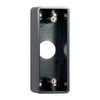
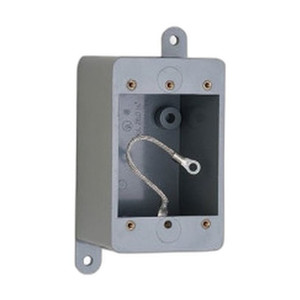
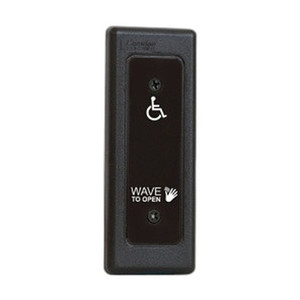
Camden CM-23D Surface Box Deep Wireless Credential Reader
The Camden CM-23D is a surface-mounted enclosure engineered to house wireless credential reader electronics in networked access control systems. The deep-format profile provides mounting depth for reader hardware and field wiring without requiring in-wall cavity excavation—a critical advantage in retrofit deployments, historic buildings, and installations where wall penetration introduces cost or structural risk. TCP/IP communication integrates the reader into standard access control platforms, enabling centralized credential validation, audit logging, and door-level policy enforcement across multi-door deployments. This form factor serves both door-mounted and wall-mounted applications where a finished, exterior reader presentation is preferred over recessed alternatives.
Key Features
- Surface-Mount Enclosure: Deep-format profile accommodates wireless reader electronics without interior wall preparation. Eliminates drywall cutting and associated structural remediation on retrofit projects.
- TCP/IP Networked: Credential validation routed over standard Ethernet infrastructure. Integrates with centralized access control platforms and door management systems supporting IP-based readers.
- Wireless Credential Compatible: Designed for wireless reader hardware—eliminates hardwired credential line runs to individual door readers, reducing installation labor on distributed multi-door sites.
- Retrofit-Ready Design: No cavity preparation required. Mounts directly to door frames, adjacent walls, or vestibule surfaces. Reduces site prep time and avoids structural modification penalties.
- Standardized Mounting Footprint: Fits common wireless reader form factors in access control product lines. Field-verifiable compatibility against your reader's physical mounting envelope and connector schema.
- Manufacturer Warranty: Factory-backed coverage on enclosure integrity and mounting hardware. Reader compatibility and field integration are end-user/integrator responsibility based on specific reader model selection.
Wireless credential readers mounted in surface boxes eliminate the cable-routing complexity of hardwired access control. On a 20-door campus retrofit, wireless readers reduce rough-in labor by 40-60 percent versus conduit runs to a central panel. TCP/IP architecture also means credential database updates propagate network-wide without touching individual readers—critical on sites where card stock or access policies change monthly.
The deep-box design accommodates reader motherboards, antenna modules, and terminal blocks without external cable bundling. This internal routing keeps the reader presentation clean and protects field connections from environmental exposure. For facilities with architectural or aesthetic constraints—glass storefronts, heritage interiors, rental properties—surface mounting eliminates the alternative of flush-mount cavity preparation.
Integration with standard TCP/IP access control platforms (Salto, Keri, Vanderbilt, Honeywell IP systems) is contingent on reader hardware selection and VMS/door management software compatibility. Integrators must verify reader model support in their target platform before specifying the CM-23D for a site. Wireless credential systems also require on-site RF survey to ensure coverage density; dense metal stud walls or multi-story deployments may require additional access points or range-extended readers.
The CM-23D is backed by manufacturer warranty covering enclosure and mounting hardware. Credential reader hardware and network integration follow the reader OEM's support terms and your platform's ONVIF/TCP/IP conformance documentation. For multi-site access control rollouts combining wireless readers and surface-mount infrastructure, validate RF coverage and reader-to-platform compatibility during pilot phase rather than field discovery.
Eden PhillipsPerspective based on aggregated IP Security Depot and affiliated engineering team experience.
We've deployed the CM-23D across retrofit campuses where hardwired credential runs were cost-prohibitive or structurally disruptive. The real win is labor: a surface-mounted wireless reader eliminates conduit, pulls, and panel modifications. On a 50-door library renovation, we swapped out a wired reader infrastructure plan with wireless CM-23D boxes and cut deployment weeks in half. The deep enclosure profile is the differentiator—it accommodates modern reader electronics and antenna bulges without external cable loops or field-fabricated mounting brackets. That said, wireless reader deployments introduce RF site-survey overhead upfront. We've seen projects stall on dense metal-stud buildings or multi-floor deployments where RF coverage required additional access points or power-boosted readers. Always RF-survey before committing to a wireless-only credential strategy. TCP/IP integration is straightforward on modern platforms (Salto, Keri, Vanderbilt), but older hardwired panel systems won't adopt these readers without VMS middleware or gateway hardware. Verify reader firmware and platform API compatibility in lab before field deployment. The enclosure itself is robust—IP54-equivalent environmental sealing keeps reader boards dry in covered vestibules—but the wireless credential ecosystem lives or dies on RF planning and reader-to-VMS API handshake validation.
Technical Highlights:
- Deep-Format Enclosure Cavity: Accepts wireless reader PCBs and antenna modules without external cable routing. Eliminates field-fabricated bracket work and reduces bill of materials on retrofit door kits. Interior terminal blocks support field wiring neatly.
- TCP/IP Credential Validation: Reader communicates with central access control platform over Ethernet. Credential database updates propagate network-wide in real time; no per-reader manual sync or firmware patching required at individual doors.
- Wireless Antenna Integration: Enclosure design accommodates internal/external antenna configurations. RF performance depends on site RF survey and reader model antenna gain—plan for 30-50m typical range indoors, subject to wall density and metal obstruction.
- Surface-Mount Installation: No cavity cutting, conduit chasing, or structural modification. Mounts to door frames, vestibule walls, or adjacent surfaces. Rough-in time typically 20-30 minutes per door versus 2-4 hours for hardwired cavity readers.
- Standardized Mounting Envelope: Fits common wireless reader form factors. Integrators must verify physical envelope and connector pinout against chosen reader model—mismatches require custom brackets or reader substitution.
- Manufacturer Warranty Coverage: Enclosure and fasteners covered. Reader hardware and network integration warranty follow reader OEM terms and platform support agreements.
Deployment Considerations:
- RF site survey is mandatory before reader selection. Dense metal studs, multi-floor separations, or high-density RF environments (hospitals, industrial plants) may exceed wireless reader range or require mesh-network topology. Budget survey cost and potential access-point expansion into project cost-of-ownership.
- Reader-to-platform API compatibility must be validated in lab. Older hardwired access control panels will not natively adopt TCP/IP readers; middleware or VMS gateway hardware may be required. Test authentication and audit-log synchronization before broad deployment.
- Wireless credential provisioning adds enrollment overhead—card linking, reader pairing, and firmware provisioning must occur at each door. On large campuses (100+ doors), consider managed wireless credential platforms with central provisioning rather than per-reader onboarding.
- Enclosure environmental rating is IP54-equivalent in covered mounting (vestibules, overhangs). Direct outdoor exposure to salt spray or high-humidity agricultural environments may corrode reader electronics; specify stainless fasteners and conformal coating where applicable.
- Network uptime directly impacts credential validation. Implement VPN or secondary WAN failover if wireless readers are on separate network segments from the main access control platform. Test graceful degradation (cached credential sets) during network outages.
The CM-23D is the right choice for retrofit and new-construction sites where wireless readers reduce cabling footprint and surface mounting eliminates wall modification. Integrators deploying 10+ doors on a single building should prioritize RF planning and reader-to-VMS compatibility validation over enclosure selection. For more details on wireless access control infrastructure and surface-mount credential hardware, explore the Camden catalog.