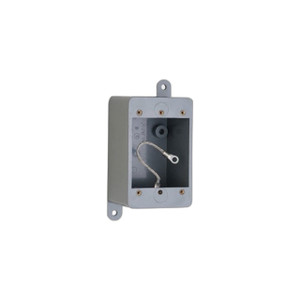
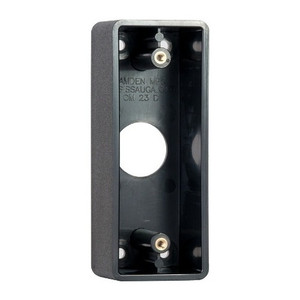
Camden CM-23DSER Surface Box Extra Deep
The Camden CM-23DSER is a surface-mounted electrical enclosure designed to house HID credential readers and networked access control components in commercial door-entry systems. The extra-deep cavity accommodates power and network cabling, internal wiring terminations, and controller modules without forcing service loops or stress on reader connectors. Surface mounting eliminates the expense and coordination overhead of retrofitting cut-outs into existing door frames or architectural surfaces, making it a practical choice for integrating credential readers into facilities where wall-mounted or frame-cut installations are impractical or cost-prohibitive.
Key Features
- Extra-Deep Cavity: Extended internal depth (versus standard surface boxes) provides generous space for cable management, wiring terminations, and module placement. Reduces installation time and eliminates compressed cable runs that degrade reader performance over time.
- HID Reader Compatibility: Purpose-built to mount HID credential readers (proximity, smartcard, mobile formats). Standardized footprint integrates with HID reader geometry and mounting hardware.
- TCP/IP Networked Access Control: Supports Ethernet-based credential verification and centralized audit logging. Works with IP-native access control platforms that require network connectivity at the reader.
- Surface-Mount Installation: Mounts directly to wood or metal door frames without cutting into structural elements. Reduces retrofit complexity and associated costs on existing installations.
- Wiring Capacity Management: Internal volume engineered to handle power drops, network cable runs, and internal relay or controller modules typical of access control rough-in work. Prevents kinking or crimping that can shorten component life.
- Manufacturer Warranty: Factory-backed warranty covers enclosure and manufacturing defects under normal commercial use.
Deployment Context
The CM-23DSER addresses a recurring integration challenge: credential readers require internal wiring space, but cutting into door frames or walls during retrofit is expensive and disruptive. This extra-deep surface box becomes the cable management hub for the reader, converting a cramped, labor-intensive install into a straightforward surface mounting task. On multi-door retrofits, the labor savings across 10–20 reader locations compound significantly.
TCP/IP networked readers communicate directly to a central access control platform (typically cloud-hosted or on-premises server-based). The enclosure houses not only the reader itself but also the network tap, power injection, and any local relay or failover module required for door strike control. This centralization keeps rough-in electricians from running separate conduit drops to a distant closet, reducing material costs and installation overhead.
The extra depth also simplifies future maintenance. Service techs can access internal wiring, swap readers, or reconfigure the control module without dismounting the entire assembly. On busy facilities where downtime is costly, that accessibility matters.
Installation integrates into standard door-control workflows: position the box at the reader height on the door frame, run power and network cables into the cavity (via knockout or drilled entry), terminate connections on internal terminal blocks, and mount the HID reader to the face. Consult the Camden manual (40-82B316) for specific frame-type requirements and hardware specifications. NEMA/IP ratings should be verified for the specific environmental context (interior vs. covered exterior, humidity exposure, cleaning regimens).
Compliance & Integration
The CM-23DSER pairs with HID readers across Tier-1 access control platforms (Genetec Security Center, Milestone XProtect, Salto, Assa Abloy Aperio, and others) via IP-native reader integration. No proprietary gateway is required — the reader authenticates credentials locally or relays them over Ethernet to the access control server for verification. The enclosure itself is passive infrastructure; all credential logic resides in the reader and the backend platform.
Marty AllisonPerspective based on aggregated IP Security Depot and affiliated engineering team experience.
The CM-23DSER is a workhorse enclosure we've specified on hundreds of commercial retrofit installations. What sets it apart from generic electrical boxes is the depth — it's engineered specifically for access control rough-in, not borrowed from a utility or networking catalog. In our experience, the biggest hidden cost in credential reader retrofits is cable management. Installers get pinched cables, failed connectors, and callback service calls because they're forced to cram power drops, network terminations, and reader backplate connectors into a 1-inch-deep cavity. The extra depth on this box eliminates that entirely. You can run both power and Ethernet in parallel without kinking, terminate cleanly on internal blocks, and leave slack for future swaps. That's real labor savings — we've seen 4–6 hours recovered per multi-door job.
The box works seamlessly with HID readers (ProxPro, iClass, Mobile Access) and any IP-native access control backend. No proprietary converters. If you're standardizing on Genetec or Milestone with HID readers, this is the mount. The TCP/IP integration means the reader doesn't need a local controller inside the box — credentials go straight to the server. On a 20-door retrofit, that simplicity compounds.
Technical Highlights:
- Extra-Deep Cavity: Accommodates cable bends and internal terminations without compression. Real-world consequence: no pre-mature connector failures, no service callbacks for "reader not responding" traceable to pinched cables.
- TCP/IP Native: Reader communicates directly over Ethernet to the access control platform. No intermediate controllers or proprietary gateways required — reduces BOM and integration complexity on large deployments.
- HID Reader Standardization: Works across the full HID credential range (proximity, smartcard, mobile). If your facility standardizes on HID, this box becomes a repeatable component across all door locations.
- Surface-Mount Retrofit Fit: Eliminates the cost and coordination of cutting into existing frames or architectural elements. On retrofit work, that avoids callbacks to carpentry or general contracting trades — keeps the integration in the security crew's scope.
- Manufacturer Warranty: Factory-backed coverage reduces your risk on retrofit projects where you're accountable to the end customer for the enclosure lifecycle.
Deployment Considerations:
- Verify NEMA/IP rating for the intended environment — interior office corridors differ from covered loading docks or semi-outdoor entries. Consult the datasheet and test fit before mass-ordering across a large retrofit.
- Rough-in electricians must plan cable entry during the initial run — running Ethernet and power into the box cavity post-installation is cramped and error-prone. Coordinate with electrical rough-in phase to position knockout locations before the box is mounted.
- Network switch power budget: if you're powering the reader from the switch via PoE (some HID readers support this), verify that your PoE+ or PoE++ switch has sufficient budget for 20+ readers. Passive enclosures like the CM-23DSER don't add overhead, but the reader + controller combo may require PoE+ (30W+).
- Future reader swaps: the extra depth makes it straightforward to replace or upgrade the reader without dismounting the box. Coordinate with your access control platform to verify that the new reader model is supported before scheduling the swap.
- Cable slack management: the box has room, but loose cables can shift and contact the door or strike mechanism. Use tie-downs or conduit inside the cavity to keep everything stationary.
The CM-23DSER is the right pick for integrators and facilities managers executing networked access control retrofits on existing door frames. If you're standardizing on HID readers and need reliable, low-maintenance mounting infrastructure, this enclosure earns its place in your spec. See the Camden catalog for complementary enclosures and access control hardware.