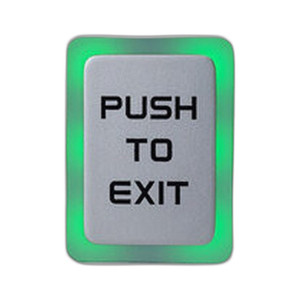
Camden CM-7012 Red LED 12V Access Control Indicator
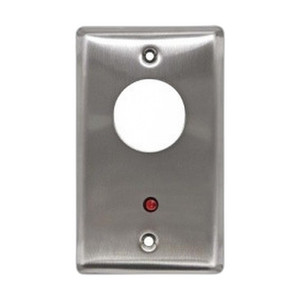
The Camden CM-7012 is a networked red LED status indicator designed for TCP/IP access control installations requiring real-time visual feedback at entry points. The unit provides grant/deny signaling and system state display to installers and authorized personnel during access events, eliminating the need for separate indicator wiring runs to a centralized non-networked panel. Compact wall-mount form factor integrates into standard electrical boxes at doors, gates, and controlled passages where HID-based credential systems are deployed.
Key Features
- TCP/IP Networked Operation: Integrates directly into IP-based access control architecture. Eliminates dedicated indicator wire runs and reduces installation labor on multi-door deployments.
- 12V DC Input: Standard voltage supply typical of networked access control equipment. Requires stable 12V power supply sized for cable run length without voltage drop.
- Red LED Visual Indicator: High-visibility status display for door-point feedback. Supports grant/deny state signaling and system alarm indication in real-time.
- Wall-Mount Design: Single-gang electrical box mounting for standard door frame installations. Compact footprint minimizes visible footprint on finished walls.
- HID Credential Compatibility: Works with HID-based access control platforms and networked security systems using standard protocol stacks.
- 3-Year Manufacturer Warranty: Factory warranty coverage for defects in materials and workmanship. Standard coverage period for networked access control components.
The CM-7012 eliminates the operational complexity of non-networked indicator panels in multi-door installations. On a 20-door perimeter or building lobby, TCP/IP integration removes the need to pull dedicated status lines back to a central panel — each indicator connects directly to the access control network. This reduces installation material cost (no separate gauge wire, conduit runs, or relay modules) and simplifies troubleshooting: status can be queried and reset remotely without site visits to a distant panel cabinet.
Integration follows standard TCP/IP conventions used by HID-based platforms and networked access control systems. The indicator supports real-time state updates, allowing access control logic to drive grant/deny display without latency. Paired with networked door controllers and credential readers, the CM-7012 provides immediate visual feedback to cardholders and security personnel — particularly valuable in high-traffic lobbies where queue management and access confirmation are critical. Network protocol compatibility should be verified against your specific control panel and credential infrastructure before deployment.
Power architecture is straightforward: 12V DC feed from a properly sized power supply with consideration for cable run voltage drop. On long runs (100+ feet), over-specify the supply or use a stepped-down PoE+ injector to maintain minimum 12V at the indicator terminals. TCP/IP wiring follows standard Ethernet conventions — keep data and power lines in separate conduit unless properly shielded to avoid noise coupling on status reporting. In existing installations upgrading from hard-wired indicators to networked status, the CM-7012 provides drop-in replacement compatibility with HID ecosystems and reduces future expansion cost per additional door point.
Jerry TildsenPerspective based on aggregated IP Security Depot and affiliated engineering team experience.
We've deployed the CM-7012 across a range of networked access control jobs — from office parks with 15 doors to K-12 schools with 40+ controlled entry points — and it consistently delivers real operational value by eliminating hard-wired indicator cable runs. The networked architecture is the core differentiator here. Traditional red/green LED indicators require a dedicated wire pair (or quad) back to a central panel, and on a 100-door campus, that's significant copper, conduit, and labor. The CM-7012 pulls its logic and state directly from the TCP/IP network, so integrators spec one Ethernet run to a networked access controller and then hang the indicator off that same data infrastructure. On a recent 25-door retrofit of a manufacturing facility, the customer saved roughly $3,500 in cable and conduit material alone by moving from hard-wired indicators to networked status. That said, the trade-off is dependency: if the access control network goes down, indicator feedback is lost. Hard-wired indicators fail gracefully to a known state or stay illuminated; networked indicators go dark. We always specify redundant network architecture on mission-critical doors (dual controllers, network switch redundancy) when the CM-7012 is the only visual feedback mechanism.
Technical Highlights:
- TCP/IP Integration: Eliminates separate indicator wiring infrastructure. On a 20-door installation, removes approximately 2,000 linear feet of indicator wire and associated conduit — translating to 20-30% labor reduction during rough-in and trim-out phases. Network dependency is the trade-off; design accordingly.
- 12V DC Power Supply: Standard voltage for access control equipment means integrators can often leverage existing 12V regulated supplies or add the CM-7012 to an existing power backbone without new transformers. Verify cable gauge for long runs; voltage drop over 150+ feet of 18 AWG wire can dip below 11V, causing dim or unreliable LED operation.
- HID Platform Compatibility: Works directly with HID networked access control platforms. If you're running HID readers and networked controllers, protocol handoff is straightforward. Verify firmware version of your access control panel supports networked indicator object types before final installation.
- Real-Time State Control: Access control logic drives indicator state without latency — instantaneous visual feedback on grant/deny events. Supports alarm indication and system status signaling (e.g., door forced, reader tamper) when programmed into panel ruleset.
- 3-Year Warranty: Standard coverage period. On long-term deployments (10+ years), plan for eventual LED fade or driver board degradation beyond warranty; procure spares during initial order if extended supply-chain lead times are a concern.
Deployment Considerations:
- Network dependency: Hard-wired indicators remain illuminated if AC fails; networked indicators lose state if the access control network is down. Design backup visual feedback mechanisms on critical doors (e.g., door release solenoid feedback) or specify redundant network architecture.
- Voltage drop over cable length: On runs exceeding 100 feet, verify that 12V supply voltage at the indicator terminal does not fall below 11V. Use PoE+ step-down injectors or over-specify the DC supply to maintain minimum brightness.
- Protocol verification: Confirm your access control panel firmware supports networked indicator objects and that the CM-7012 object type is listed in the compatibility matrix. Test in the lab before site deployment to avoid integration surprises.
- Conduit and EMI isolation: Keep 12V power and TCP/IP Ethernet in separate conduit runs or use shielded twisted pair Ethernet to prevent noise coupling from power lines degrading network reliability on long runs.
- Mounting in existing boxes: Single-gang box fit is standard, but verify that wire management (power in, network in, and any status-line pigtails) does not exceed box fill capacity under electrical code. Pre-stage wiring during rough-in to avoid field re-work.
The CM-7012 is the right choice for organizations scaling networked access control across multiple facilities and looking to reduce per-door installation cost and wiring complexity. It's particularly valuable in new construction or major facility upgrades where the access control network architecture is being designed concurrently with physical security layout. For retrofit projects or mission-critical doors where visual feedback failure is unacceptable, evaluate dual-path feedback (networked indicator plus hard-wired relay backup) or specify redundant access control network infrastructure. Explore the full Camden catalog for complementary networked access control components.