
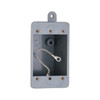
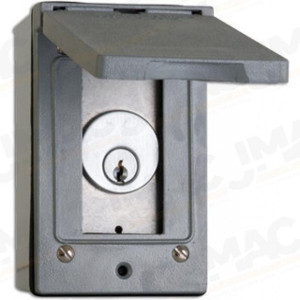
Camden Push/Turn to Release, N/O, Maintained, Red Only
Push/turn release strike, 30VDC, HID-integrated with emergency egress
Usually Ships in 2-3 Weeks
Free shipping over $499

Manufacturer-verified compatible cameras, recorders, mounts, accessories, and licenses for this product. Adjust quantities and add the entire bundle to your cart in one click.
Questions about this product? Free pre-sales support from a senior specialist — product questions, compatibility checks, BOM quotes, price confirmation — typically answered within one business day. Need camera placement or system design work? Engineering time is $175 per hour (qty 1 = 1 hour). Hardware buyers get up to one hour ($175) credited back on their order.
The Camden CM-5070 is a normally closed (N/C) maintained electronic strike designed for installations requiring both electrical control from an access control system and manual mechanical release via pushbutton. Rated at 6 amps @ 30VDC, this strike mechanism solves a critical operational gap: when network connectivity fails or operators need immediate egress, the 2 3/8" red pushbutton provides independent mechanical release without relying on panel power or system logic. Integrators typically specify the CM-5070 in high-traffic commercial entrances, emergency exits, and secured areas where dual release paths (electrical + manual) are operationally essential.
The CM-5070 is fundamentally an integration device, not a primary locking mechanism. It sits at the boundary between electrical access control and mechanical emergency release. On a single-door entrance controlled by an access reader, the strike energizes on valid credential, pushing the pushbutton provides manual override. This dual-path architecture eliminates the operational overhead of finding a key or buzzing someone through in network-down scenarios. Installers often pair the CM-5070 with magnetic locks or overhead door operators where redundant release is mandated by fire code or site security policy.
Electrical compatibility hinges on your access control panel's strike output specification. Most modern systems output 12–24VDC or 30VDC relay contacts; the CM-5070 requires 30VDC at 6A minimum. If your panel supplies 12VDC or 24VDC, you will need a step-up power supply or alternate strike model. Contact block wiring is straightforward: N/C terminal connects to the panel strike relay output; when the relay de-energizes (strike command issued), the pushbutton coil pulls the strike mechanism. No advanced configuration required — it operates as a simple electro-mechanical device with no firmware or protocol involvement.
Deployment considerations center on door hardware compatibility and traffic volume. The CM-5070 is rated for high-traffic commercial use, but the pushbutton mechanism is mechanical and will wear with repeated use over years. In extremely high-traffic environments (shopping mall entrances), expect eventual button degradation and plan for replacement every 3–5 years depending on use frequency. Outdoor installations in freezing climates may experience ice buildup on the button surface; verify your site's seasonal conditions before finalizing mounting height. The red color is fixed (no other colors available) — if door hardware aesthetics are a constraint, confirm the color fit with your architect or design team before ordering.
The CM-5070 carries a Manufacturer Warranty and is a passive electro-mechanical device with no firmware updates or compliance certifications (NDAA, Section 889) to track. Integration is ONVIF-agnostic — the strike is purely electrical, not networked. Pair it with any access control system that supplies 30VDC maintained output (Salto, Genetec, Hirschfeld, HID VertX, etc.). For a detailed wiring schematic and dimensional drawing, consult the datasheet. The Camden catalog includes expanded strike options (different voltages, release types) if the CM-5070's specifications don't align with your panel's power supply or operational requirements.

The CM-5070 is a workhorse strike for installations where you cannot tolerate a single point of failure in the release path. We've deployed dozens of these across retail chains, office buildings, and healthcare facilities — and the consistent pattern is the same: integrators specify it not because it's a cutting-edge device, but because it solves a real operational problem. On day one, the access control system commands the strike electrically. On day two, a network outage or controller failure happens, and the pushbutton gets someone out of the building safely. That's the value prop. It's a belt-and-suspenders approach to door release, and in high-traffic commercial environments, that redundancy is worth the modest additional hardware cost and wall space.
The maintained N/C logic is the key architectural choice. Unlike an energize-to-release strike, the CM-5070 stays released as long as power is applied. This means the access control system doesn't have to pulse the strike or manage a timer — it simply closes a relay and holds it. For integrators accustomed to momentary strikes (energize for 600ms, then de-energize), the maintained behavior can feel counterintuitive at first, but it's actually simpler: no timed relay logic needed, no risk of the strike re-engaging mid-passage. The manual pushbutton overrides this state entirely — pressing it releases the strike whether the electrical coil is energized or not.
One caveat: verify your access control panel's strike output capacity. The CM-5070 draws 6A at 30VDC, which is significant on a single relay contact. If your panel's strike relay is rated for only 3A, you'll need an external relay or a 30VDC power distribution module. We've seen integrators wire this incorrectly and wonder why the strike doesn't release — then discover the panel's strike output was underspec'd. Check the panel datasheet, confirm 30VDC at 6A minimum, and you'll avoid a callback.
Technical Highlights:
Deployment Considerations:
The CM-5070 is ideal for integrators building access control systems in regulated environments (healthcare, finance, retail) where a dual-path release architecture is a compliance requirement or site policy. It's not a networked device, not an intelligent lock, and not a substitute for a proper access control system — it's an insurance policy against electrical failure. If your project calls for manual override as a critical failsafe, the CM-5070 delivers that with minimal complexity. Explore the Camden catalog for variant strike types if your voltage or release logic requirements differ.

Manufacturer-verified compatible cameras, recorders, mounts, accessories, and licenses for this product. Adjust quantities and add the entire bundle to your cart in one click.
Push/turn release strike, 30VDC, HID-integrated with emergency egress

30VDC push/pull electronic strike designed for high-frequency access control door installations in commercial and institutional environments
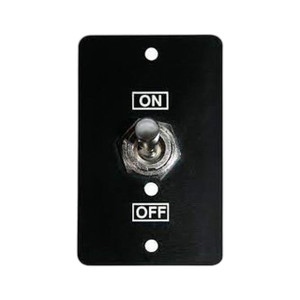
30VDC push/pull electronic strike engineered for fail-secure, maintained normally-closed (N/C) operation in retrofit and new-build access control
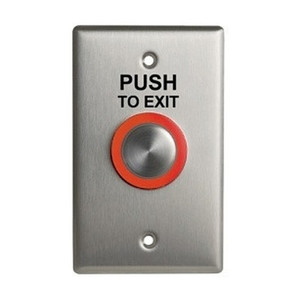
30VDC electronic strike designed for push-to-lock operation with mechanical key-to-release override and N/C maintained hold

N electric lock strike designed for 30VDC access control systems requiring maintained contact switching to control electromagnetic locks or electric
Looking for more Camden products? Shop the full Camden catalog →
Support services and planning resources for commercial surveillance, access control, and infrastructure deployments.
Fixed scope • Fixed price