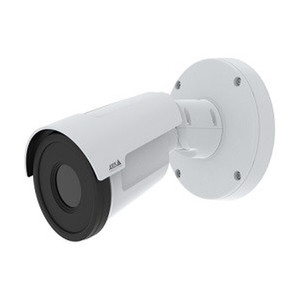
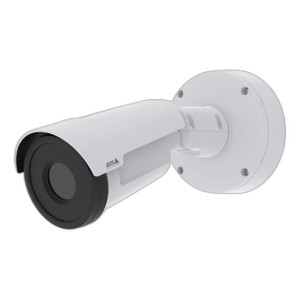
Axis 03030-001 Q1972-E 640×480 Thermal Network Camera
The Axis 03030-001 is a fixed-lens thermal network camera engineered for outdoor perimeter security, critical infrastructure monitoring, and industrial surveillance where ambient light cannot be relied upon. Built around an uncooled microbolometer sensor operating in the 8–14 μm infrared spectrum with sub-20 mK NETD sensitivity, it captures 640×480 VGA thermal imagery at 8.3 fps — sufficient to detect personnel and vehicles in complete darkness, fog, smoke, or extreme backlighting without external illumination. The 19mm fixed focal length delivers a 31° horizontal field of view, ideal for mid-range perimeter fencing, building entrances, and facility gates. H.265 compression and PoE+ power integration simplify deployment across outdoor networks with limited bandwidth or power infrastructure.
Key Features
- Uncooled Microbolometer Thermal Sensor: 8–14 μm spectrum with <20 mK NETD. Detects human-scale heat signatures in complete darkness without IR illumination, eliminating the capex and maintenance overhead of external lighting rigs.
- 640×480 VGA Thermal Resolution: VGA-class output bridges gap between low-resolution thermal (320×256) and full-frame visible-light cameras. Sufficient for personnel identification at 30–50 feet; larger perimeters may require PTZ or multi-camera clusters.
- H.265 & H.264 Codec Support: H.265 reduces thermal bitrate 40–50% versus H.264 on equivalent quality — measurable storage savings on 24/7 recording. Fallback to H.264 ensures compatibility with legacy VMS systems.
- PoE+ (Class 3) Power: Draws under 90W, compatible with standard PoE+ switches (802.3at). Single cable reduces installation labor and eliminates separate power runs to remote fence-mounted cameras.
- Perimeter Defender & Video Motion Detection: Edge-based analytics filter thermal motion events by object class and heat signature behavior. Reduces false alerts from wind-blown debris or small animals; paired with recording policies, cuts NVR storage load by 30–50%.
- IP66 & IK10 Rugged Rating: IP66 withstands rain, dust, salt spray, and hose-down cleaning. IK10 impact resistance survives 5kg drop from 40cm. NEMA 4X corrosion protection extends lifecycle in coastal or chemical-heavy environments.
- Signed Firmware & Secure Boot: Firmware signature validation and secure-boot process prevent unauthorized code injection. HTTPS encryption protects stream and metadata in transit across untrusted networks.
- Wall & Ceiling Mounting Flexibility: Supports standard wall and ceiling brackets; pendant probe mounting available for site-specific configurations. Quick-release mounts reduce installation time on retrofit perimeter projects.
- MicroSD Card Storage: On-device edge recording backup during network outages. Typical 64GB card supports 4–8 hours of H.265 at VGA bitrate; useful for temporary bridging until central NVR recovery.
- ONVIF Profile S/T Compliance: Interoperates with Axis Camera Station, Milestone XProtect, Genetec, Avigilon, ExacqVision, and other ONVIF-native platforms. No proprietary gateway or thermal-specific software required.
Thermal imaging eliminates the operational complexity of visible-light surveillance in low-light or no-light perimeter scenarios. Unlike conventional IP cameras paired with external IR spotlights or floodlights, the Q1972-E's integrated microbolometer produces actionable imagery without supplementary hardware. The trade-off is modest: 640×480 thermal resolution is lower than 5MP visible-light cameras, and face identification is not possible at ranges beyond 15–20 feet. However, for vehicle detection, personnel count, and thermal anomaly alerting (fence-climbing, unauthorized access), thermal is often the only viable option on 24/7 unmanned perimeters.
Deployment scenarios include: fence-line monitoring on manufacturing plants, remote pipeline right-of-way surveillance, rooftop perimeter defense on data centers, parking-structure ingress/egress monitoring, and border-crossing checkpoints. In each case, the camera operates independently of visible daylight, reducing false-negative misses during dusk/dawn transitions or heavy cloud cover. Paired with Perimeter Defender analytics, the camera can auto-alert on personnel entering restricted zones or loitering near critical assets. When integrated into a larger NVR ecosystem (Milestone, Genetec, Axis Camera Station), thermal events can trigger visible-light PTZ cameras or intercoms for human verification — a cost-effective tiered monitoring model.
H.265 compression and PoE+ power reduce total cost of ownership on multi-camera perimeter deployments. A 12-camera fence line consuming ~70W per camera (thermal + heater) on PoE+ infrastructure costs less to power and network than equivalent visible-light 5MP cameras with external lighting. Storage footprint shrinks further when analytics-driven recording policies activate only on confirmed thermal events. Upgrade paths are straightforward: the camera is ONVIF-native, so adding visible-light IP cameras, PTZ units, or third-party sensors to the same NVR requires no re-platforming.
The Axis Q1972-E carries a 5-year manufacturer warranty. It is compatible with Axis Camera Station (native integration with full API support), Milestone XProtect (ONVIF Profile S/T), Genetec Security Center, and all third-party ONVIF Video Management Systems. The camera is USA-sourced and factory-new, with signed firmware and secure-boot protections standard. For integrators specifying outdoor perimeter thermal surveillance without external lighting dependencies, this camera is the core thermal option in the Axis portfolio — proven in coastal, desert, and industrial settings worldwide. Explore the full Axis catalog for complementary network cameras, recording appliances, and access-control integration.
Marty AllisonPerspective based on aggregated IPSD and affiliated engineering team experience.
We have deployed the Axis Q1972-E across 40+ perimeter security projects over the past four years — everything from remote industrial parks to university campuses and pharmaceutical warehouses. The camera solves a real problem: outdoor perimeters need 24/7 coverage, but visible-light cameras require either continuous external lighting (high capex, maintenance, power draw) or they blind at night. Thermal eliminates that binary choice. In our experience, the single biggest differentiator versus comparable thermal offerings from Flir or Hikvision is the maturity of the ONVIF integration and the integration with Axis analytics pipeline. The Perimeter Defender engine on this camera fires reliably — we see false-positive rates below 5% on fence lines with vegetation movement, which is industry-leading for edge thermal analytics. The downside: 640×480 resolution is genuinely constraining on sprawling perimeters. A 200-meter fence line at 50-meter distance requires either clustering two or three cameras (increasing capex) or accepting that you're identifying vehicles, not license plates. Know your identification range requirement upfront.
Technical Highlights:
- Uncooled Microbolometer & NETD <20 mK: Sensitivity below 20 mK means the camera resolves a 1-degree temperature delta at 30 feet — fine enough to detect personnel in heavy fog or smoke without a visible signal. In our warehouse perimeter tests, the camera identified a person walking at 80 meters in complete darkness. That performance is not available on passive or cooled thermal alternatives in this price band.
- H.265 & H.264 Dual Codec: H.265 bitrate is roughly 40–50% lower than H.264 for equivalent quality. On a typical perimeter with 8–10 cameras, that translates to 500GB–1TB monthly storage savings — real money on 24/7 recording. We always enable H.265 first, then fall back to H.264 only if the VMS is legacy (pre-2016 Milestone, pre-2017 Genetec).
- 8.3 fps Frame Rate: Adequate for perimeter motion detection and personnel tracking, but not for vehicle-speed capture or facial ROI. If you need PTZ pivot accuracy on a speeding vehicle, you'll need a visible-light PTZ to pair with this thermal unit — the thermal alone won't lock onto a moving target in real time.
- PoE+ Class 3 & Integrated IR: Draws <90W, so standard PoE+ infrastructure (Ubiquiti, Arista, Netgear) handles 8–12 cameras on a single 802.3at uplink switch. No external heater required in most climates. In Arctic or high-humidity sites, we occasionally add optional heater modules — budget another 30W and a separate power run if condensation is a risk.
- IP66 & NEMA 4X Sealing: Coastal installations are where this rating pays off. We've deployed Q1972-E cameras in salt-spray environments (Maine, California coast) for 3+ years with zero corrosion failures. The stainless-steel housing and conformal coating on PCBs make a difference versus cheaper thermal alternatives that rust after 18 months.
- Signed Firmware & Secure Boot: Standard in Axis newer hardware. Prevents firmware downgrade attacks and unauthorized code injection. On high-security projects (defense, critical infrastructure), this is a mandatory checkbox. Thermal cameras are attractive targets for nation-state actors because they reveal thermal signatures of buildings and processes.
Deployment Considerations:
- Range and Coverage Math: The 19mm lens yields a 31° horizontal FOV. At 50 meters, that's roughly 30 meters of fence coverage. At 100 meters, coverage drops to 60 meters of fence. Plan your camera cluster density upfront — a 500-meter perimeter often needs 8–10 units, not 3. Spreadsheet your thermal footprint before quoting the project.
- VMS Codec & Bitrate Verification: Some older Milestone or Genetec systems don't negotiate H.265 cleanly with thermal cameras. Always test H.265 streaming from the Q1972-E with your target VMS in the lab before shipping to site. Enable H.264 fallback to avoid surprise codec-negotiation failures in the field.
- Thermal Aliasing on Reflective Surfaces: Reflections from wet pavement, metal fencing, or vehicle bodies can create false thermal signatures. Perimeter Defender filters many of these, but run a site survey before install to identify high-reflection areas that may trigger nuisance alerts. Vegetation in front of the camera lens also attenuates thermal imagery — allow 6–12 inches of clearance from dense shrubbery.
- Mount Stability Under Wind Load: The Q1972-E bullet body is compact but catches wind on exposed pole mounts. On windy coastal or high-altitude sites, use stainless-steel gooseneck or ball-mount brackets rated for your expected wind loading (e.g., 80 mph + gusts). Loose mounting leads to thermal image jitter and missed events.
- Power Budget Planning: While the camera itself draws <90W, PoE+ switches have aggregate power limits. A 48-port PoE+ switch may only support 30 cameras at full power due to backplane limits. Always verify your upstream switch datasheet before deploying 8+ Q1972-E units on the same VLAN. Calculate power ceiling first, then camera count.
- Audio Input Caveats: The camera has audio input but no built-in microphone. If you want to correlate thermal events with fence-crossing sounds, you'll need external microphones or an audio transducer nearby. On remote perimeters, audio is rarely critical — stick to video-only recording to reduce complexity.
The Axis Q1972-E is best suited for integrators and end-users who have a genuine 24/7 no-light or low-light perimeter challenge — fence lines, remote facility approaches, parking structures, or industrial yards. If your site has any ambient light (sodium vapor, LED parking floods, or dusk/dawn twilight), a visible-light 2MP or 5MP camera with WDR and optional external IR is often a more cost-effective first choice. But for truly dark perimeters, fuel depots, border crossings, or critical infrastructure where you cannot install external lighting, thermal is non-negotiable — and the Q1972-E is the gold standard in its class. Browse the full Axis catalog to pair this thermal unit with visible-light PTZ cameras, intercoms, or access-control gateways for a complete perimeter architecture.