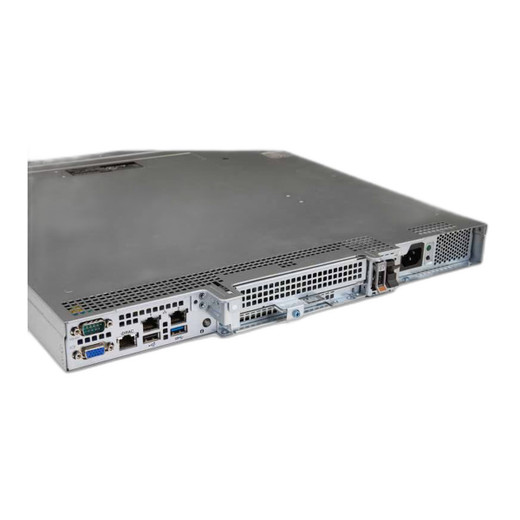
Axis 03237-001 24-Channel Rack Recording Server
The Axis 03237-001 is a purpose-built 1U rack-mountable video management platform pre-configured with 24 AXIS Camera Station Pro licenses and Windows IoT. This is a deployment appliance, not a blank-slate server—it ships ready to connect cameras and begin recording, eliminating months of configuration and licensing negotiation typical in enterprise surveillance roll-outs.
Overview
Organizations deploying mid-to-large-scale network video recording often face a choice: buy a generic server and license software separately (slower, more moving parts), or standardize on a pre-integrated platform. The S1224 targets the latter path. Windows IoT provides operating system stability optimized for continuous recording workloads, while the 24-channel license ceiling tells you exactly what this device will handle—no guessing, no surprise licensing costs as you scale.
The 1U form factor fits standard 19-inch server racks, maximizing density in space-constrained data centers. A single expandable drive bay means initial storage is lean (you add drives as retention policy demands), keeping upfront capital lower while avoiding the over-provisioning trap. This hybrid design reflects real-world budgeting: initial deployment often doesn't require massive on-board storage if you're archiving to network-attached storage or cloud, but you retain the option to grow.
Key Features
- 24 AXIS Camera Station Pro licenses pre-loaded: No separate licensing procurement. Video management software is bundled, reducing time-to-deployment and eliminating license key tracking headaches across multiple devices.
- Up to 24 simultaneous video channels: Designed to handle exactly 24 Axis network cameras at full frame rate and resolution. Don't plan for 30 cameras and hope it scales—this is your hard ceiling, preventing over-commitment and ensuring consistent performance.
- TPM with FIPS 140-2 Level 2 certification: Trusted Platform Module provides hardware-based encryption of video data and system integrity checks. Mandatory for regulated sectors—financial services, healthcare, government—where video chain-of-custody and tamper evidence are non-negotiable compliance requirements. This isn't soft encryption; it's cryptographic key protection at the silicon level.
- One expandable drive bay: Supports one primary storage drive (or RAID if your deployment warrants it). Growth is deliberate: add external NAS or SAN as footage retention periods grow. This prevents over-building Day 1 and wasting capital on drives sitting 80% empty for two years.
- Built-in recovery OS: System failure doesn't mean re-imaging from scratch. Rapid restore capability minimizes downtime in surveillance-critical environments—airports, retail chains, campuses cannot tolerate 4-hour recorder outages during recovery.
- Windows IoT operating system: Mainstream OS kernel means IT teams already understand patch cycles, driver updates, and integration with Active Directory. No proprietary Linux variant requiring specialized training. Standard Windows diagnostic tools work as expected.
Integration and Compliance
The S1224 is optimized for Axis IP camera deployments but supports ONVIF-compliant third-party cameras via standards-based protocols. Its Windows foundation simplifies integration into enterprise IT infrastructure—network time synchronization, certificate management, and domain authentication follow familiar patterns. The FIPS 140-2 Level 2 certification is not aspirational; it's validated by a cryptographic lab and documented for audit. If your organization requires Section 508 accessibility reporting or CMMC Level 2 compliance, this device provides the cryptographic foundation those frameworks demand.
When to Choose a Different Model
The S1224 assumes 24-channel capacity is sufficient. If your site plan calls for 40+ cameras, this device will be undersized; consider Axis higher-capacity recording solutions in the same family. If you need direct local video analytics (object detection, people counting) beyond basic motion detection, evaluate whether standalone analytics appliances or camera-integrated AcuSense should precede or augment the recorder. If your network already standardizes on a different VMS platform (Milestone Xprotect, Genetec, etc.), verify that platform's compatibility with the pre-loaded AXIS Camera Station Pro software.
Frequently Asked Questions
Q: Does the 03237-001 require additional software licensing beyond what ships with it?
A: No. The device ships with 24 AXIS Camera Station Pro licenses. If you later add a second 03237-001 unit and want to manage both from a single console, you'll need to evaluate AXIS Camera Station Enterprise options—that requires additional licensing. Single-unit deployments have no hidden costs.
Q: What's the maximum storage capacity if I use the single drive bay?
A: The specifications support modern SSD or HDD drives; consult the product datasheet for approved drive models and maximum capacity. For retention policies exceeding 30 days across 24 cameras at 4MP resolution, external NAS is typically more cost-effective than maxing the internal bay.
Q: Is the 03237-001 compatible with non-Axis cameras?
A: Yes. AXIS Camera Station Pro supports ONVIF Profile S and T compliant cameras. However, advanced features (firmware updates, specific analytics, Zipstream compression tuning) are Axis-optimized. Mixed-brand deployments work but require testing before full rollout.
Q: Does FIPS 140-2 Level 2 certification mean the device is pre-approved for government contracts?
A: FIPS 140-2 Level 2 certification confirms the cryptographic module meets federal standards for key protection. Government procurement still requires evaluation against your specific RFP, compliance checklist (CMMC, FedRAMP, etc.), and security assessment. The certification is a prerequisite, not an automatic greenlight.
Q: Can I cluster multiple 03237-001 units for redundancy?
A: AXIS Camera Station Pro supports multi-server deployments with shared storage backends. You'll need to verify licensing requirements for that architecture with Axis pre-sales. Each unit operates independently by default.
Q: What is the warranty on the 03237-001?
A: Refer to the Axis product documentation for standard warranty terms. OEM hardware warranty typically covers defects in materials and workmanship; extended care plans are available through authorized distributors.
Ted PerryPerspective based on aggregated IP Security Depot and affiliated engineering team experience.
The 03237-001 embodies a pragmatic philosophy: surveillance recorders don't need to be generic, do-everything servers. This unit is opinionated—it does 24 channels of Axis-optimized recording with cryptographic assurance built into the silicon. That TPM with FIPS 140-2 Level 2 certification is not marketing window dressing; it's the difference between a video system that meets federal compliance audits and one that triggers exceptions during procurement review.
Technical Highlights:
- FIPS 140-2 Level 2 TPM: Hardware-based key protection means video encryption keys are isolated from the operating system and resistant to firmware tampering. This satisfies compliance frameworks (HIPAA, NIST, DoD) that require cryptographic evidence. Software-only encryption cannot claim the same isolation.
- Pre-licensed 24-channel configuration: 24 AXIS Camera Station Pro licenses ship installed, eliminating the procurement lag (often 2–4 weeks) of purchasing software separately. Early deployment isn't blocked by licensing bottlenecks.
- Recovery OS with rapid restore: Built-in recovery partition allows system re-imaging without external media or network boot complexity. In a data center with dozens of appliances, this cuts mean-time-to-recovery (MTTR) from hours to 30 minutes.
- Single expandable drive bay with 1U density: The S1224 occupies one rack unit but doesn't mandate massive internal storage. This reflects actual deployment: most 24-channel sites supplement with NAS or SAN, keeping the recorder lean and responsive. If you need 10TB on-board, this isn't your device—consider larger form factors.
Deployment Considerations:
- Validate that 24 channels aligns with your site plan. Undersizing means future equipment replacement; oversizing increases idle capacity and power consumption. If you're unsure, template your camera list first, then right-size the appliance.
- The single drive bay is intentional—it forces architectural decisions early. Organizations often discover that hybrid storage (fast local SSD for live search, NAS for archive) is more cost-effective than maxing internal capacity. Plan accordingly before installation.
- Windows IoT requires standard patch management discipline. Your IT team must own firmware update cycles and security baseline enforcement; this is not a plug-and-forget appliance.
The S1224 is the right choice for corporate campuses, retail chains, and medium-sized government facilities where compliance audits expect documentary evidence of secure video handling, where IT infrastructure is Windows-native, and where 24-channel capacity is a genuine fit—not aspirational. It's not the answer if you need video analytics (delegate that to the cameras themselves via AcuSense) or if regulatory pressure demands 40+ cameras on a single appliance (specify a higher-capacity model).