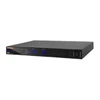
Axis 02995-001 Camera Station Pro Universal Device NVR License
Overview
The Axis 02995-001 is a software license extension for Axis Camera Station that unlocks management of third-party IP cameras and network video recorders alongside Axis-branded hardware. This approach eliminates vendor lock-in and reduces capital expenditure on equipment replacement, particularly valuable for organizations with existing camera investments or those operating mixed-vendor surveillance environments. Unlike proprietary VMS platforms that force single-brand ecosystems, the 02995-001 lets you consolidate monitoring into one management interface regardless of camera manufacturer.
Key Features
- Universal Device Support: Integrates third-party IP cameras and NVRs without requiring proprietary hardware—critical when you've already deployed cameras from multiple vendors and want to avoid rip-and-replace costs.
- Professional-Grade Management: The Pro tier designation provides advanced surveillance capabilities including coordinated multi-camera workflows, operator role-based access controls, and integration with enterprise security systems—necessary for facilities with complex security policies.
- Mixed-Brand Network Management: Consolidate Axis and non-Axis devices into a single monitoring pane, reducing operator training overhead and simplifying day-to-day operations across distributed sites.
- High-Resolution Stream Support: Handles modern high-megapixel IP cameras (4K and beyond), so you're not bottlenecked by legacy software limits when deploying newer equipment.
- Software-Based Licensing: No hardware dongle required—licensing is tied to the Camera Station installation, simplifying deployment across multiple facilities and reducing logistics complexity during system expansion.
- NVR Integration: Manage NVR-attached cameras directly from Camera Station, unifying edge-recorded and centrally-recorded streams in one operator interface—eliminates the need for multiple VMS consoles on a security desk.
Integration & Compatibility
The 02995-001 license functions as an add-on module to a base Axis Camera Station installation. Verify that your current Camera Station version supports the Pro tier before purchase; licensing is applied per installation. When deploying network video recorders with third-party cameras, confirm that target NVR models expose ONVIF or equivalent API endpoints so Camera Station can query device status and retrieve video streams. The license does not include Camera Station software itself—it extends an existing deployment. For organizations standardizing on IP cameras from mixed vendors, this license bridges the gap between equipment choices and centralized management, reducing the total cost of ownership versus purchasing separate VMS instances per brand.
Typical Deployment Scenarios
- Enterprise Multi-Site Consolidation: Organizations with surveillance spread across 5+ locations, where each site may have installed different camera brands. The 02995-001 lets you manage all sites from a single Camera Station instance rather than maintaining separate VMS systems per vendor.
- Heterogeneous Network Upgrades: Facilities upgrading their surveillance infrastructure incrementally, replacing older Axis cameras with mixed third-party models. This license preserves investment in existing Axis infrastructure while adding new vendors to the management platform.
- Facilities with NVR-Heavy Deployments: Warehouses, manufacturing plants, or campuses where cameras feed into edge NVRs for local recording, and you want centralized viewing and event correlation across NVR boundaries without rebuilding the entire edge tier.
- Systems Integrator Multi-Brand Projects: Integrators deploying Camera Station as the management backbone for clients who standardize on third-party cameras for cost or performance reasons—this license removes the friction of a single-brand VMS.
Frequently Asked Questions
Q: Does the 02995-001 license work with all third-party IP cameras?
A: Camera Station supports cameras that expose ONVIF Profile S, Profile T, or equivalent standardized APIs. Before deploying, verify the target camera models publish their API specifications and are confirmed compatible with your Camera Station version. Most mainstream manufacturers (Hikvision, Dahua, Bosch, Hanwha, Uniview) expose standard APIs, but older or proprietary devices may not.
Q: Do I need a separate Camera Station software license for the Pro tier?
A: The 02995-001 is an add-on license. You must already own a base Axis Camera Station installation. The Pro designation is applied at the time you add this license; check your Camera Station documentation for version requirements.
Q: How many third-party devices can a single 02995-001 license support?
A: Licensing is typically per installation, not per device. Confirm channel or device limits with your Camera Station documentation or sales resources, as these can vary based on your base installation tier.
Q: Can I use this license with Camera Station on a virtual machine or cloud deployment?
A: Camera Station deployments on virtualized infrastructure are supported, but verify that your hypervisor and network configuration meet Axis performance and security requirements. The 02995-001 license itself is platform-agnostic once Camera Station is running.
Q: Does this license include recording or storage management?
A: The 02995-001 is a management license—it enables device integration and viewing. Recording and storage are handled by your NVR, edge devices, or centralized recording infrastructure. Plan storage separately.
Q: What's the typical deployment timeline for adding third-party cameras to Camera Station?
A: Once licensed, adding a device typically involves configuring credentials and network discovery in Camera Station—usually 15–30 minutes per device. Plan network testing and operator training into your project schedule.
Ted PerryPerspective based on aggregated IP Security Depot and affiliated engineering team experience.
The Axis 02995-001 (often searched as 02995 001) solves a real integration headache: organizations locked into legacy or mixed-brand camera deployments that want centralized management without wholesale equipment replacement. If you've already invested in third-party cameras or NVRs and need to consolidate monitoring into a single pane of glass, this license removes the friction of maintaining parallel VMS platforms.
Technical Highlights:
- Universal Device Integration: ONVIF-compliant third-party cameras integrate natively, eliminating vendor-specific connector plugins and reducing IT overhead when standardizing on Camera Station.
- Pro-Tier Capabilities: The Pro designation unlocks advanced multi-camera coordination, role-based operator controls, and event correlation—capabilities that justify centralization versus running separate single-brand VMS instances.
- Software-Based Licensing Model: No hardware license keys to manage or replace; the 02995-001 is applied at the installation level, simplifying license mobility across servers and reducing logistics when scaling across multiple facilities.
Deployment Considerations:
- API Dependency: Third-party device support relies on standard ONVIF exposure. Older or heavily customized devices may require vendor firmware updates to expose the necessary endpoints—plan API validation during proof-of-concept.
- Prerequisite Installation: This is an add-on license only; a base Camera Station installation is required. Confirm your base tier supports the Pro module before purchase.
- Storage Planning: The license enables management and viewing but does not include recording infrastructure. Ensure your NVRs, edge storage, or centralized recording systems have adequate capacity and retention policy aligned to your compliance requirements.
The 02995-001 is most valuable in heterogeneous enterprise environments—multi-site deployments where equipment standardization hasn't been possible, or system integrations where the customer has already committed to third-party cameras for cost or specialized features. It's a pragmatic choice for reducing operational friction rather than a 'best of everything' solution; use it when unification matters more than single-vendor optimization.