Axis 02993-001 Camera Station 5-Year Pro Universal Device License
The Axis 02993-001 is a 5-year software license for Axis Camera Station Pro — the platform layer that converts individual IP cameras and encoders into a managed surveillance system. This is not a camera; it's the management backbone. Choose this license when you're committing to centralized video operations across multiple sites or camera counts that will grow over time.
What This License Covers
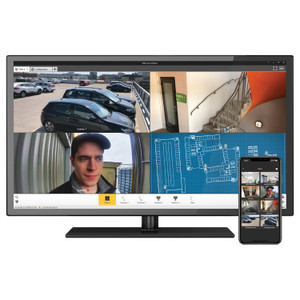
The Pro tier unlocks the full feature set of Axis Camera Station — live multi-stream viewing, forensic video search with frame-level export, integrated access control panels, and event-driven recording logic. The "Universal Device" designation means you pay once for the license, not per camera. Add ten cameras or a hundred; the 02993-001 covers them all without license reconciliation or tiered renewal costs.
The 5-year commitment front-loads cost but eliminates annual renewal overhead. On a per-year basis, this outpaces annual single-camera or small-camera-count licenses within the first two years — meaningful when budgeting multi-year security operations. You avoid vendor lock-in to annual payment cycles while maintaining the same feature access competitors offer on shorter terms.
Key Capabilities
- Universal Device Compatibility: Works with any Axis network camera, encoder, access control reader, or I/O module in your inventory. No per-device licensing tiers mean you can migrate between camera models, add recorders, or integrate third-party readers without license adjustments.
- Forensic Search & Export: Frame-accurate video retrieval with configurable export options. In investigations or incident review, this beats frame-by-frame scrubbing on live playback — search results are timestamped and logged.
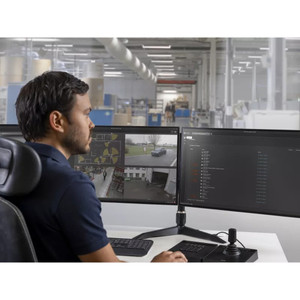
- Multi-View Live Dashboards: Display up to 16 simultaneous camera feeds on one operator console. Critical for warehouse, retail, or transport hubs where operators monitor multiple zones in parallel.
- Access Control Integration: Unified management of door readers, card holders, and entry events. When a badge swipe triggers an alarm, Camera Station correlates the card access event with video — eliminating the need to cross-reference separate systems.
- Event-Driven Recording: Record continuously on some cameras, motion-only on others, or triggered by external inputs (fence sensors, panic buttons). Reduces storage costs by recording only when risk is present, not 24/7.
- Multi-Site Deployment: One server can manage cameras and access control across branch offices, warehouses, or distributed facilities. Centralized operator interface; local failover recorders at each site if required.
Integration & Compatibility
Camera Station runs on Windows or Linux servers with moderate compute demands — a quad-core CPU and 8GB RAM is a typical baseline for 32–64 cameras. It integrates with Axis NVRs for decentralized recording or third-party storage via ONVIF. Access control integration covers Axis readers and, via gateway, third-party panels. The platform supports both direct camera IP addressing and automatic device discovery on the same subnet.
Because Camera Station is a software license, you provision it on existing server hardware or virtual machines — no vendor-locked appliance required. This flexibility matters when integrating into existing IT infrastructure or scaling across cloud-hosted environments.
When to Choose This License
If you are deploying more than 4–6 cameras, plan to retain the system for 3+ years, or need access control tied to video events, the Pro tier justifies itself in feature richness. If you are in early pilot phases with fewer than 3 cameras, consider a lower-tier or annual license first. If you need VMS features beyond Camera Station's scope — such as third-party AI metadata integration or SIEM plugins — evaluate whether Milestone XProtect or similar platforms better fit your workflow.
Licensing Term & Cost Model
The 5-year term anchors your software budget and provides upgrade stability. Axis commits to feature parity across the license term; you won't face version discontinuation mid-contract. After year 5, you renew or migrate to a successor platform — giving you time to evaluate alternatives without surprise cutoffs.
Ted PerryPerspective based on aggregated IP Security Depot and affiliated engineering team experience.
The 02993-001 (often searched as 02993 001) represents a critical inflection point in your surveillance architecture. The shift from camera-based licensing to universal device licensing eliminates the reconciliation burden — you're no longer counting cameras or managing tier boundaries as your deployment grows. The 5-year window is both a strength and a bet: you're betting that Axis's feature roadmap won't be disrupted and that your operational scope won't radically shrink.
Technical Highlights:
- No Per-Camera Licensing: Add or replace cameras without touching the license. Scales from 5 cameras to 500+ on a single server without incremental costs — a real advantage when organic growth or facility consolidation changes your footprint.
- 5-Year Cost Stability: Fixed term eliminates year-to-year pricing fluctuation and renewal negotiation overhead. Budget predictability is underrated until you're managing 20+ site renewals annually.
- Unified Access Control & Video: Correlating badge swipes with video events is native, not a plugin. Response time on suspicious access patterns drops when you don't have to manually cross-check two separate logs.
Deployment Considerations:
- Server sizing matters: Camera Station is software, not appliance-based. Ensure your infrastructure team provisions adequate CPU and storage upfront — undersizing creates bottlenecks that are harder to fix retrospectively than initial capacity planning.
- This license does not include cameras or recorders. Verify your Axis device inventory (cameras, encoders, readers) is compatible with Camera Station before purchase. Older Axis models may require firmware updates to full ONVIF compliance.
Position the 02993-001 for multi-facility deployments where centralized operator oversight, forensic search workflows, and badge-to-video correlation are operational requirements — not nice-to-have extras. It's the right choice when your security team needs to investigate incidents systematically rather than react to live alerts alone.
Frequently Asked Questions
Q: Can I use the 02993-001 license on multiple servers or sites?
A: The license terms depend on your purchase agreement. Typically, a single 02993-001 license covers one Camera Station instance (one server installation). Multi-site or redundant deployments may require multiple licenses. Verify licensing terms with your reseller or Axis directly.
Q: What happens after the 5-year term expires?
A: At expiration, your Camera Station instance remains installed but will require a new license to continue operation. Axis typically offers renewal licenses at a discount relative to new purchase. Plan upgrade or renewal 3–6 months before expiration to avoid service gaps.
Q: Does the 02993-001 include cameras or an NVR?
A: No. This is a software license only. You must separately procure Axis IP cameras, encoders, and optionally an Axis NVR or third-party storage. The license activates Camera Station on your chosen server hardware.
Q: Is this license NDAA Section 889 compliant?
A: Axis manufactures in multiple jurisdictions. Verify NDAA compliance status with your supplier or request an Axis compliance certificate before purchase if federal procurement rules apply to your organization.
Q: What's the difference between Camera Station Pro and Standard tier?
A: Pro unlocks advanced search, access control integration, and multi-view dashboards. Standard is limited to basic live viewing and recording. Pro is required for integrated security operations; Standard suits simple monitoring deployments.
Q: Can I integrate third-party cameras (non-Axis) with Camera Station?
A: Camera Station supports ONVIF-compliant cameras from other vendors, but full integration (analytics, firmware updates, edge processing) is optimized for Axis hardware. Mixed deployments work, but expect reduced feature depth on non-Axis devices.