ASUS PA90-M7021ZN ProArt Mini PC Workstation — Intel Core i7-9700K
Overview
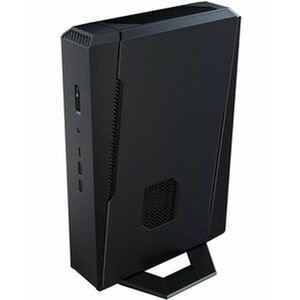
The ASUS PA90-M7021ZN is a compact workstation-class PC built around Intel's 9th-generation Core i7-9700K processor — an 8-core, 8-thread chip that boosts to 4.9 GHz. In the ProArt PA90 form factor, ASUS targets creative professionals and technical workstation users who need desktop-grade compute in a smaller chassis footprint without moving to a full tower. At 26.05 lb and 19.00 × 10.80 × 20.10 in, the PA90 is substantial — this is not an ultra-small-form-factor box, but a proper workstation that happens to skip the full ATX tower. If your deployment requires a processor with real sustained multi-threaded throughput and you're evaluating the PA90-M7021ZN (often searched as PA90 M7021ZN) against traditional towers, the processor spec alone is worth the conversation.
Key Features
- Intel Core i7-9700K — 8 Cores / 8 Threads at 3.6 GHz Base, 4.9 GHz Boost: The Coffee Lake i7-9700K delivers 8 physical cores without hyperthreading — each core gets its own execution resources, which translates to predictable, low-latency performance on parallel compute tasks. The 4.9 GHz single-core boost matters for single-threaded workloads like video timeline scrubbing or software rendering passes that don't scale across all cores. This is a processor you'd find in a capable workstation from this generation.
- 12 MB Intel Smart Cache: The 12 MB shared L3 cache reduces main-memory round-trips on data-intensive workloads. For applications that repeatedly reference the same datasets — simulation loops, image processing pipelines, or analytics engines — cache depth at this level keeps throughput from stalling at the memory bus. That matters more than clock speed alone when the working dataset fits in L3.
- 95 W TDP with 100 °C Tjunction: The i7-9700K carries a 95 W thermal design power envelope, which means the PA90's cooling system is engineered for sustained high-load operation without throttling. The 100 °C Tjunction ceiling is standard for this processor family — the chassis must manage that heat budget under continuous load, which is relevant if you're running the machine in a rack-adjacent or poorly ventilated enclosure.
- PCIe 3.0 x16 Slot Support: With PCIe 3.0 and up to 16 lanes available, the PA90 can accommodate a full-bandwidth discrete GPU or high-speed PCIe storage card without a bottleneck at the interface. For workloads that offload compute to a GPU — graphics rendering, inference acceleration, or video transcoding — the x16 PCIe 3.0 link provides the bandwidth headroom those cards need.
- 64-Bit Operating Mode: The i7-9700K runs exclusively in 64-bit mode, supporting current 64-bit operating systems and applications without limitation. This is baseline for any workstation deployment today, but worth confirming for legacy environment compatibility checks.
- 8 GT/s System Bus Rate: The 8 GT/s DMI interconnect between the processor and chipset provides sufficient throughput for concurrent I/O across storage, USB, and network interfaces without creating a chipset bottleneck under mixed workloads.
- 26.05 lb / 19.00 × 10.80 × 20.10 in Form Factor: At just over 26 pounds and with a footprint under 11 inches wide, the PA90 fits on a desk or workstation cart without dominating the space the way a full tower would. The height at 20.10 inches accommodates the internal cooling required for a 95 W processor — plan vertical clearance accordingly if deploying under a desk or in a credenza.
Integration and Compatibility
The i7-9700K's 9th-generation architecture is compatible with mainstream 300-series Intel chipsets and supports standard DDR4 memory. PCIe 3.0 x16 compatibility means the PA90 pairs with a wide range of professional discrete graphics cards and NVMe storage solutions available at the time of this platform generation. For software environments, the 64-bit processor with 8 GT/s bus rate integrates cleanly into Windows and Linux workstation deployments. Buyers evaluating this unit for workstation deployments alongside server-class hardware should note the i7-9700K is a client-class processor — DRAM channel count and ECC memory support differ from Xeon-based alternatives in the same form factor class. Review your VMS or compute application's memory requirements before finalizing the configuration. For security operations centers or NVR-adjacent workstation builds, the PCIe slot availability is relevant for capture cards or GPU-accelerated decoding.
Frequently Asked Questions
Q: What processor does the ASUS PA90-M7021ZN use?
A: The PA90-M7021ZN is equipped with an Intel Core i7-9700K — a 9th-generation (Coffee Lake) 8-core, 8-thread processor running at 3.6 GHz base and boosting to 4.9 GHz, with a 12 MB Smart Cache and 95 W TDP.
Q: How large is the PA90-M7021ZN and how much does it weigh?
A: The PA90-M7021ZN measures 19.00 × 10.80 × 20.10 inches (L × W × H) and weighs 26.05 lb. Plan for adequate vertical clearance if deploying in a constrained space.
Q: What PCIe slot configuration does the PA90-M7021ZN support?
A: The system supports PCIe 3.0 with up to 16 lanes, accommodating full-bandwidth discrete GPUs or high-speed PCIe storage cards without an interface bottleneck.
Q: Is the i7-9700K in the PA90-M7021ZN suitable for multi-threaded workloads?
A: Yes — the i7-9700K provides 8 physical cores each with dedicated execution resources (no hyperthreading), which delivers consistent parallel throughput for compute-intensive workloads. The 4.9 GHz boost clock also benefits single-threaded tasks.
Q: Does the PA90-M7021ZN support ECC memory?
A: ECC memory support is not confirmed in the available evidence for this unit. The i7-9700K is a client-class processor and does not natively support ECC — buyers requiring error-correcting memory should evaluate Xeon-based workstation platforms instead.
The PA90-M7021ZN sits in an interesting spot: it's a workstation-class machine built around the i7-9700K's 4.9 GHz boost ceiling in a chassis that weighs 26 lb and stands just over 20 inches tall — not a tower, but not a slim-line either. Where I'd deploy this is in a production workstation role where a tower is overkill on floor space but you still need full PCIe 3.0 x16 bandwidth for a discrete GPU or capture card.
Technical Highlights:
- 4.9 GHz Boost / 8 Physical Cores: The i7-9700K's 95 W TDP at this clock rate means the PA90's cooling has real work to do — sustained all-core loads will push the system hard. The 100 °C Tjunction ceiling gives some headroom, but ambient temperature in your install environment matters.
- 12 MB Smart Cache: On workloads with moderate working-set sizes — think video decode pipelines or per-frame analytics — 12 MB of shared L3 keeps the processor fed without stalling on DDR4 latency cycles. This is where the i7-9700K punches above entry-level Xeon alternatives from the same era.
- PCIe 3.0 x16 Availability: Full x16 bandwidth means you're not compromising a GPU or NVMe RAID card with a bifurcated or reduced-lane slot. That's a real consideration when speccing GPU-accelerated video analytics workstations.
Deployment Considerations:
- At 26.05 lb and 19 × 10.8 × 20.1 inches, the PA90-M7021ZN needs a dedicated, stable surface — it won't fit in a standard 1U or 2U rack shelf without a custom tray, and it's too heavy for a typical wall-mount bracket.
- The i7-9700K does not support ECC memory — if your workload involves financial data processing, long-running simulations, or any application where silent memory errors are a reliability risk, this is the platform to disqualify early rather than discover post-deployment.
For a security operations workstation running GPU-accelerated VMS client software across multiple high-resolution streams, the PA90-M7021ZN's PCIe 3.0 x16 slot and 4.9 GHz boost clock make it a viable desk-side decode station — particularly where a full tower is impractical and a slim-line PC lacks the expansion slot you need.