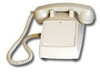
Viking Electronics K-1900-D2-ASH Ash Hot-Line Desk Phone
Overview
The Viking Electronics K-1900-D2-ASH is a telephone-line-powered hot-line desk phone built for environments where a single-button emergency or direct-dial connection is non-negotiable — guard stations, elevator lobbies, server rooms, and industrial control areas where staff need an always-ready voice link without hunting for a dial tone or a power outlet. The K-1900-D2-ASH (often searched as K 1900 D2 ASH) draws power directly from the telephone line at a minimum of 20V DC/18mA, so it stays operational even during a facility power failure as long as the PSTN or on-premises PBX loop current is live.
Key Features
- Telephone Line Powered (20V DC / 18mA min): No wall adapter, no power brick, no outlet required. The phone draws everything it needs from the loop, which means it keeps working during a local power outage — a critical attribute for emergency and life-safety installations where powered-down intercoms are a liability.
- 1–32 Digit Programmable Speed Dial with Non-Volatile Memory: Speed dial survives power loss without reprogramming — non-volatile memory retains the number across outages. A single stored number turns this into a true hot-line; lift the handset and it dials automatically. Supports up to 32 digits for extensions routed through long dial strings or access codes.
- Hearing Aid Compatible Amplified Handset: Meets hearing aid compatibility requirements, reducing friction for ADA-sensitive deployments in public spaces or government facilities where compliance is a procurement requirement rather than a preference.
- Rotary Handset Volume Control: Field-adjustable receive volume without menus or programming. Useful in noisy mechanical rooms or warehouses where ambient levels shift by shift.
- Dual Dialing Speed — Normal (120ms tones / 10 pps) and Fast (50ms tones / 20 pps): Fast mode trims post-dial delay on PBX systems that accept accelerated DTMF, reducing connect time in high-traffic dispatch or security-desk applications.
- Ash Color Option: The K-1900-D2-ASH ships in ash (light grey), blending into office and corridor environments where the red variant would create visual noise. Red (K-1900-D2) is available if color-coded emergency signaling is required.
- Operating Range 0°C to 32°C (32°F to 90°F), 5–95% RH Non-Condensing: Rated for standard indoor environments — not designed for unheated enclosures or outdoor exposure. Confirm ambient conditions before specifying for mechanical rooms that run cold.
- Compact Desktop Footprint — 9.0" x 8.25" x 4.75": Fits a standard desk corner or shelf bracket without encroaching on workspace. Ships at 3 lbs, light enough for surface-mount or desk pedestals without additional reinforcement.
Integration & Compatibility
The K-1900-D2-ASH connects to any analog telephone line or FXS port — PSTN, PBX analog extension, or VoIP ATA. No special configuration is required on the line side beyond adequate loop current (20V DC minimum). For Viking Electronics multi-phone installations, the hot-line feature pairs cleanly with analog trunk groups. If your facility runs a VoIP phone system, provision an FXS adapter with sufficient loop current output; some ATAs run low and may not reliably power the handset amplifier. Verify loop current spec on the ATA before deploying in quantity. This phone does not support SIP natively — it is an analog device.
Frequently Asked Questions
Q: Does the K-1900-D2-ASH require an external power supply?
A: No. It is fully telephone line powered, drawing a minimum of 20V DC at 18mA from the analog loop. No wall adapter or PoE is involved.
Q: Will the speed dial number survive a power outage?
A: Yes. The phone uses non-volatile memory, so the programmed speed dial number is retained even when line power is lost.
Q: What is the maximum speed dial length?
A: Up to 32 digits, which accommodates extensions with long access codes or international dial strings.
Q: Is the K-1900-D2-ASH compatible with VoIP or SIP systems?
A: It connects to any analog FXS port, including those on VoIP ATAs, as long as the adapter provides at least 20V DC loop current. It does not support SIP natively.
Q: What is the warranty on this phone?
A: Viking Electronics covers the K-1900-D2-ASH with a two-year limited manufacturer warranty.
Q: Can this phone be wall mounted?
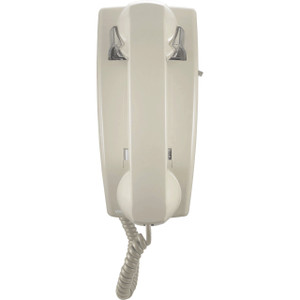
A: The K-1900-D2-ASH is the desk model. Viking offers the K-1900-W-2-ASH as the wall-mount variant in the same series if surface mounting is required.
The K-1900-D2-ASH earns its place in life-safety and security-desk deployments specifically because of one spec most buyers overlook: the non-volatile memory. Every analog hot-line phone I've seen specified for elevator lobbies or guard booths eventually loses its programmed number after a power event — not the Viking. That retained speed dial is the difference between a phone that works at 2 a.m. after a power blip and one that needs a technician visit before it's useful again.
Technical Highlights:
- Line Power at 20V DC / 18mA: Eliminates the power-supply failure mode entirely. On a live PSTN or PBX loop, this phone has no external dependency — meaningful in facilities where outlet availability near the installation point isn't guaranteed.
- Dual Dialing Speed (120ms normal / 50ms fast): Fast mode at 50ms tones / 20 pps noticeably reduces post-dial delay on modern PBXs. Worth enabling in dispatch or security-desk installs where repeated calls add up.
- Hearing Aid Compatible Amplified Handset: Not just a compliance checkbox — the amplified receive side is genuinely useful in mechanical rooms and lobbies where ambient noise competes with the earpiece.
Deployment Considerations:
- Operating temperature tops out at 32°C (90°F) — verify that mechanical rooms, server closets, or industrial spaces stay within this ceiling before specifying. This is an indoor-rated phone, not a hardened unit.
- If deploying behind a VoIP ATA, validate that the FXS port delivers at least 20V DC loop current under load. Budget ATAs sometimes fall short, which causes intermittent amplifier drop-out that is difficult to diagnose after installation.
The K-1900-D2-ASH is the right call for emergency and direct-dial analog phone applications — elevator lobbies, stairwell enclosures, guard stations, and access control entry points — where power independence and a retained dial number matter more than feature count.