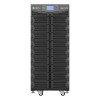
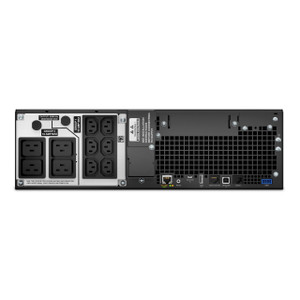
Vertiv AS3A0NCUGNNXLKB Lithium-Ion Rack/Tower Double Conversion UPS
Overview
The Vertiv AS3A0NCUGNNXLKB is a 4.5kW double-conversion UPS built for environments where battery chemistry matters as much as runtime. Leveraging LiFePO₄ lithium-ion technology rather than traditional VRLA, this rack/tower unit delivers a projected service life of up to 10 years — roughly double the replacement cycle of lead-acid alternatives — while running on 208/120VAC input. If you're managing a dense server room, a telecom edge site, or a video surveillance infrastructure that can't afford scheduled battery swaps every three to four years, the AS3A0NCUGNNXLKB is worth a hard look.
Key Features
- LiFePO₄ Lithium-Ion Chemistry: Lithium iron phosphate is the safest lithium chemistry available — it doesn't enter thermal runaway the way NMC or NCA cells can. For enclosed rack environments and telecom closets where ventilation is limited, this directly reduces fire risk without requiring active cooling infrastructure around the battery.
- Up to 10-Year Service Life: VRLA batteries in a 4–5kW UPS typically need replacement at 3–5 years under normal operating conditions. The AS3A0NCUGNNXLKB's rated service life of up to 10 years cuts battery replacement labor and disposal costs by roughly half over a decade — a genuine TCO advantage for multi-site deployments where truck rolls are expensive.
- Sub-4.5-Hour Recharge Time: Recharging to full in under 4.5 hours means a second power event within the same shift doesn't find you unprotected. For data centers with frequent utility fluctuations or sites in storm-prone regions, fast recharge is the difference between a backup system and a single-use buffer.
- Advanced BMS with Cell-Level Monitoring: The onboard battery management system tracks individual cell health, not just string voltage. This means degraded cells are identified before they become a capacity problem — you get actionable warnings rather than discovering a bad battery during an actual outage.
- Better Performance in Higher Temperatures: VRLA batteries derate significantly above 25°C; every 8–10°C rise above ambient roughly halves their service life. Lithium-ion chemistry in the AS3A0NCUGNNXLKB tolerates elevated temperatures with far less degradation — directly relevant for edge deployments, outdoor-rated enclosures, or server rooms running warm.
- ~46 lbs per Battery String: At roughly 46 lbs per battery string, the weight delta versus comparable VRLA configurations is meaningful for high-density rack builds. Lighter battery strings reduce floor-load requirements and simplify maintenance pulls in standard 2-post or 4-post racks.
- Double-Conversion Topology: Double conversion means the load runs on clean, inverter-generated AC at all times — utility power never passes directly to connected equipment. Voltage sags, surges, harmonics, and frequency variations are all isolated. This is the correct topology for sensitive computing, storage arrays, and network infrastructure where even momentary power aberrations cause errors or resets.
- Minimal Maintenance Profile: Compared to VRLA-based systems that require periodic capacity testing, float-voltage checks, and scheduled replacements, the AS3A0NCUGNNXLKB's lithium chemistry combined with cell-level BMS monitoring substantially reduces ongoing maintenance overhead — valuable in unmanned or remotely managed sites.
- Lower Lifecycle Cost: When you factor in fewer battery replacements, reduced maintenance visits, and the longer service interval, the total cost of ownership over a 10-year horizon is lower than a comparable VRLA unit even if the upfront cost is higher.
- 5-Year Warranty (UPS + Batteries): The warranty covers both the UPS electronics and the battery pack for 5 years. This is worth noting because battery warranties on VRLA-based systems are typically shorter and often prorated — a full 5-year coverage on both components is a concrete differentiator.
Integration and Compatibility
The AS3A0NCUGNNXLKB operates on 208/120VAC and supports both rack and tower form factors, making it adaptable across standard data center rack rows and standalone equipment rooms. The double-conversion architecture is VMS-agnostic — any IP camera system, NVR array, or network switch drawing from its output receives regulated AC regardless of what's happening upstream. For surveillance-specific deployments, pair this UPS with a PoE switch on the protected output to ensure cameras and access control hardware stay online through utility interruptions. For broader infrastructure planning, explore the full Vertiv power protection lineup or review the UPS and power protection category for runtime and capacity comparisons across the portfolio. Organizations evaluating runtime extensions should also consult the UPS selection guide for guidance on matching capacity, topology, and battery chemistry to load profiles.
Frequently Asked Questions
Q: What is the battery chemistry used in the AS3A0NCUGNNXLKB, and why does it matter?
A: The AS3A0NCUGNNXLKB uses LiFePO₄ (lithium iron phosphate) chemistry. This is important because LiFePO₄ is thermally stable and does not enter thermal runaway under fault conditions — a meaningful safety advantage in enclosed rack environments compared to other lithium chemistries or traditional VRLA.
Q: How long does the battery take to recharge after a discharge event?
A: Recharge time is under 4.5 hours, meaning the unit is back to full capacity within a half-shift after a power event.
Q: What is the warranty on the AS3A0NCUGNNXLKB?
A: Vertiv provides a 5-year warranty covering both the UPS unit and the battery pack.
Q: How does the service life of this UPS compare to a standard VRLA-based unit?
A: The AS3A0NCUGNNXLKB is rated for up to 10 years of service life. Standard VRLA UPS batteries typically require replacement every 3–5 years, so this unit can eliminate one or two full battery replacement cycles over a 10-year deployment.
Q: Is this UPS suitable for hot or poorly ventilated equipment rooms?
A: Yes. Lithium-ion chemistry performs better at elevated temperatures compared to VRLA, which degrades rapidly above 25°C. This makes the AS3A0NCUGNNXLKB a better fit for edge sites, telecom closets, and server rooms running above ideal ambient temperatures.
Q: What does the cell-level battery management system actually monitor?
A: The advanced BMS tracks individual cell health within each battery string, not just aggregate string voltage. This allows early detection of degraded cells before they impact capacity or trigger an unexpected failure during an outage.
The spec I keep coming back to on the AS3A0NCUGNNXLKB is that 5-year warranty covering both the UPS electronics and the battery pack together — that's the financial commitment that usually separates a genuine lithium product from a VRLA unit with a lithium marketing badge. Combined with the up-to-10-year service life rating, this is a unit you can budget for once and not revisit for a full capital planning cycle.
Technical Highlights:
- LiFePO₄ Chemistry: Thermal stability without active cooling requirements — in rack environments where you're already managing heat density, not adding a thermal runaway risk to the power layer is a real architectural win.
- Sub-4.5-Hour Recharge: Fast enough to handle back-to-back utility events within the same operational window. For sites that see afternoon thunderstorm sequences or rolling brownouts, this recharge rate keeps the backup posture intact.
- Cell-Level BMS: String-level voltage monitoring is a lagging indicator — by the time a string reads low, you've already lost capacity. Cell-level monitoring catches individual cell degradation early, which is the actual maintenance advantage of this architecture over conventional VRLA systems.
Deployment Considerations:
- At approximately 46 lbs per battery string, verify your rack's weight rating before installation — lithium is lighter than equivalent VRLA capacity, but dense rack configurations still need floor-load validation, especially in older facilities.
- Double-conversion topology draws from the utility continuously to maintain the inverter — budget for the associated heat output in your room cooling calculations, particularly in edge or telecom closet deployments where BTU budgets are tight.
This unit is well-matched to multi-camera surveillance infrastructure in edge locations — remote retail sites, transit hubs, parking structures — where battery replacement truck rolls are genuinely expensive and the equipment room runs warm. The 10-year service life changes the maintenance calculus for those deployments in a way that a standard VRLA unit simply can't match.