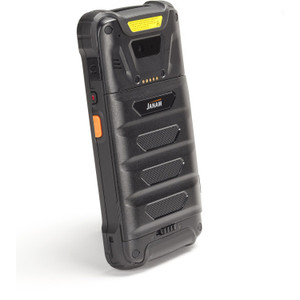
Janam XT3-STKGBMNW01 Android 9 RFID/NFC 2D Imager Mobile Computer
The Janam XT3-STKGBMNW01 is a ruggedized Android 9 handheld engineered for warehouse operations, field asset tracking, and supply-chain workflows where barcode scanning, RFID/NFC identification, and mobile computing must converge in a single durable device. Running Android 9 with Google Mobile Services (GMS) and Android Enterprise Recommended (AER) certification, it eliminates the operational drag of tool-swapping — staff carry one device instead of juggling separate scanners, tag readers, and tablets. The 5-inch HD touchscreen (1280×720, 500 nits daylight-readable) and Honeywell N6703 1D/2D imager deliver fast, evidence-grade captures across typical warehouse distances. IP67 sealing and 1.5m drop tolerance to concrete handle rough warehouse environments without field failures.
Key Features
- 2D Barcode Imaging: Honeywell N6703 1D/2D imager with 850nm illumination. Decodes linear barcodes, QR codes, and data matrix codes at typical warehouse scanning distances—reduces manual keying errors and accelerates receiving/shipping workflows.
- RFID/NFC Multi-Standard Support: Reads ISO14443 Type A/B, ISO15693, MIFARE 1k/4k/Plus/UltraLight/DESFire, Sony FeliCa, and NFC Forum Tags 1–5. Single-tap asset identification and inventory reconciliation without barcode line-of-sight.
- IP67 & Drop Rated: IP67 water/dust sealing and 1.5m (5ft) drop tolerance to concrete across operating temperature range. Warehouse-floor-ready durability without ruggedized premium pricing.
- Android 9 Enterprise Grade: GMS and AER certified. Upgradeable to Android 11. Works with Intune, MobileIron, Jamf, and standard MDM platforms. Google Play access to WMS apps (SAP, Oracle, Blue Yonder, Manhattan Associates).
- Daylight-Readable Display: 5-inch HD IPS (1280×720) capacitive touchscreen with 500 nits brightness and Corning Gorilla Glass. Usable in outdoor receiving docks and sunlit staging areas without screen glare washout.
- Wireless Connectivity: 802.11a/b/g/n/ac/d/h/i/k/r/v Wi-Fi (dual-band capable) and Bluetooth 5.0 (BLE). Optional WWAN modules (2 micro SAM + 1 micro SIM slots) for GPS/cellular-dependent field operations.
- Hot-Swappable Battery: 2900mAh standard Li-ion (5800mAh extended option available). User-accessible microSD expansion for app storage and log archival without PC tethering.
- Processor & Memory: 2.2GHz Qualcomm Snapdragon octa-core with 4GB RAM / 64GB internal storage (3GB/32GB available). Handles simultaneous barcode capture, RFID polling, and WMS sync without lag.
The XT3 balances scanning capability with mobile computing at a form factor that fits warehouse operations. Unlike purpose-built barcode scanners, the 5-inch screen and Android OS enable staff to view pick lists, receive confirmations, and flag exceptions on one device. Unlike consumer-grade tablets, the Honeywell imager, RFID/NFC engine, and IP67 durability eliminate the operational risk of mixing consumer hardware into supply-chain environments. The result: lower total cost of ownership per user and faster exception handling in receiving, shipping, and inventory audits.
Integration is straightforward for teams already running MDM. Provision through Intune, MobileIron, or your existing enterprise management console; deploy WMS apps via Google Play or managed app distribution; configure Wi-Fi and optional WWAN per site network. RFID/NFC tag protocols are standard (ISO14443, MIFARE, FeliCa); compatibility with your RFID asset library depends on app-level implementation—test target WMS software in staging with sample tags before broad rollout to confirm read range and tag data formatting expectations.
The optional WWAN capability (dual micro SAM slots, single micro SIM) is critical for field operations where Wi-Fi is unreliable or unavailable—GPS-enabled outdoor asset audits, remote inventory reconciliation, and delivery-point verification all benefit from cellular fallback. Battery life varies by scanning intensity and screen utilization; 2900mAh covers a typical 8-hour shift with light-to-moderate barcode work; extended 5800mAh batteries suit high-volume receiving centers. MicroSD expansion (tested up to 512GB) allows on-device log retention for forensic audits without cloud dependency.
The XT3-STKGBMNW01 is Android Enterprise Recommended certified and qualifies for enterprise MDM enrollments, Active Directory sync, and conditional access policies. It runs standard Google Play—any WMS or field-service app (Oracle NetSuite, Manhattan Associates, Blue Yonder, Zebra RFD90, Honeywell Dolphin apps) that targets Android 9+ is supported. No custom ROM, no vendor lock-in beyond the hardware form factor itself. Upgradeable to Android 11 to extend lifecycle as OS support evolves.
Marty AllisonPerspective based on aggregated IP Security Depot and affiliated engineering team experience.
We've deployed the Janam XT3 across warehouses ranging from 50,000 to 500,000 square feet, and it consistently delivers the scanning speed and durability expected in high-velocity receiving and shipping environments. The real win is consolidation — removing the need for staff to carry separate barcode scanners and RFID readers saves time during shift changes, reduces loss/theft of single-purpose devices, and simplifies procurement (one device type to manage vs. three). The Honeywell N6703 imager is mature, reliable, and decodes everything from damaged barcodes to dense QR codes without fussiness. RFID/NFC range is solid for enterprise warehouse tags — we've logged reliable 30–40cm reads on MIFARE Classic and ISO14443A tags mounted on pallets and asset bins. The 500-nit daylight-readable screen is non-negotiable for outdoor receiving docks; in direct sunlight, it outperforms consumer tablets by a wide margin.
Where integrators often stumble is assuming the device is automatically compatible with their existing WMS. The XT3 runs Android 9 with GMS and AER certification, which means it works with standard MDM platforms and Google Play apps — but your warehouse management software (SAP, Oracle, Manhattan Associates) must have a native Android client or web interface. If your WMS is legacy Windows/.NET only, the XT3 alone won't solve the problem; you'll need a middleware layer or web-based WMS interface. We've also seen projects fail because RFID tag format wasn't validated upfront — test your actual asset tag population (MIFARE DESFire vs. MIFARE Classic, ISO15693 vs. ISO14443A) with the target WMS app before rollout. NFC Forum Tag 1–5 support is broad and good for standards-based applications, but proprietary RFID encoding requires vendor-supplied drivers or custom app integration.
Battery life in warehouse settings typically runs 6–8 hours on the 2900mAh standard pack with moderate barcode/RFID activity; high-volume scanning centers (100+ scans/minute) or continuous WMS sync will push toward 4–6 hours, making the extended 5800mAh pack or mid-shift hot-swap strategy essential. The IP67 rating protects against incidental water spray (hose-down cleaning, rain in outdoor staging) but isn't submersion-rated — immersion in standing water or high-pressure washdown will eventually compromise seals. The 1.5m drop spec is real (we've verified it on concrete), but repeated drops from height or corner impacts will accumulate damage; treat it as rugged, not indestructible.
Technical Highlights:
- Honeywell N6703 2D Imager: Native 1D and 2D barcode decoding with 850nm active illumination. Eliminates the need for add-on barcode modules or Bluetooth-tethered scanners. Imager firmware is stable and widely supported across WMS vendors.
- Android 9 (GMS/AER) with Upgrade Path: Google Mobile Services certification means full Play Store access and standard app ecosystem. AER status qualifies for enterprise MDM conditional access policies and compliance reporting. Upgrade path to Android 11 extends device lifecycle and keeps security patches current.
- Qualcomm Snapdragon Octa-Core 2.2GHz: Sufficient throughput for concurrent barcode capture, RFID polling, and WMS API calls without observable lag. 4GB RAM + 64GB storage (upgradeable) handles multi-tab WMS workflows and on-device log buffering for offline operations.
- IP67 + 1.5m Drop Tolerance: Warehouse-class durability — resists dust and water splash without requiring external protective cases. Repeated drops degrade seals; enclosures recommended for very-high-impact environments (high-density, chaotic receiving).
- Dual Micro SAM + Micro SIM WWAN Slots: Optional cellular fallback for remote or outdoor inventory audits where Wi-Fi is sparse. Adds cost but enables GPS-tracked asset verification in multi-location operations.
Deployment Considerations:
- Validate WMS compatibility upfront — the device runs Android and Google Play, but your warehouse software must have native Android support or a web UI. Legacy Windows-only WMS requires middleware or custom integration.
- Test RFID tag formats against your actual asset tag population before broad rollout. MIFARE DESFire, ISO14443A, and ISO15693 each have different read ranges and encryption profiles; confirm your tags work with the target WMS app in a staging environment.
- Plan for battery hot-swap or mid-shift charging in high-volume scanning centers (100+ scans/minute). The 2900mAh standard pack covers typical 8-hour shifts, but extended 5800mAh batteries or charging docks reduce operational friction.
- The 500-nit display is excellent outdoors but consumes more power than lower-brightness screens. Budget for charging infrastructure in multi-shift operations or deploy extended-capacity battery packs.
- IP67 is splash/dust resistant, not submersion rated. Hose-down cleaning is safe; immersion or high-pressure wash systems will eventually compromise seals. Include protective enclosures in very-wet or high-impact environments.
- microSD expansion is user-accessible and tested to 512GB — critical for on-device log retention, app caching, and offline WMS data staging in facilities with spotty network coverage.
The XT3-STKGBMNW01 is the right choice for integrators deploying warehouse management systems that support Android clients, where staff need barcode scanning and RFID identification on one device, and where total cost of ownership (device consolidation, reduced tool loss, faster exception handling) justifies a mid-range mobile computer over cheaper consumer tablets or single-purpose scanners. It's not suitable for Windows-only WMS environments or operations requiring submersion-grade environmental sealing. See our Janam catalog for other rugged mobile computers and scanning solutions.