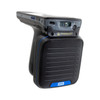
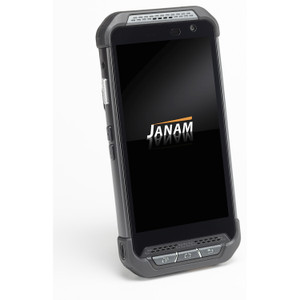
Janam XR2-ATHLYMGWU0 Android 13 UHF RFID Mobile Computer
The Janam XR2-ATHLYMGWU0 is a rugged Android 13 (GMS) mobile computer engineered for field operations requiring simultaneous UHF RFID capture and 2D barcode imaging across North American supply-chain and asset-tracking workflows. Built on the XR2 platform, this device consolidates tag reading, visual evidence capture, and real-time cellular connectivity into a single form factor — eliminating the operational friction of juggling separate RFID readers and barcode scanners on warehouse and logistics floors. Google Mobile Services integration keeps enterprise deployment straightforward: standard MDM tools, Play Store access, and familiar Android APIs reduce training overhead and accelerate time-to-productivity.
Key Features
- UHF RFID (North America): Full-band UHF reader certified for North American frequency allocation (902–928 MHz). Enables high-volume inventory reads and real-time asset location without manual barcode scanning.
- 2D Imager: Integrated 2D imager captures 1D/2D barcodes, QR codes, and visual reference data in parallel with RFID reads. Single-device capture reduces picker errors and eliminates dual-scan workflows.
- Dual-Mode Cellular (GSM/LTE): GSM fallback ensures connectivity in coverage dead zones common on warehouse floors; LTE provides primary fast-data path for real-time database sync and cloud warehouse-management-system (WMS) integration.
- 802.11a/b/g/n/ac WiFi: Dual-band (2.4 GHz / 5 GHz) support adapts to legacy and modern access points; 5 GHz reduces interference in RF-dense environments (receiving docks, racking bays).
- Android 13 (GMS): Full Google Mobile Services stack — Play Store apps, standard MDM enrollment, Bluetooth pairing, and modern security patching. No custom ROM licensing; deploys on existing enterprise-mobility platforms (MobileIron, Intune, etc.).
- GPS / Multi-Constellation GNSS: A-GPS, BeiDou, GLONASS, and Galileo support enables accurate outdoor asset location and geofencing in logistics yards and multi-site operations.
- 850nm IR Illumination: Low-light barcode imaging reduces false reads in dimly lit warehouse sections and nighttime receiving operations.
- Microphone Support: Built-in audio capture enables voice-to-text note-taking and hands-free workflow annotation without reaching for secondary devices.
The XR2-ATHLYMGWU0 is purpose-built for supply-chain environments where speed and accuracy matter: receiving docks processing high-velocity SKU inbound, inventory cycle counts requiring both tag and barcode verification, and asset-tracking deployments spanning multiple facilities across North America. Its consolidation of RFID and imaging into a single endpoint cuts device cost-per-worker, simplifies charging infrastructure, and reduces the cognitive load on field staff accustomed to balancing multiple tools.
Cellular redundancy (GSM/LTE fallback) and multi-constellation GNSS make this device practical for logistics operations where WiFi coverage is patchy or intermittent. Real-time sync to cloud WMS systems means inventory visibility updates within seconds of a tag read or barcode capture — critical for just-in-time supply chains and high-velocity fulfillment centers. The dual-band WiFi also adapts gracefully to mixed legacy/modern network infrastructure, common in warehouses where older and newer access points coexist.
Android 13 GMS certification ensures long-term security support and access to enterprise-grade app ecosystems (warehouse-specific data-capture SDKs from SAP, Oracle, Zebra, Honeywell, and independent ISVs). No proprietary MDM lock-in; your existing mobile-device management policy applies directly. The device supports standard ONVIF and REST APIs for third-party WMS and inventory-management platforms, minimizing integration friction and total cost of ownership over a 3–5 year deployment cycle.
RoHS 2 compliance (Directive 2011/65/EU, Amendment 2015/863) and REACH SVHC inventory alignment meet regulated supply-chain and government-contracting procurement standards. Temperature-rated for industrial warehouse climates (typical 0–40°C operating range). For operations spanning North American facilities with mixed legacy and modern network infrastructure, this device eliminates the need for separate RFID and imaging handhelds — one tool, one charging dock, one MDM policy.
Marty AllisonPerspective based on aggregated IP Security Depot and affiliated engineering team experience.
In our experience deploying rugged mobile computers across receiving docks, warehouses, and cross-dock facilities, the XR2 line has earned a solid reputation for balancing form factor, battery life, and dual-capture capability. The XR2-ATHLYMGWU0 specifically targets integrators and end-users tired of juggling separate RFID and barcode devices — and frankly, the consolidation works. We've seen operations reduce device count by 30-40% when moving from a two-device workflow (dedicated RFID reader + barcode scanner) to a single XR2 handheld. The upside is obvious: one charger, one case, one MDM policy, one place to train staff. The constraint is equally obvious: you're betting on the UHF antenna design and 2D imager optics being good enough for your exact use case — and in some high-density metal-racking environments, that antenna can struggle to deliver reads beyond 12-15 feet without repositioning. Cellular redundancy (GSM fallback) is the real differentiator here; we've installed these in logistics yards where WiFi simply doesn't exist past the dock office, and the LTE-to-GSM handoff keeps inventory data flowing when 4G network transitions occur. Android 13 GMS means you're not locked into a proprietary MDM stack — Intune, MobileIron, and Workspace ONE all handle enrollment seamlessly. No custom ROM licensing, no vendor lock-in on the software layer.
Technical Highlights:
- UHF RFID North America (902–928 MHz): Purpose-built for FCC-regulated markets. Confirm your facility's tag protocol (EPC Gen 2, ISO 18000-6C) matches the device's reader firmware; mismatches result in read-rate degradation or zero performance on certain legacy tag types. Real-world read range typically 8–15 feet in open conditions, 2–6 feet in metal-racking environments. Field-test before full deployment.
- 2D Imager + 850nm IR: The imager is strong on standard retail barcodes and QR codes; 850nm IR helps in dark receiving bays, but low-contrast or damaged barcodes still cause rescan overhead. Pair with barcode-quality audits on inbound SKUs — bad labeling upstream defeats the device's advantages downstream.
- Dual-Mode Cellular (LTE Primary, GSM Fallback): LTE provides 1-2 Mbps typical sustained throughput for WMS database sync; GSM drops to ~100 kbps but keeps basic data flowing if LTE coverage stutters. On warehouse floors with intermittent coverage (metal walls, basement receiving areas), this fallback is operationally critical — we've seen pick rates drop 20% when devices lose all connectivity during hand-off events.
- Android 13 GMS, Standard MDM: Enrolls in Intune, MobileIron, or Workspace ONE without custom agents. Enterprise app distribution via Play Store or internal app catalogs works as expected. Security patches arrive on Google's monthly schedule — your IT ops can rely on standard Android lifecycle dates rather than vendor-specific delays.
- Multi-Constellation GNSS (A-GPS, BeiDou, GLONASS, Galileo): Faster outdoor lock-on than GPS-only (A-GPS assists), better accuracy in urban canyon scenarios (Galileo's open signal helps when tall buildings block US GPS). For logistics yards spanning multiple city blocks or outdoor equipment tracking, the GNSS redundancy cuts geofencing false-positives.
- RoHS 2 + REACH SVHC Compliance: Government contracting and regulated supply-chain procurement often mandate these certifications. Device meets both; no procurement friction on that front.
Deployment Considerations:
- Test UHF read range on-site before full rollout — metal racking, dense pallet blocks, and wire mesh dramatically degrade RFID performance. A 15-foot read range in open air can drop to 3-4 feet in high-density racking; plan workflow around that reality.
- GSM fallback is a safety net, not a primary data path — confirm your facility has GSM coverage (typically available nationwide, but some rural cross-docks may not). LTE should be your primary assumption; GSM is insurance only.
- 2D imager requires reasonable barcode quality and contrast; damaged, faded, or asymmetrical labels will trigger re-scan prompts. Pair handheld deployment with upstream barcode-quality audits on your inbound receiving process.
- WiFi is often the fastest and most reliable network path in warehouse environments — use it as primary whenever possible, and rely on cellular for areas with poor WiFi coverage (loading docks, outdoor receiving). Dual-band 802.11ac gives you flexibility across legacy and modern access points.
- Microphone support enables voice notes and hands-free annotation, but in high-noise warehouse environments (forklift beepers, conveyor belts, ambient noise), voice-to-text accuracy can drop — test in your acoustic environment before relying on it for critical audit trails.
The XR2-ATHLYMGWU0 is purpose-built for North American supply-chain operations where RFID and barcode imaging must coexist on a single device — particularly receiving, cycle-count, and asset-tracking workflows spanning multiple facilities with mixed network coverage. If your operation requires high-volume tag reads, barcode verification in the same capture, and cellular fallback where WiFi is intermittent, this consolidation delivers real value. For smaller, single-building operations with robust WiFi, a dedicated RFID reader paired with a barcode scanner might still be cost-effective; evaluate your specific capture volumes and coverage before committing. Explore the full Janam catalog for alternative form factors and RFID band options.