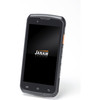
Janam XT40-ATHLRMGW00 Android 13 RFID/NFC 2D Imager Mobile Computer
The Janam XT40-ATHLRMGW00 is a ruggedized Android 13 (GMS) mobile computer purpose-built for field workers in warehouse, retail, logistics, and asset-tracking environments. The device consolidates barcode scanning (2D imager), proximity card reading (RFID/NFC), cellular connectivity (LTE/GSM), and GPS positioning into a single handheld platform, eliminating the operational overhead of managing multiple devices and streamlining data capture workflows. Whether your team needs real-time inventory updates at point-of-scan or contactless credentialing without a separate reader, the XT40 delivers both capabilities without switching tools.
Key Features
- Android 13 with Google Mobile Services (GMS): Full Google Play store access, enterprise app compatibility, and streamlined MDM enrollment via Intune, Samsung Knox, or MobileIron. Native OS support eliminates custom ROM complexity and reduces deployment friction across mixed Android environments.
- Integrated 2D Barcode Imager: Captures standard barcode formats (Code 128, UPC-A/E, Code 39, QR, DataMatrix, PDF417, Aztec) without secondary scanning hardware. Imager-based capture is faster and more reliable than camera-based barcode reading on low-light dock operations.
- RFID/NFC Capability: Supports ISO 14443 Type A/B and ISO 15693 standards for contactless card/tag reading. Enables proximity-based asset verification, employee badge authentication, and item-level tag reading without line-of-sight requirements.
- LTE/GSM/WiFi Connectivity: Multi-band cellular (LTE/GSM) with fallback to 802.11ac/b/g/n WiFi ensures connectivity across warehouse, parking lot, and outdoor environments. Bluetooth pairing for wireless peripherals (printers, external readers) follows standard Android pairing.
- Integrated GPS with Multi-GNSS: GPS, A-GPS, GLONASS, BeiDou, and Galileo support enables precise location tracking for mobile workforce management, route optimization, and geo-fenced task assignments without external positioning hardware.
- 850nm Infrared Low-Light Capability: Built-in IR illumination allows barcode and RFID tag capture in dimly lit environments (nighttime inventory, unlit storage areas) without external lighting rigs or supplemental flash units.
- MDM-Ready Security Posture: Pre-configured for enrollment in Intune, MobileIron, and Samsung Knox. Knox Vault container isolation, encrypted storage, and remote wipe capabilities meet BYOD governance and federal data-handling requirements without extensive custom configuration.
- Microphone Support: Integrated audio input enables voice-to-text data entry, hands-free communication over cellular/VoIP apps, and voice-triggered workflows for environments where manual data entry is impractical (gloved operation, high-volume picking).
The XT40 bridges the gap between consumer-grade Android and purpose-built enterprise handhelds. Unlike rugged-industrial devices that lock you into proprietary OSes and custom app ecosystems, the XT40 runs standard Android 13 with full GMS certification—your team gets access to the Google Play Store and enterprise apps designed for standard Android, not a fork. That cuts your app sourcing and maintenance burden significantly. The 2D imager + RFID/NFC combination eliminates the "two devices or one with compromises" dilemma common in retail and warehouse deployments. You capture barcodes, read proximity cards, and position workers—all on a single platform.
Connectivity spans LTE, GSM, WiFi, and Bluetooth—designed for real-world field coverage where your warehouse floor might have spotty WiFi but solid cellular, or vice versa. The multi-GNSS receiver (GPS, GLONASS, BeiDou, Galileo) gives you resilient positioning even in urban canyons or partially obstructed outdoor yards, reducing deployment risk in logistics yards where standard GPS alone can lag. The 850nm infrared imager means nighttime receiving docks and unlit storage areas don't require external lighting investment—a hidden cost savings in facilities where halogen floods were the previous workaround.
MDM enrollment is streamlined for Intune, MobileIron, and Samsung Knox—three of the most common enterprise mobile management platforms in North America. No custom Knox deployments or manual profile installation required; the device ships GMS-ready and Android Enterprise-certified. Microphone support opens hands-free workflows via voice-to-text or VoIP calling, reducing time-to-entry for workers in gloves or high-volume picking scenarios. Storage options and temperature ratings suit warehouse conditions; verify operating range against your site's environmental profile (cold storage, outdoor yard temperature swings) before large-scale deployment.
This device targets integrators and end-user teams managing field workforces that demand both speed and flexibility. If your legacy mobile inventory solution was a proprietary OS with custom APIs, the shift to Android 13 GMS eliminates vendor lock-in—you gain access to mainstream app development talent and commercial off-the-shelf enterprise solutions. The barcode + RFID bundle is particularly valuable in mixed-protocol environments (UPC inventory alongside ISO 14443 credentials or RFID asset tags), where a single-protocol device would force you to carry multiple readers or compromise capture method.
Marty AllisonPerspective based on aggregated IP Security Depot and affiliated engineering team experience.
We've deployed a lot of warehouse and retail mobility solutions, and the XT40 represents a pragmatic middle ground that many integrators overlook: it's rugged enough for daily field beating, runs a genuine Android OS (not a locked-down fork), and packs both scanning and RFID into one form factor without the feature bloat of fully industrial handhelds. The GMS certification is the real unlock here—it means you're not trapped in a proprietary app ecosystem or fighting custom ROM updates every time Google releases a security patch. Your development team, your system administrator, and your end-user community all speak "standard Android." That drastically reduces total cost of ownership on the software side, especially if you're planning a multi-year deployment. The barcode imager + RFID combination is genuinely useful in mixed environments (retail receiving where you're scanning inventory but also verifying employee badges via proximity card, or logistics yards where asset tags are RFID but packing labels are still UPC). We've seen the 2D imager significantly outperform camera-based barcode capture in low-light dock conditions—no post-processing, no "decode failures" on smudged or worn labels. The 850nm IR is quiet but effective; it doesn't blind workers or draw attention the way some imager designs do. On connectivity, the multi-GNSS receiver is overbuilt for most warehouse use, but if your client is managing outdoor logistics yards or cross-dock operations, the BeiDou/Galileo fallback gives you positioning resilience that pure GPS alone can't match. The LTE/GSM dual-band ensures you're not betting your entire operation on a single carrier's coverage—important in rural distribution centers where carrier overlap is thin.
Technical Highlights:
- 2D Imager vs. Camera-Based Barcode: Dedicated imager optics (optimized for barcode focal distance and contrast resolution) capture worn labels, damaged barcodes, and reflective/matte surfaces reliably in warehouse lighting conditions. Camera-based barcode reading requires software post-processing and often struggles with label orientation or surface gloss—you'll see fewer retry scans and faster throughput with a true imager.
- ISO 14443A/B + ISO 15693 RFID/NFC: Supports both Type A/B cards (common in corporate access control and payment terminals) and Type 15693 longer-range tags (asset tracking, inventory bins). Single radio eliminates the need to carry separate RFID and NFC readers; verify your card/tag protocol matches one of these three standards before deployment.
- Multi-GNSS (GPS/GLONASS/BeiDou/Galileo): Provides positioning resilience in environments where satellite geometry is poor (urban canyons, partial tree cover, metal-roofed warehouses). Single-satellite-constellation receivers (GPS-only) often lose lock indoors or in constrained yards; multi-GNSS keeps you positioned even when some constellations are unavailable. Real operational benefit for cross-dock or outdoor logistics workflows.
- Android 13 GMS Certification: Full Google Play Store access means you can deploy commercial off-the-shelf logistics apps (route optimization, proof-of-delivery, voice picking) without custom ROM builds or firmware forks. Each Android OS release rolls out security patches and features to GMS devices immediately—no 18-month custom certification delay.
- MDM Enrollment (Intune/Knox/MobileIron): Enterprise-grade device management without custom profiles or manual enrollment scripts. Remote wipe, app containerization (Knox Vault), conditional access, and certificate pinning are all available through your existing MDM infrastructure—no additional licensing or integration lift.
- 850nm IR Imager Light: Low-power infrared illumination allows barcode capture in unlit receiving docks or outdoor nighttime operations without external halogen floods. Infrared is invisible to human eyes, so workers don't experience discomfort or navigation issues from glare—especially useful on busy dock floors where lighting changes rapidly.
Deployment Considerations:
- Android GMS certification is a strength, but verify your enterprise app portfolio is available on Google Play Store or compatible with standard Android—some legacy warehouse systems still assume proprietary OS or custom ROM. Migration path for LTE device management (SIM provisioning, carrier contracts) should be planned 4-6 weeks before rollout if you're scaling beyond pilot.
- RFID/NFC range is typically 5-10cm for Type A/B cards in contact mode, and up to 1m for Type 15693 tags depending on antenna design. Proximity reading (no contact required) is powerful for badge verification, but placement of tags or cards in pockets/bags can reduce read success—test real-world card placement on your shop floor before full deployment.
- LTE/GSM fallback is valuable, but ensure you have carrier coverage maps and backhaul agreements in place before deployment. Warehouse areas with poor signal (metal structures, basement receiving) should be surveyed for WiFi supplementation or repeater placement—cellular connectivity alone won't solve deep indoor coverage gaps.
- Microphone support is present, but voice-to-text accuracy in noisy warehouse environments (loading dock, conveyor noise) degrades significantly. Test voice app integration in your loudest operational area before rolling out to high-volume picking crews; some teams find touchscreen data entry more reliable despite the glove penalty.
- Temperature range and ruggedization should be validated against your specific warehouse conditions (cold storage units, outdoor covered yards, humid climates). Request the full datasheet and cross-reference environmental ratings before finalizing order quantities; replacement or repair mid-deployment is expensive.
The XT40 is the right choice for teams that have outgrown consumer Android tablets but need the flexibility and cost efficiency of a mainstream OS rather than an industrial proprietary stack. If your operation spans mixed barcode + RFID/NFC protocols and you want MDM simplicity without custom ROM support costs, this device delivers. Explore the Janam catalog for complementary rugged mobile solutions and accessory options.