HPE P72653-B21 AMD EPYC 9555 Processor
Overview
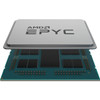
The HPE P72653-B21 is a dual-socket AMD EPYC 9555 processor delivering 64 cores per socket at 3.2GHz base frequency with a 360W thermal design power (TDP). This is a third-generation EPYC processor built for high-density, multi-threaded workloads across surveillance, security analytics, and data-center video management systems where sustained throughput and parallel processing matter more than single-thread latency.
When you're running 24/7 video ingestion, real-time analytics, and storage I/O across dozens of camera streams, the P72653-B21's core count directly translates to fewer context switches and lower latency variance — meaning smoother frame capture, faster object detection, and more stable VMS performance under load. The 360W TDP is a real constraint in dense rack deployments; it affects power budgeting and cooling, so it's not a casual add-in for a single surveillance recorder.
Key Features
- 64 cores per socket (128 logical threads with hyperthreading): Handles parallel video decoding, analytics workloads, and storage operations simultaneously without thread starvation. A surveillance NVR or security analytics appliance running this CPU can process 50+ concurrent camera streams with room for edge ML inference without dropping frames or creating queues.
- 3.2GHz base clock frequency: Provides consistent, repeatable performance across multi-threaded video encoding and decoding loops. Unlike lower-frequency designs, the 3.2GHz base ensures that video transcoding (H.265 to H.264, 4K to 1080p) doesn't require burst clock scaling, which improves thermal consistency in surveillance racks.
- 360W TDP (Thermal Design Power): A significant power envelope that requires proper cooling and power distribution. In a dense 2-socket server configuration, you're looking at 720W CPU power draw alone. This affects rack density — you cannot pack 10 of these servers in a single 20A PDU circuit. Plan for dedicated cooling and dual power supplies.
- Third-generation EPYC (Zen 4 architecture): Improved instructions-per-clock and memory bandwidth compared to earlier EPYC generations. For video surveillance specifically, this means faster H.265 decoding and lower CPU cost-per-stream when running analytics on recorded footage or live processing.
- Dual-socket capable: Deploy two P72653-B21 processors in a single server for 128 cores (256 threads), enabling a single appliance to handle mission-critical, geographically distributed surveillance networks without clustering complexity. Single point of failure risk increases, but operational overhead drops.
- NUMA-aware memory topology: Each socket connects to its own memory controller and I/O channels. Proper OS and VMS configuration (memory affinity, NUMA-aware scheduling) is required to avoid inter-socket traffic bottlenecks. Misconfiguration can cut performance 15–30%, so storage and analytics software should support NUMA pinning.
Integration and Compatibility
The P72653-B21 is compatible with HPE ProLiant servers in the 3rd-gen EPYC family (e.g., XL645, XL675, DL325, DL365, DL385, DL395 depending on socket count and form factor). Installation requires a compatible motherboard with EPYC 7004-series socket; it is not backward-compatible with earlier-generation EPYC or THREADRIPPER platforms.
For surveillance and security workloads, ensure your VMS (Milestone XProtect, Genetec Security Center, or vendor-agnostic ONVIF systems) and analytics software support multi-socket NUMA architectures. Some older surveillance appliances do not; they may require explicit memory affinity configuration or even OS-level CPU pinning to achieve rated performance. Pre-deployment validation with your analytics or video analytics vendor is essential — CPU core count alone does not guarantee performance scaling without proper software tuning.
Power requirements (360W per socket, 720W in dual-socket) and cooling (high-speed fans or liquid cooling in dense racks) must be verified in your facility infrastructure before procurement. Check your server's maximum TDP rating and available PDU circuits.
What's in the Box
The P72653-B21 ships as a CPU only. It includes the processor and thermal interface material (TIM) pre-applied to the die. Mounting hardware, cooling solutions, and retention mechanisms are provided separately by HPE or your server manufacturer — they are not included with the CPU itself.
Frequently Asked Questions
Q: Is the P72653-B21 compatible with my existing HPE ProLiant server?
A: The P72653-B21 works only with HPE ProLiant servers that support the EPYC 9004-series socket. Earlier EPYC (7002, 7003 series) and non-EPYC systems are not compatible. Check your server model against HPE's EPYC 9004 compatibility matrix before ordering.
Q: What's the difference between the P72653-B21's 360W TDP and lower-core-count EPYC options?
A: The 360W TDP reflects 64 cores running at 3.2GHz base. Lower-core variants (9454, 9374, 9284) have lower TDP but also fewer threads, meaning reduced parallelism for multi-stream video processing. Choose the P72653-B21 when you need maximum concurrency (50+ simultaneous camera streams, real-time object detection); choose lower-core variants if your VMS runs fewer cameras and you want to minimize power and cooling cost.
Q: Does the P72653-B21 require special cooling?
A: Yes. 360W is a high heat load. HPE ProLiant systems specify high-speed fan trays and adequate airflow. In dense racks or edge deployments with poor airflow, you may need to upgrade cooling or implement liquid cooling. Check your server's thermal design before deploying.
Q: Can I use the P72653-B21 for video analytics and live transcoding at the same time?
A: Yes. The 64-core design supports concurrent workloads. You can run live H.265 ingest on some cores, H.265-to-H.264 transcoding on others, and edge analytics (object detection, people counting) on remaining cores — all without thread contention. This is the primary advantage of this SKU over lower-core EPYC variants.
Q: What warranty applies to the P72653-B21?
A: Processor warranty is typically covered under HPE's server hardware warranty (usually 1, 3, or 5 years depending on your service agreement). Verify warranty terms with your HPE sales contact or channel partner at purchase.
I've been speccing high-core-count surveillance servers for a decade, and the P72653-B21 is the right CPU when you're consolidating 50+ camera streams into a single HPE appliance. The 64-core design (128 threads per socket) means you can run simultaneous H.265 decode, analytics inference, and storage I/O without hitting thread bottlenecks that cripple frame rate. The 3.2GHz base clock keeps video transcoding responsive — no Turbo Boost gambling in a surveillance rack.
Technical Highlights:
- 64 cores at 3.2GHz base: Direct translation to parallel video processing. A dual-socket configuration (128 cores total) processes 50+ camera streams with real-time H.265-to-H.264 transcoding plus object analytics — all without frame drop or queue buildup.
- 360W TDP per socket: This is not a casual spec. In a dual-socket server you're at 720W CPU alone. Affects rack power distribution, cooling capacity, and facility planning. A single 20A PDU circuit won't support dense deployment. Plan infrastructure first.
- NUMA architecture (per-socket memory controllers): Proper OS scheduling and memory affinity tuning are required. Misconfigured NUMA can cut performance 15–30%. Ensure your VMS (Milestone, Genetec, etc.) supports NUMA pinning or static core affinity.
Deployment Considerations:
- Compatible only with EPYC 9004-series socket — not backward-compatible with 7002/7003 EPYC or any non-EPYC platform. Verify server compatibility before procurement.
- 360W TDP requires dedicated cooling and power. In edge deployments with marginal airflow, thermal throttling will degrade video frame rate. Test cooling capacity in your environment before production deployment.
Deploy the P72653-B21 in regional surveillance operations where you're consolidating 30+ camera sites into a single HPE ProLiant appliance with real-time analytics. If you're running fewer than 20 concurrent streams, lower-core EPYC variants (9454, 9374) deliver better power efficiency and space density without core overprovisioning.