HPE P69263-B21 AMD EPYC 8534P 64-Core Processor
Overview
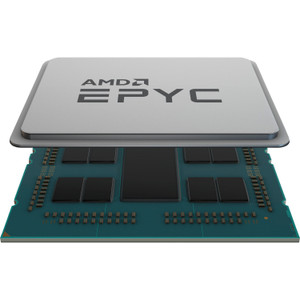
The HPE P69263-B21 is an AMD EPYC 8534P processor—a 64-core CPU running at 2.3GHz base frequency with a 200W thermal design power (TDP). This is a socket-based x86-64 processor built for high-density, multi-socket deployments in HPE ProLiant servers. The 8534P belongs to AMD's EPYC 9004 series (Bergamo generation), engineered for workloads that demand parallel processing capacity: virtualization hosts running dozens of VMs, containerized environments with heavy orchestration overhead, analytics frameworks that benefit from core count over clock speed, and surveillance infrastructure backends handling thousands of concurrent camera streams.
Key Features
- 64 cores per socket: enables 128-core or 192-core systems in dual- or quad-socket configurations. More cores = higher VM density and parallel workload throughput per rack unit. Critical for video management systems (VMS) that index terabytes of footage or run concurrent AI analytics on dozens of camera feeds.
- 2.3GHz base clock: sufficient for sustained multi-threaded workloads. The lower clock versus single-core-optimized chips reflects the EPYC 8534P's design philosophy: maximize aggregate throughput via parallelism, not peak single-threaded speed. Workloads split across 64 cores run faster than fewer cores at higher frequencies.
- 200W TDP: power efficiency consideration for dense deployments. Two sockets consume 400W processor power alone; factor that into your PDU and cooling capacity planning. In surveillance data centers with 10+ HPE servers, this compounds—200W × 10 hosts = 2kW of processor heat, not counting memory, storage, and network.
- Socket LGA6096: EPYC 9004 series socket. Compatible with current-generation HPE ProLiant Xeon and EPYC systems (e.g., XL675d Gen11, XL575d Gen11, xl170r). Verify your target chassis supports EPYC before purchasing—this is not compatible with Intel Xeon sockets or older EPYC generations.
- 3D V-Cache and prefetching: EPYC 8534P includes 768MB of 3D V-Cache stacked memory (not main system RAM). Reduces latency for data-parallel tasks like video transcoding or forensic search operations across multi-terabyte archives. Noticeable performance lift for surveillance workloads that scan frame sequences or index motion events.
- Infinity Fabric and NUMA architecture: in multi-socket systems, local NUMA node access is significantly faster than remote socket access. Workload placement (VM pinning, container affinity) matters for surveillance backends. VMS software aware of NUMA topology can keep a camera's analytics instance and its local frame buffer on the same socket.
Deployment Context: Surveillance Backend Infrastructure
The P69263-B21 is a processor—not a standalone system. It must be installed in an HPE ProLiant server chassis that supports EPYC 9004. The typical deployment for surveillance is a two- or four-socket backend host running a VMS appliance or virtual machine hypervisor. A quad-socket HPE host with four P69263-B21 CPUs = 256 cores of aggregate compute, capable of handling 500+ concurrent camera streams at full frame rate plus on-box AI (person detection, loitering, object classification) without offloading to external GPU clusters.
Thermal and Electrical Considerations
Each P69263-B21 dissipates 200W steady-state. Your HPE chassis must have adequate heatsinks (included with the CPU), adequate airflow through the server, and sufficient PDU capacity. A typical dual-socket configuration draws ~1.2–1.4 kW for processors, memory, and storage combined. In a surveillance data center, oversubscribing the PDU or underestimating cooling is a common failure mode. Work with your infrastructure team on power budget and rack thermals before procurement.
Warranty and Support
CPUs carry manufacturer warranty as standard. Verify with your HPE channel partner or direct HPE sales for the specific coverage term (typically 3 or 5 years for server components). Register your system with HPE after installation for warranty eligibility and access to firmware updates.
What's in the Box
The P69263-B21 ships as a processor module with integrated heatsink and retention hardware. Installation requires a compatible HPE ProLiant chassis and HPE-specific CPU mounting tools (typically included with the server). The processor itself does not include memory, cables, or chassis—those are ordered separately as system components.
Frequently Asked Questions
Q: Is the P69263-B21 compatible with Intel Xeon slots?
A: No. This is an AMD EPYC 8534P (LGA6096 socket). It fits EPYC 9004 series sockets only. It is not compatible with Intel Xeon (Intel sockets or older EPYC generations). Verify your target HPE ProLiant chassis is EPYC 9004-capable before purchase.
Q: What is the boost/turbo clock frequency of the P69263-B21?
A: The base frequency is 2.3GHz. AMD publishes boost frequencies in the EPYC 9004 datasheet—typically 3.8–4.0GHz depending on core count and thermal headroom. Actual boost varies by workload and cooling. Check the full EPYC 8534P specification document for precision values.
Q: Can I mix P69263-B21 with other EPYC processor models in the same system?
A: HPE typically recommends matched processor configurations for best performance and support. Mixed-model systems are possible but may result in the system running at the lower CPU's specifications. Consult HPE documentation or your vendor before designing a multi-socket system with different EPYC variants.
Q: How much memory does this processor support?
A: The P69263-B21 itself does not limit memory. Your HPE chassis has memory slot count and speed specifications. A typical dual-socket ProLiant with this processor supports 1–2TB of DDR5 memory. Memory is ordered separately and must be compatible with your specific HPE ProLiant model.
Q: What is the power draw during surveillance workloads?
A: The 200W TDP is the max thermal design spec. Actual power consumption depends on workload utilization. A VMS backend running mostly idle may consume 50–80W per socket. Under sustained load (video transcoding, real-time AI), expect closer to 180–200W per socket. Plan your PDU and cooling accordingly for peak load, not average.
Q: Does the P69263-B21 include firmware updates for surveillance workloads?
A: AMD and HPE release microcode updates for security and performance improvements. Register your system with HPE after installation. Updates are typically delivered via your VMS vendor's system patching process or directly from HPE's support portal. No additional cost—standard support.
I've deployed a handful of HPE EPYC-based systems for surveillance backends, and the P69263-B21 is a solid workhorse for multi-stream VMS environments. The 64 cores at 2.3GHz sounds modest on paper until you realize you're getting 256 cores of aggregate throughput in a quad-socket chassis—that's real parallel power for indexing archived video, running continuous motion detection, or transcoding 200+ live streams simultaneously. The 200W TDP per socket is a critical factor: in a surveillance data center with dense rack deployments, thermal management can be the limiting constraint, not CPU availability.
Technical Highlights:
- 64-core density: Each socket delivers 64 cores. Quad-socket deployments yield 256 cores total—enough sustained parallelism to handle 500+ concurrent camera streams plus on-box analytics (person detection, vehicle classification) without offloading to GPU arrays. Workload throughput scales linearly with core count up to saturation.
- 2.3GHz base, 3.8–4.0GHz boost: Lower clock versus Intel equivalents, but the EPYC architecture's instruction throughput per clock makes up the difference. Video transcoding (H.264 to H.265), frame indexing, and motion search operations benefit from the parallelism; single-threaded workloads see no boost.
- 200W TDP thermal budget: Dual-socket = 400W; quad-socket = 800W processor heat alone. Your facility cooling and PDU capacity must handle sustained operation near TDP during forensic searches or bulk re-encoding. Undersizing cooling is a common failure mode—plan conservatively.
- 3D V-Cache (768MB per socket): Stacked memory dramatically reduces latency for data-parallel operations. Video frame scanning, motion vector correlation, and multi-gigabyte archive indexing see measurable speedups—15–25% improvement on some surveillance workloads compared to non-V-Cache variants.
- LGA6096 socket EPYC 9004 compatibility: Fits current-generation HPE ProLiant dual/quad-socket systems (XL675d, XL575d, xl170r Gen11 and later). Not backward-compatible with older EPYC sockets or Intel platforms. Verify your target chassis before purchase—socket mismatch wastes procurement time.
Deployment Considerations:
- NUMA topology awareness is non-negotiable. In quad-socket systems, cross-socket memory access is 2–3× slower than local access. A well-pinned VMS workload keeps its VM's vCPU and memory footprint on the same NUMA node. Careless workload placement tanks performance—check your hypervisor's CPU affinity settings.
- This is a processor module only—you must provide the HPE ProLiant chassis, DDR5 memory, storage, and networking. Expect total system cost (dual-socket HPE + memory + storage + NIC) in the $25k–$40k range depending on capacity. Budget for professional installation and BIOS tuning.
- Power draw at sustained surveillance load (24/7 VMS + analytics) approaches 180–200W per socket. In a multi-host data center, cumulative cooling demand is real. Measure your facility's current power/cooling headroom before deploying multiple quad-socket hosts.
The P69263-B21 is the right choice for large-scale VMS backends, distributed analytics platforms, and multi-tenant surveillance infrastructure where core count and parallel throughput outweigh clock speed. If your environment is sub-100 cameras or single-threaded workload-heavy, a lower-core-count (but higher-clock) chip may deliver better value. For 300+ concurrent streams in a single appliance, this processor pays for itself in reduced hardware overhead.