
Showing Results for Credentials
-
Save $0.81

HID 84511 HDP5000 HDP5600 YMCK Resin Black Ribbon
YMCK full-color ribbon with resin black for HDP5000/5600 card printers
- Yields 500 printed images per cartridge, reducing swap frequency in high-volume badge runs.
- Resin black panel produces durable, fade-resistant text and barcodes on finished credentials.
- Compatible with HDP5000 and HDP5600 printers; verify firmware revision before deployment.
In stock · Ships same business day Free shipping over $499$289.80 $288.99 Save $0.81 -
Save $143.81

HID 84514 H5600 YMCFK Ribbon 500 Images
500-image YMCFK ribbon for HID FARGO H5600 with UV security
- Yields 500 full-color YMCFK images per roll, reducing swap frequency on high-volume runs.
- Fluorescent (F) panel enables UV-light verification, adding a covert security layer to each card.
- Designed for HID FARGO H5600 series printers, ensuring validated compatibility and consistent output.
Usually Ships in 2-3 Weeks Free shipping over $499$331.80 $187.99 Save $143.81 -
Save $0.91
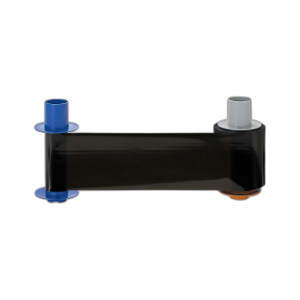
HID 84518 H5600 K Resin Black Ribbon 3000 Images
Black resin ribbon for HID H5600 printers, 3000-image yield
- 3000-image yield per cartridge reduces replacement frequency in high-volume card runs.
- Resin formulation delivers scratch-resistant output on ID badges and access control cards.
- Rated for -31° to 150°F operation, supporting deployment in demanding environments.
In stock · Ships same business day Free shipping over $499$291.90 $290.99 Save $0.91 -
Save $178.66

HID 84519 H5600 Ymckiki Ribbon
YMCKIKI ribbon for HID H5600 printers, 400 images per load
- YMCKIKI configuration prints full-color credentials with dual black/inhibit panels in one pass.
- 400-image yield per cartridge reduces ribbon change frequency in high-volume issuance workflows.
- Rated IP55 and tested from -35°C to 65°C for reliable use in demanding environments.
Usually Ships in 2-3 Weeks Free shipping over $499$412.65 $233.99 Save $178.66 -
Save $0.26

HID 86004 Cleaning Rollers 10 Pack
10-pack cleaning rollers for HID card printers, US-made consumables
- 10-pack supply supports scheduled monthly or quarterly maintenance cycles.
- Removes card debris from transport path, reducing premature printhead wear.
- Tool-free roller swap via hopper or access cover minimizes printer downtime.
Usually Ships in 2-3 Weeks Free shipping over $499$66.25 $65.99 Save $0.26 -
Save $0.01

HID 86131 Extra Cleaning Cards Double Sided 50 Count
Double-sided cleaning cards for HID printers, 50-card pack
- Double-sided design clears transport debris and adhesive residue in a single pass.
- 50-card pack sustains scheduled preventive maintenance across multi-printer deployments.
- Compatible with all HID card printer models, standardizing consumables across your fleet.
In stock · Ships same business day Free shipping over $499$74.00 $73.99 Save $0.01 -
Save $0.01

HID 86187 HDP5000 Ribbon Sensor
OEM ribbon sensor for HDP5000 card printer positioning and detection
- Direct OEM fit for HDP5000 eliminates compatibility testing during field replacement.
- Maintains 300 dpi ribbon positioning accuracy across dye-sublimation and thermal transfer jobs.
- Multi-region certified (UL, CE, FCC, VCCI, KC, BIS) for global credential issuance deployments.
Usually Ships in 2-3 Weeks Free shipping over $499$49.00 $48.99 Save $0.01 -
Save $142.31
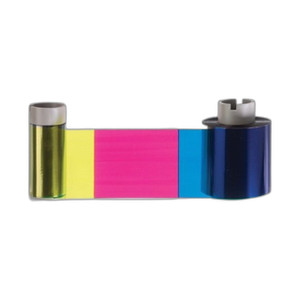
HID 86200 YMCKO Color Ribbon
YMCKO ribbon for HID DTC550—500 images per cartridge
- 500-image yield reduces ribbon changeovers, supporting 5–10 weeks of mid-volume badge runs.
- YMCKO overlay panel seals printed IDs against scratches, UV fading, and daily wear.
- Engineered specifically for the DTC550, ensuring reliable cartridge integration and color accuracy.
Usually Ships in 2-3 Weeks Free shipping over $499$375.30 $232.99 Save $142.31 -
Save $1,889.80

HID 88935 HDP5000 Single Sided Lamination Module
Single-sided lamination module for HID HDP500 retransfer printers
- Integrates directly into HDP500 retransfer systems, eliminating a separate laminator.
- 300 dpi HDP output with laminate layer preserves barcode and mag-stripe integrity.
- USB 2.0 and Ethernet with internal print server support network-based issuance workflows.
Usually Ships in 2-3 Weeks Free shipping over $499$3,895.79 $2,005.99 Save $1,889.80 -
Save $2,647.81

HID 88936 HDP5000 Dual Sided Lamination Module
Dual-sided lamination module for HID HDP5000 secure card printing
- Single-pass dual-sided lamination eliminates secondary processing steps and cuts bottlenecks.
- 300 dpi (11.8 dots/mm) resolution preserves barcode and RFID legibility after lamination.
- USB 2.0 and Ethernet with internal print server enable flexible wired network deployment.
Usually Ships in 2-3 Weeks Free shipping over $499$5,458.80 $2,810.99 Save $2,647.81 -
Save $792.89

HID 89001 HDP5000 Dual Sided Printing Module
Automatic duplex printing module for HID HDP500 retransfer printers
- 300 dpi retransfer printing delivers edge-to-edge fidelity on both card faces.
- USB 2.0 and Ethernet with integrated print server support networked job queuing.
- Automatic duplex eliminates manual card flipping, doubling per-operator throughput.
Usually Ships in 2-3 Weeks Free shipping over $499$1,635.88 $842.99 Save $792.89 -
Save $399.76

HID 89201 HDP5000 ISO Mag Encoder
ISO magnetic stripe encoder module for HDP5000 card printers
- Encodes Tracks 1, 2, and 3 per ISO/IEC 7811 for compatibility with legacy mag-stripe readers.
- Plug-and-play HDP5000 module eliminates external encoding hardware in credential issuance workflows.
- Built-in data verification confirms stripe quality and readability before cards leave the printer.
Usually Ships in 2-3 Weeks Free shipping over $499$882.75 $482.99 Save $399.76 -
Save $712.19
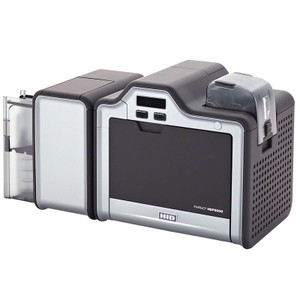
HID 89202 HDP5000 5121D Encoder
Desktop smart card encoder for HID iCLASS and MIFARE credentials
- USB 2.0 high-speed and Ethernet interfaces support flexible, networked deployment.
- 300 dpi HDP dye-sublimation printing ensures sharp, durable credential output.
- UL, CE, and FCC certifications confirm compliance for enterprise and regulated sites.
Usually Ships in 2-3 Weeks Free shipping over $499$1,470.18 $757.99 Save $712.19 -
Save $665.79
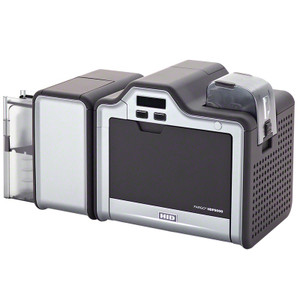
HID 89205 HDP5000 Contact Smart Card Encoder HID Prox
Dual-function encoder for contact smart cards and HID proximity credentials
- Programs both ISO/IEC 7816 contact smart cards and HID proximity credentials in one rack-mounted unit.
- 300 dpi dye-sublimation printing delivers photographic-quality card graphics with MagStripe encoding support.
- USB 2.0 and Ethernet with internal print server enable flexible integration into existing credential management systems.
Usually Ships in 2-3 Weeks Free shipping over $499$1,469.78 $803.99 Save $665.79 -
Save $0.01
HID 89213 HDP5000 Lock Kit
Security lock kit for HDP5000 card printers in shared environments
- Secures HDP5000 card printers against tampering in open or shared environments.
- 2-year warranty and precision fit ensure long-term reliability with no rework.
- Compact at 6.8×2.8×2 in, 0.2 lb — installs without disrupting printer operation.
Usually Ships in 2-3 Weeks Free shipping over $499$167.00 $166.99 Save $0.01 -
Save $0.01

HID 89214 HDP5000 Adjustable Film Cartridge Kit
Adjustable film cartridge kit for HID HDP5000 high-volume ID printing
- Adjustable film cartridge kit for HDP5000 printer
- OEM consumable for reliable card imaging
- Compatible with FARGO HDP5000 production printers
Usually Ships in 2-3 Weeks Free shipping over $499$177.00 $176.99 Save $0.01 -
Save $249.15

HID 89223 200 Card Single Input Hopper Cartridge w
200-card single hopper for continuous HID card printer operation
- 200-card hopper capacity cuts reload interruptions in high-volume badge issuance runs.
- IP55-rated feed mechanism resists dust and light spray in office or production environments.
- FIPS-201 FASC-N certification supports PIV credential production in compliance-driven deployments.
Usually Ships in 2-3 Weeks Free shipping over $499$582.14 $332.99 Save $249.15 -
Save $769.53
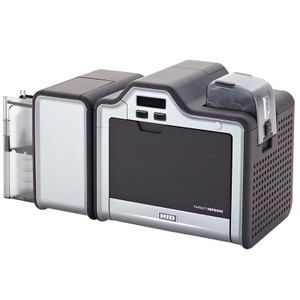
HID 89270 HDP5000 Dual Card Input Hopper
Dual-feed card hopper for HDP5000 batch processing systems
- Dual card input channels eliminate feed bottlenecks in high-volume credential batch runs.
- 300 dpi HDP dye-sublimation print engine delivers sharp, consistent credential output.
- USB 2.0 and Ethernet with internal print server simplify integration into existing IT infrastructure.
Usually Ships in 2-3 Weeks Free shipping over $499$1,586.52 $816.99 Save $769.53 -
Save $755.50

HID 89277 HDP5000 5127 Upgrade Kit
HDP5000 upgrade kit expanding encoding capacity for CR-80 cards
- 300 dpi HDP dye-sublimation printing delivers sharp, durable CR-80 card credentials.
- USB 2.0 and Ethernet with internal print server support flexible network deployment.
- Certified UL, CE, FCC, and 9 additional marks for broad global compliance coverage.
Usually Ships in 2-3 Weeks Free shipping over $499$1,559.49 $803.99 Save $755.50 -
Save $448.63

HID 921NWNTEKE050K RK40 iClass Wall Reader
Wall-mount iCLASS reader with Wiegand output for mixed-credential access
- Reads iCLASS SE, iCLASS, Mifare, and legacy proximity cards on a single reader.
- Wiegand output integrates directly with existing access control panels without rewiring.
- SEOS and SIO encryption support enables smooth migration from legacy to modern credentials.
Usually Ships in 2-3 Weeks Free shipping over $499$913.62 $464.99 Save $448.63 -
Save $474.75

HID 921NWPNEK0047M RK40 iClass SE HF Reader
iCLASS SE HF reader with secure element encryption for cloning protection
- Secure element encryption blocks credential cloning at the reader hardware layer.
- Supports iClass SE, DESFire, MIFARE, SEOS, NFC, and 125kHz Prox in one SKU.
- OSDP V2 delivers encrypted reader-to-panel signaling with real-time tamper alerts.
Usually Ships in 2-3 Weeks Free shipping over $499$965.74 $490.99 Save $474.75 -
Save $474.75

HID 921NWPTEK00482 RK40 iClass SE LF Reader
Dual-tech iCLASS SE + LF reader with Wiegand output for mixed-credential sites
- Reads both iCLASS SE HF and LF cards in one unit, simplifying mixed-credential migrations.
- Native Wiegand and RS-485 half-duplex outputs integrate directly with existing panels and long cable runs.
- Field-upgradeable firmware via flash programming reduces on-site reconfiguration time and costs.
Usually Ships in 2-3 Weeks Free shipping over $499$965.74 $490.99 Save $474.75 -
Save $289.94

HID 922NTNNEK0014G RM40 Iclass SE HF Reader
Multi-technology reader for iCLASS SE, proximity, and magnetic stripe
- Reads iCLASS SE, magnetic stripe (ABA), and proximity cards from one install point.
- Wiegand 26-bit output integrates directly with legacy access control panels.
- RM40 form factor simplifies retrofit deployments at standard door frame locations.
Usually Ships in 2-3 Weeks Free shipping over $499$729.93 $439.99 Save $289.94 -
Save $462.31

HID 940NTNTEKE0000 R90 iClass SE SEOS SIO Reader
HF iCLASS SE R90 reader with Wiegand, RS-232, and SIO/SEOS output
- Supports Wiegand, RS-232, and SIO/SEOS output for legacy and modern panel integration.
- Field-programmable Elite key encryption secures iCLASS SE E credentials in transit.
- 32-bit MSB CSN capture ensures full credential identity resolution across multi-site deployments.
Usually Ships in 2-3 Weeks Free shipping over $499$1,081.30 $618.99 Save $462.31 -
Save $3,146.49
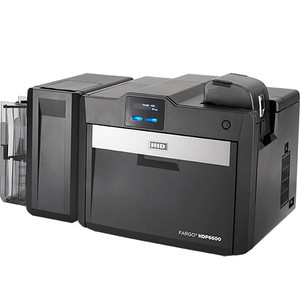
HID 94600 HDP6600 Single -Sided Printer
Single-sided ID card printer with 600 dpi and 230 cards/hour output
- Prints up to 230 CR-80 cards/hour at 600 dpi for high-volume badge production.
- USB 2.0 and 100 Mbps Ethernet ports enable direct integration into existing workflows.
- Supports 30–40 mil card stock with over-the-edge print area for full-bleed credentials.
Usually Ships in 2-3 Weeks Free shipping over $499$6,486.48 $3,339.99 Save $3,146.49 -
Save $3,775.79
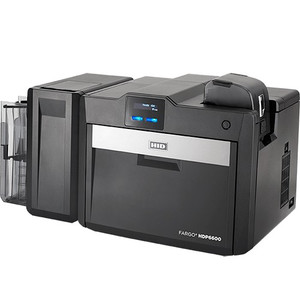
HID 94601 HDP6600 single-side card printer
Single-side thermal printer with integrated contactless encoder for ID cards
- Integrated contactless encoder eliminates a separate encoding station, shrinking deployment footprint.
- Encodes both proximity cards and contactless smart cards in a single unified issuance workflow.
- USB-connected, desktop form factor simplifies installation at distributed or centralized issuance points.
Usually Ships in 2-3 Weeks Free shipping over $499$7,783.78 $4,007.99 Save $3,775.79 -
Save $3,837.95
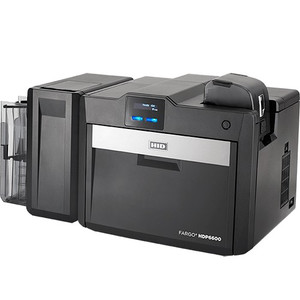
HID 94602 HDP6600 single-side card printer
Single-side card printer with integrated encoding for on-site credential production
- Prints and encodes credentials in one pass at 230 cards/hour, enabling same-day issuance.
- 600 dpi HDP dye-sublimation delivers edge-to-edge color on CR-80 cards at 16.7M colors.
- USB 2.0 and 100 Mbps Ethernet interfaces support flexible integration into existing IT networks.
Usually Ships in 2-3 Weeks Free shipping over $499$7,912.94 $4,074.99 Save $3,837.95 -
Save $3,587.28

HID 94610 HDP6600 Single-Sided Printer w/Flattenr
Single-sided CR80 printer with integrated flattener for ID badges
- Prints up to 230 CR80 badges per hour at 600 dpi via USB 2.0 or 100 Mbps Ethernet.
- Integrated flattener eliminates post-print warping, ensuring reliable card feeding in access control systems.
- 1 GB RAM and SmartScreen OLED panel support consistent high-volume deployment with minimal operator intervention.
Usually Ships in 2-3 Weeks Free shipping over $499$7,396.27 $3,808.99 Save $3,587.28 -
Save $4,279.75

HID 94612 HDP6600 single-side card printer
Single-side printer with integrated encoder for proximity, magnetic stripe, and smart cards
- Prints at 230 cards/hour via 600 dpi HDP dye-sublimation for high-volume issuance.
- Integrated encoder supports Prox, iCLASS, mag stripe, and smart card in one device.
- USB 2.0 and 100 Mbps Ethernet interfaces simplify deployment into existing networks.
Usually Ships in 2-3 Weeks Free shipping over $499$8,822.74 $4,542.99 Save $4,279.75 -
Save $4,437.47
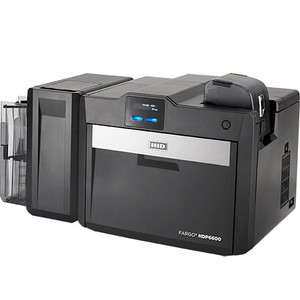
HID 94641 HDP6600 dual-side card printer
Dual-side printer with built-in contactless encoder for single-pass card issuance
- Prints both card sides in a single pass at 230 cards/hour, cutting issuance time.
- 600 dpi HDP dye-sublimation delivers sharp, secure credential output on every card.
- USB 2.0 and 100 Mbps Ethernet ports simplify integration into existing network infrastructure.
Usually Ships in 2-3 Weeks Free shipping over $499$9,148.46 $4,710.99 Save $4,437.47 -
Save $4,499.64
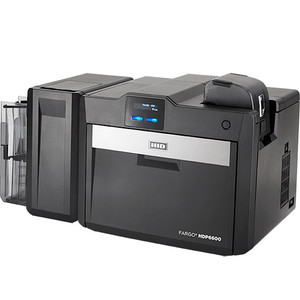
HID 94642 HDP6600 dual-side card printer
Dual-sided full-color printer with integrated magnetic, smart, contactless encoding
- Prints both card sides at 600 dpi in a single pass, up to 126 cards/hour.
- Encodes magnetic stripe, smart card, and contactless credentials without extra hardware.
- Connects via USB 2.0 or 100 Mbps Ethernet; backed by a 2-year warranty.
Usually Ships in 2-3 Weeks Free shipping over $499$9,277.63 $4,777.99 Save $4,499.64 -
Save $4,499.64
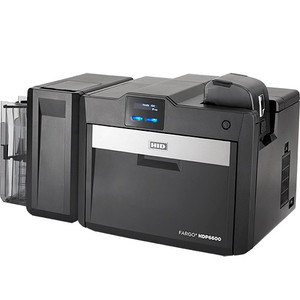
HID 94643 HDP6600 dual-side card printer
Dual-side edge-to-edge card printer with tamper-evident HDP overlay
- 600 dpi edge-to-edge dual-side printing eliminates borders for complex security graphics.
- 126 cards/hour throughput with 100-card hopper reduces operator intervention on production runs.
- USB 2.0 and 100 Mbps Ethernet interfaces support flexible network or direct-connect deployment.
Usually Ships in 2-3 Weeks Free shipping over $499$9,277.63 $4,777.99 Save $4,499.64 -
Save $4,437.47
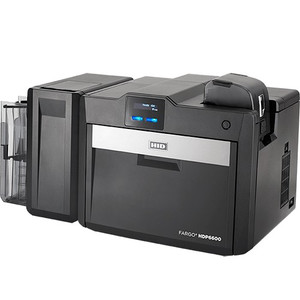
HID 94644 HDP6600 dual-side card printer
Dual-side full-color printer with integrated contact chip encoder for enterprise ID issuance
- Prints full-color graphics on both card sides in a single pass, cutting cycle time.
- Built-in ISO/IEC 7816 contact chip encoder eliminates a separate encoding workstation.
- USB and network connectivity supports shared deployment across enterprise issuance workflows.
Usually Ships in 2-3 Weeks Free shipping over $499$9,148.46 $4,710.99 Save $4,437.47 -
Save $4,941.43

HID 94646 HDP6600 dual-side card printer
Dual-sided card printer with integrated contactless and contact chip encoding
- Prints both card sides in one pass at 230 cards/hour, cutting production time significantly.
- 600 dpi HDP dye-sublimation output supports photographic quality and microprinting security features.
- Integrated dual encoder handles iCLASS, Mifare, and EMV smart cards via USB 2.0 or Ethernet.
In stock · Ships same business day Free shipping over $499$10,187.42 $5,245.99 Save $4,941.43 -
Save $5,003.60

HID 94647 HDP6600 dual-side card printer
Dual-side printer with contact chip and magnetic stripe encoding for enterprise ID issuance
- Prints both card sides in one pass at 230 cards/hour, cutting issuance time significantly.
- 600 dpi HDP dye-sublimation output delivers sharp, durable credentials on every card.
- Integrated contact chip and magnetic stripe encoders eliminate separate encoding hardware.
Usually Ships in 2-3 Weeks Free shipping over $499$10,316.59 $5,312.99 Save $5,003.60 -
Save $5,504.95
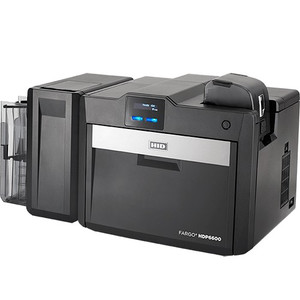
HID 94648 HDP6600 dual-side card printer
Dual-side printer with contactless, contact chip, and magnetic stripe encoding
- Prints both card sides at 600 dpi in one pass at 230 cards/hr, cutting issuance time.
- Encodes iCLASS, MIFARE, contact chip, and magnetic stripe from a single device.
- USB 2.0 and 100 Mbps Ethernet with 1 GB RAM support networked enterprise deployments.
Usually Ships in 2-3 Weeks Free shipping over $499$11,349.94 $5,844.99 Save $5,504.95