
Showing Results for Cards & Key Fobs
-
Save $3.29

HID Isoprox II Prog F-gloss B-gloss Matc - 1386LGGMV
N ISOProx II proximity card — a passive RF credential for personnel access control systems
- RF-programmable passive card requires no battery, eliminating maintenance overhead.
- Supports up to 85-bit formats with 137 billion unique codes for large multi-site deployments.
- Sequential vertical-slot-punch format ships in 100-card batches, simplifying bulk provisioning.
Usually Ships in 2-3 Weeks Free shipping over $499$8.28 $4.99 Save $3.29 -
Save $3.34

HID Isoprox II Prog F-gloss B-gloss NO # - 1386LGGNH
N RF-programmable Isoprox II proximity card — the industry standard for cost-effective physical access control credentials
- Passive RF card requires no battery and programs via standard HID readers or programmers.
- Supports formats up to 85 bits with 137B+ unique codes, eliminating credential collision risk.
- Gloss/gloss finish with no printed card number limits identifier exposure in sensitive environments.
Usually Ships in 2-3 Weeks Free shipping over $499$8.33 $4.99 Save $3.34 -
Save $2.29
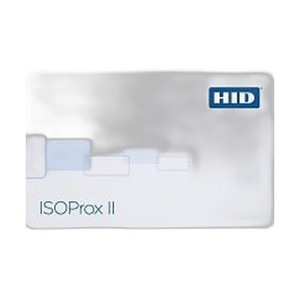
HID Isoprox II Prog F-gloss B-gloss NO # - 1386LGGNV
N RF-programmable proximity card built for cost-effective access control deployments across commercial, industrial, and institutional facilities
- Passive, battery-free design eliminates maintenance cycles and supports infinite shelf life.
- Supports formats up to 85 bits, yielding 137B+ unique codes for large multi-facility rollouts.
- Compatible with any standard HID proximity reader; no specialized hardware required at commissioning.
Usually Ships in 2-3 Weeks Free shipping over $499$8.28 $5.99 Save $2.29 -
Save $2.29

HID Isoprox II Prog F-gloss B-gloss SEQ - 1386LGGSN
Passive RF-programmable proximity card credential designed for organizations running HID proximity reader infrastructure
- Supports up to 85-bit encoding with 137B+ unique codes, eliminating collision risk at scale.
- Passive RF design requires no battery, eliminating credential maintenance across deployment life.
- Gloss front/back finish with lamination supports photo ID printing and embossing out of the box.
Usually Ships in 2-3 Weeks Free shipping over $499$8.28 $5.99 Save $2.29 -
Save $2.29

HID Isoprox II Prog F-gloss B-gloss SEQ - 1386LGGSV
N RF-programmable proximity access card designed as a low-cost, passive credential for facilities using HID proximity reader infrastructure
- Passive RF design eliminates battery replacement, delivering infinite operational lifespan.
- Over 137 billion unique codes across 85-bit formats prevent credential collision at scale.
- RF-programmable ID assignment simplifies issuance and revocation via cross-reference lists.
Usually Ships in 2-3 Weeks Free shipping over $499$8.28 $5.99 Save $2.29 -
Save $0.93

HID Kantech ISOProx II Dye Sub Card KSF
HID ISOProx II proximity card with full-color dye sub printing
- HID ISOProx II 125kHz dye-sub card with KSF format
- 26-bit Wiegand for multiCLASS and legacy 125kHz readers
- Dye-sublimation printable surface for branded badges
Usually Ships in 2-3 Weeks Free shipping over $499$8.92 $7.99 Save $0.93 -
Save $56.61

HID MDP-00870 Bluetooth Smart Module
Bluetooth Smart module for mobile access control with enterprise encryption
- IP55-rated for outdoor deployments; operates from -31°F to 150°F.
- FIPS-201 FASC-N compliant encryption blocks credential cloning and replay attacks.
- Reads Mifare and DESFire EV1 cards, preserving existing card inventory on retrofit installs.
Usually Ships in 2-3 Weeks Free shipping over $499$115.60 $58.99 Save $56.61 -
Save $2.03
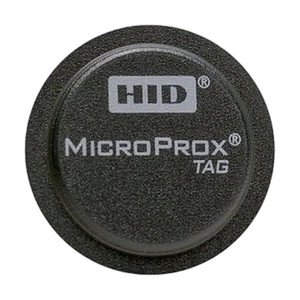
HID Microprox TAG Prog Gray Match # - 1391LGSMN
Programmable Microprox tag credential in gray finish
- Field-programmable read-write credential eliminates manufacturer returns for card data changes.
- Integrates directly with HID proximity readers without additional middleware or hardware.
- Minimum 100-unit order supports volume deployments; credentials ship factory-new and unprogrammed.
Usually Ships in 2-3 Weeks Free shipping over $499$6.02 $3.99 Save $2.03 -
Save $2.03

HID Microprox TAG Prog Gray Match # - 1391LSSMN
Pre-programmed Microprox proximity tag in gray, configured for sequential matching
- Ships factory-programmed for plug-and-play enrollment into HID proximity reader systems.
- Sequential matching simplifies bulk credential tracking by badge stock range in enterprise deployments.
- Operates at 125 kHz EM for reliable compatibility with standard HID Microprox readers.
Usually Ships in 2-3 Weeks Free shipping over $499$6.02 $3.99 Save $2.03 -
Save $2.03

HID Microprox TAG Prog Gray NO # - 1391LSSNN
Programmable Microprox tag credential in gray, designed as a standalone access token for integration with HID badge reader systems
- Programmable Microprox TAG integrates with HID PACS for non-card credential deployments.
- Peel-off self-adhesive backing enables direct mounting to badges, surfaces, or equipment.
- Ships in minimum 100-unit quantities, supporting high-volume organizational rollouts.
Usually Ships in 2-3 Weeks Free shipping over $499$6.02 $3.99 Save $2.03 -
Save $2.49

HID Mifare ADH TAG 1K Non-prog F- STD A - 1435NSSNN
When you need reliable, cost-effective proximity credentials for MIFARE-based access control deployments, non-programmable adhesive tags deliver fast
- 13.56 MHz ISO 14443A interface ensures compatibility with existing MIFARE readers.
- Non-programmed format ships ready for immediate enrollment—no pre-config step needed.
- Rated -40 to 158 °F; adhesive construction mounts to curved or irregular surfaces.
Usually Ships in 2-3 Weeks Free shipping over $499$6.48 $3.99 Save $2.49 -
Save $1.59
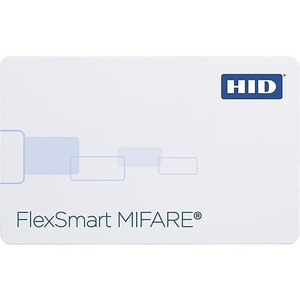
HID Mifare ADH TAG 1K Prog F- STD HID - 1435MSSMN
When you're deploying mixed credential environments or migrating from legacy proximity systems to contactless smart card infrastructure, you need
- Adhesive form factor adds 13.56 MHz smart card capability to existing badges without replacement.
- 1 KB EEPROM supports programmable sectors for custom facility codes and multi-application use.
- Rated -40 to 158°F enables reliable deployment across cold storage, loading docks, and outdoor areas.
Usually Ships in 2-3 Weeks Free shipping over $499$6.58 $4.99 Save $1.59 -
Save $2.78

HID Mifare Keyfob 1K Non-prog F- STD H - 1434NSSNN
When you need a cost-effective credential for large-scale deployments where card programming happens at the reader level rather than during
- Ships non-programmed so you stage inventory in bulk and encode rights at the reader.
- 13.56 MHz MIFARE Classic 1K with 1 KB EEPROM across 16 sectors suits tiered access zoning.
- Rated –40 to 70 °C keeps credentials operational in unheated warehouses or outdoor kiosks.
Usually Ships in 2-3 Weeks Free shipping over $499$7.77 $4.99 Save $2.78 -
Save $1.24
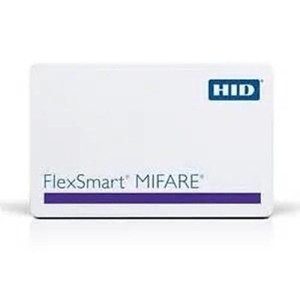
HID Mifare Non-prog - 1430NGGNV
- Factory-encoded MIFARE Classic 1K eliminates field programming and blocks credential tampering.
- 13.56 MHz ISO 14443A operation ensures fast reads across standard MIFARE reader infrastructure.
- Rated –40 to 158 °F and dye-sublimation printable for harsh-environment badged deployments.
Usually Ships in 2-3 Weeks Free shipping over $499$5.23 $3.99 Save $1.24 -
Save $1.34

HID Mifare Prog HID 13.56M - 1430MGGMN
- 13.56 MHz MIFARE Classic 1K enables on-site encoding, eliminating factory pre-programming delays.
- 1 KB EEPROM supports site-specific cardholder data and granular access permission storage.
- Rated -40 to 158°F and dye-sublimation printable for durable, photo-ID-ready deployments.
Usually Ships in 2-3 Weeks Free shipping over $499$5.33 $3.99 Save $1.34 -
Save $2.84

HID Mifare Prox Non-prog Mifare Prog Prox - 1431LGGUNM
When your access control deployment requires flexible credential technology that bridges legacy prox systems with modern secure authentication, you
- Dual 125 kHz / 13.56 MHz operation lets one card work legacy prox and MIFARE readers.
- 26-bit H10301 format ensures drop-in compatibility with existing HID proximity infrastructure.
- Dye-sublimation print-ready PVC composite supports direct badge personalization on standard printers.
Usually Ships in 2-3 Weeks Free shipping over $499$9.83 $6.99 Save $2.84 -
Save $2.84
HID Mifare Prox Non-prog Mifare Prog Prox - 1431LGGUVM
When you're managing a multi-technology access control deployment with both legacy proximity readers and newer Mifare systems, credential management
- Dual 125 kHz / 13.56 MHz operation lets one card serve both legacy Prox and MIFARE readers.
- Fixed 26-bit H10301 Prox side preserves existing facility codes with no reprogramming required.
- Dye-sublimation print capability supports on-site photo ID badging in standard CR80 format.
Usually Ships in 2-3 Weeks Free shipping over $499$9.83 $6.99 Save $2.84 -
Save $2.84
HID Mifare Prox Non-prog Mifare Prog Prox - 1431LGGVNM
Managing access control systems that bridge legacy proximity and MIFARE technology creates deployment headaches when you need credentials that work
- Operates on both 125 kHz prox and 13.56 MHz MIFARE Classic 1K readers simultaneously.
- Ships pre-encoded with 26-bit H10301 format; MIFARE sector is field-programmable for custom data.
- CR80 PVC composite form factor supports dye-sublimation printing and fits standard badge holders.
Usually Ships in 2-3 Weeks Free shipping over $499$9.83 $6.99 Save $2.84 -
Save $2.84
HID Mifare Prox Non-prog Mifare Prog Prox - 1431LGGZNM
When you're integrating access control systems that need to bridge legacy proximity hardware with newer Mifare-based platforms, dual-technology
- Dual 125 kHz prox and 13.56 MHz MIFARE Classic 1K in one card enables phased migrations.
- Pre-encoded 26-bit H10301 prox side deploys immediately with existing HID proximity readers.
- Rated -40 to 158°F and dye-sublimation printable for durable, photo-ID-ready badging.
Usually Ships in 2-3 Weeks Free shipping over $499$9.83 $6.99 Save $2.84 -
Save $2.84
HID Mifare Prox, Non-prog Mifare, Prog Prox
Composite card with both HID Prox (125 kHz, programmed) and MIFARE (13.56 MHz, non-programmed) technology in a single ISO ID-1 form factor
- Dual 125 kHz Prox (programmed) + 13.56 MHz MIFARE (blank) in one ISO ID-1 card.
- Single credential works on legacy Prox and modern MIFARE readers during phased rollout.
- Direct-printable face supports on-site badge personalization without secondary laminate.
Usually Ships in 2-3 Weeks Free shipping over $499$9.83 $6.99 Save $2.84 -
Save $2.94
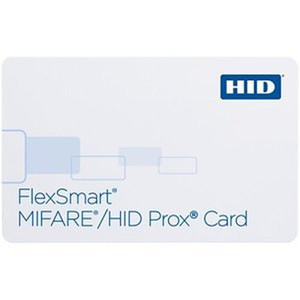
HID Prox & Mifare - 1431BGGMVM
When your access control deployment spans multiple credential technologies—legacy 125 kHz Prox cards alongside newer 13.56 MHz Mifare—you need a
- Reads both 125 kHz HID Prox and 13.56 MHz MIFARE Classic 1K from a single unit.
- Wiegand output ensures drop-in compatibility with existing access control panels.
- Rated for -40 to 158°F, supporting reliable operation in exterior door deployments.
Usually Ships in 2-3 Weeks Free shipping over $499$9.93 $6.99 Save $2.94 -
Save $2.84
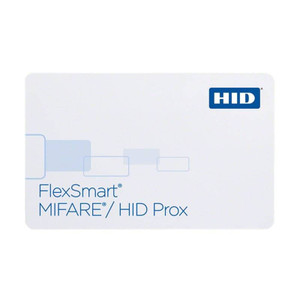
HID Prox & Mifare 1K Non-prog F-gloss - 1431NGGNNN
When you're deploying mixed-technology access control environments that require both legacy HID Prox compatibility and contactless smartcard
- Dual 125 kHz Prox and 13.56 MHz MIFARE 1K in one card eliminates per-user dual issuance.
- Non-programmed, pre-encoded CR80 card deploys immediately into standard HID Prox ecosystems.
- Rated –40 to 158 °F and dye-sublimation printable for industrial and corporate badging workflows.
Usually Ships in 2-3 Weeks Free shipping over $499$9.83 $6.99 Save $2.84 -
Save $2.94

HID Prox & Mifare Prog HID 125K & 13.56 - 1431BGGMNM
When you're managing multi-tenant facilities, retrofitting older HID Prox systems, or standardizing credential readers across mixed-technology
- Reads both 125 kHz HID Prox and 13.56 MHz MIFARE Classic 1K from one reader.
- Field-programmable format config eliminates reader swaps during phased migrations.
- Rated -40 to 158 °F; Wiegand output integrates with existing panels and third-party systems.
Usually Ships in 2-3 Weeks Free shipping over $499$9.93 $6.99 Save $2.94 -
Save $2.98

HID Prox Card - 1346LNSNN
Proximity access card (PROXCARD II) designed for integration with HID proximity reader infrastructure
- Passive 125kHz RF credential requires no battery and drops into existing HID reader ecosystems.
- Supports up to 85-bit encoding with 137 billion unique codes, eliminating collision risk at scale.
- Minimum order of 100 units includes cross-reference documentation for streamlined admin workflows.
Usually Ships in 2-3 Weeks Free shipping over $499$8.97 $5.99 Save $2.98 -
Save $0.26
HID ROL-00077 Cleaning Roller
Adhesive cleaning roller for HID card printers removes dust and residue
- Adhesive surface lifts dust and card residue from the printer path to sustain print quality.
- Rated for operating temps from -31°F to 150°F, supporting installations in varied environments.
- Consumable design simplifies maintenance cycles; replace routinely to prevent mechanical buildup.
Usually Ships in 2-3 Weeks Free shipping over $499$22.25 $21.99 Save $0.26 -
Save $65.95
HID Signo 20 Blk/slvr PIG - 20NKS-00-00UJ95
When your access control deployment demands a compact reader that balances functionality with aesthetic flexibility, the HID Signo 20 delivers a
- OSDP v2 Secure Channel and Wiegand support fits new and legacy panel installs.
- IP65-rated housing operates from -35 to 65 °C for indoor or outdoor deployment.
- Reads iCLASS Seos, MIFARE DESFire, HID Prox, and Apple/Google Wallet credentials.
Usually Ships in 2-3 Weeks Free shipping over $499$321.94 $255.99 Save $65.95 -
Save $209.10
HID Signo 20 Blk/slvr PIG - 20NKS-03-0086UQ
When you're deploying access control in environments where traditional wiring isn't feasible or you need flexibility during installation, a reader
- Reads iCLASS Seos, MIFARE DESFire, HID Prox, and mobile credentials from one reader.
- OSDP v2 Secure Channel and Wiegand outputs integrate with legacy and modern access panels.
- IP65-rated with optical tamper detection; operates from -31°F to 150°F for varied sites.
Usually Ships in 2-3 Weeks Free shipping over $499$494.09 $284.99 Save $209.10 -
Save $184.69

HID Signo 20 Blk/slvr PIG CRD PFL STD - 20NKS-00-00004C
When you're deploying HID's Signo ecosystem and need flexible mounting or retrofit installations, the pigtail connection format eliminates panel
- Pigtail wiring eliminates backplate punch-outs, cutting retrofit install time on tight frames.
- OSDP v2 Secure Channel and Wiegand output fit both modern controllers and legacy panels.
- IP65-rated across -35 to 65 °C supports covered exterior and harsh indoor deployments.
Usually Ships in 2-3 Weeks Free shipping over $499$440.68 $255.99 Save $184.69 -
Save $186.69
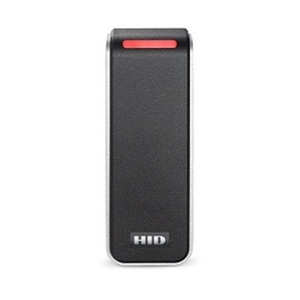
HID Signo 20 Blk/slvr PIG CRD PFL STD - 20NKS-00-00044T
When you're deploying HID Signo readers across a multi-site enterprise or retrofit project, maintaining reader profile consistency without
- Programs Signo 20 credential profiles in the field—no laptop or network required.
- Supports 125 kHz and 13.56 MHz technologies including Seos, DESFire, and HID Prox.
- IP65-rated for indoor/outdoor use; operates from -35 °C to 65 °C.
Usually Ships in 2-3 Weeks Free shipping over $499$440.68 $253.99 Save $186.69 -
Save $203.10
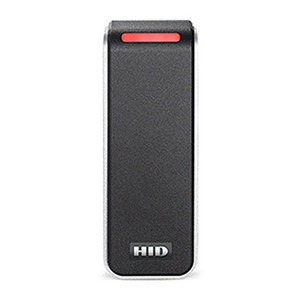
HID Signo 20 Blk/slvr Term CRD PFL Cstm - 20TKS-03-016B91
When deploying HID's Signo platform across enterprise or multi-tenant environments, standardized credential management becomes critical
- Supports OSDP v2 Secure Channel and Wiegand for flexible panel integration.
- Reads 125 kHz and 13.56 MHz credentials plus Bluetooth LE/NFC mobile access.
- IP65-rated enclosure handles indoor/outdoor installs from -35 °C to 65 °C.
Usually Ships in 2-3 Weeks Free shipping over $499$494.09 $290.99 Save $203.10 -
Save $0.44

HID Signo 20 Mounting Plate Black - 20-K-MP
When you're deploying HID Signo 20 readers in commercial environments, proper mounting is critical for both aesthetics and long-term reliability
- Purpose-built for HID Signo 20 single-gang readers, ensuring a precise fit.
- Polycarbonate construction provides a stable base on uneven or rough surfaces.
- Black finish matches Signo 20 aesthetics for a consistent, professional look.
Usually Ships in 2-3 Weeks Free shipping over $499$25.43 $24.99 Save $0.44 -
Save $217.18
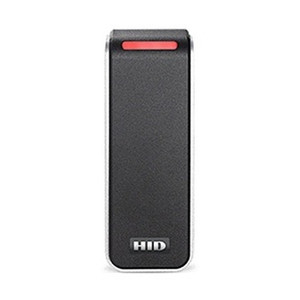
HID Signo 20 PIV - 20HTKS-03-0004XR
When federal compliance and high-security access control converge, you need a reader that handles PIV credentials without compromise
- FIPS 201 / PIV-I compliant with on-reader cryptographic validation blocks cloning attacks.
- OSDP v2 Secure Channel and Wiegand output integrate with new and legacy access control panels.
- IP65-rated for indoor/outdoor use; operates from -35 °C to 65 °C across campus deployments.
Usually Ships in 2-3 Weeks Free shipping over $499$513.17 $295.99 Save $217.18 -
Save $215.18

HID Signo 20 PIV - 20HTKS-03-00059X
- FIPS 201/PIV-I/TWIC compliant with OSDP v2 Secure Channel for cryptographic controller linking.
- Reads 125 kHz and 13.56 MHz credentials, preserving legacy panels via Wiegand during phased rollouts.
- IP65-rated housing operates from -31 to 150°F, supporting protected exterior mounting scenarios.
Usually Ships in 2-3 Weeks Free shipping over $499$513.17 $297.99 Save $215.18 -
Save $204.18
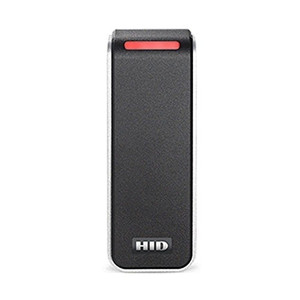
HID Signo 20 PIV - 20HTKS-03-0005A8
When you're deploying access control in federal facilities, military installations, or enterprises with strict PIV compliance requirements
- FIPS 201/PIV-I/TWIC compliant; reads iCLASS Seos, MIFARE DESFire, and legacy HID Prox on one reader.
- OSDP v2 Secure Channel and Wiegand outputs ensure compatibility with existing and modern access panels.
- IP65-rated for indoor/outdoor use; operates from -35 to 65 °C without additional enclosures.
Usually Ships in 2-3 Weeks Free shipping over $499$513.17 $308.99 Save $204.18 -
Save $217.18

HID Signo 20 PIV - 20HTKS-03-0005B9
When federal compliance mandates meet high-security credential workflows, you need a reader that handles FIPS 201 PIV cards without forcing you to
- FIPS 201 / PIV-I compliant with OSDP v2 Secure Channel—no panel replacement needed.
- IP65-rated from -35 to 65 °C supports vestibule, perimeter gate, and outdoor installs.
- Reads 125 kHz and 13.56 MHz credentials plus BLE/NFC for phased legacy migration.
Usually Ships in 2-3 Weeks Free shipping over $499$513.17 $295.99 Save $217.18 -
Save $204.18

HID Signo 20 PIV - 20HTKS-03-0005N2
When federal compliance meets everyday access control deployments, you need a reader that handles PIV credentials without forcing you into
- OSDP v2 Secure Channel and Wiegand output integrate with existing access panels.
- IP65-rated housing operates from -31 to 150 °F for indoor or outdoor deployments.
- Reads PIV/PIV-I/TWIC plus 125 kHz and 13.56 MHz credentials in one mullion reader.
Usually Ships in 2-3 Weeks Free shipping over $499$513.17 $308.99 Save $204.18