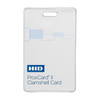
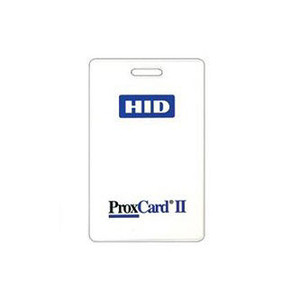
HID 1326LMSMV Proxcard II Proximity Access Card
Overview
The HID 1326LMSMV is a passive RF-programmable proximity credential card engineered for facilities deploying HID proximity reader infrastructure. No battery, no active power draw—the card energizes only when presented within range of a compatible reader. Matte finish with HID logo imprint supports photo ID overlay or standalone badge-slot mounting. Fits standard wallet format (85.6×54 mm), enabling both access control and cardholder identification in a single physical credential.
Compatibility
The 1326LMSMV works with all HID proximity reader models in the 125 kHz standard protocol family. Verify reader compatibility by confirming support for HID Proxcard II format (also called Proxcard format, distinct from iClass or DESFire). If your installation uses iClass or DESFire readers, this card will not function. Cross-reference your reader documentation or contact your integrator to confirm 125 kHz proximity support before ordering.
Credential Capacity and Codes
137+ billion unique code combinations: The card supports programmed formats up to 85 bits, yielding over 137 billion addressable codes—sufficient for large enterprise deployments without code collision risk. RF programmable: Card IDs are written via compatible HID programmer (sold separately); no factory pre-programming is included with the 1326LSMSMV base SKU. Minimum order is 100 cards per purchase.
Physical Durability
Passive design—no maintenance. Zero battery means no expiration, no field replacement, no lifecycle tracking. Crack-resistant material: Strong, flexible construction withstands wallet pressure and typical card-slot handling. Read range consistency: Proven proximity physics—unaffected by body shielding (metal rings, keys, coins in same pocket) or environmental electromagnetic noise, delivering consistent read distance across multiple presentations.
Identification Support
Matte finish and configurable imprint location (vertical slot noted in spec) support custom inkjet printing for photo ID, name, barcode, or QR code. Cross-reference documentation (card number to programmed ID) is typically generated during system commissioning for audit and replacement workflows.