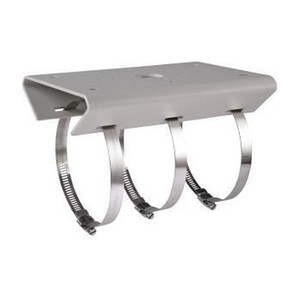
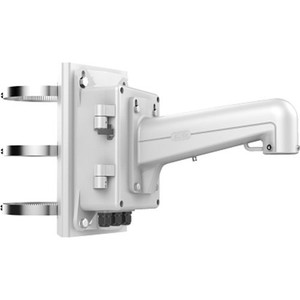
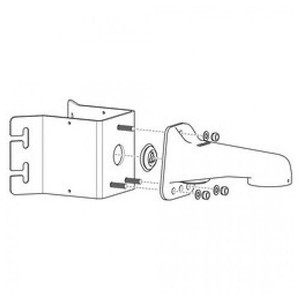
Hikvision CMPL PTZ Corner Mount Adapter
The Hikvision CMPL is a purpose-built corner mounting solution for Hikvision PTZ cameras deployed in surveillance systems where edge coverage and structural integration matter. This aluminum alloy adapter addresses a real installation challenge: anchoring PTZ domes securely in corner positions without compromising cable routing, structural aesthetics, or camera pan/tilt performance.
Key Features
- Aluminum Alloy Construction: Resists corrosion in both indoor and outdoor settings, meaning you avoid rust degradation that can loosen mounting tolerances over months of temperature cycling. This matters if your deployment spans warehouses, covered parking, or semi-outdoor retail alcoves where moisture is intermittent rather than constant.
- Corner-Optimized Geometry: Designed specifically to position PTZ cameras at wall or ceiling corners, which maximizes field of view in confined spaces and eliminates the blind spots you'd get from a standard wall mount. Real benefit: fewer cameras to achieve the same coverage footprint.
- Broad PTZ Series Compatibility: Works with DS-2AE5xxx, DS-2AE7xxx, DS-2DE4xxx, DS-2DE5xxx, DS-2DE6xxx, DS-2DE7xxx, DS-2DF5xxx, DS-2DF6xxx, and DS-2DF8xxx series PTZ cameras — covers most mid-range and compact Hikvision PTZ lines. Before ordering, confirm your specific model falls within one of these ranges; the CMPL does not support fixed-dome or compact turret cameras.
- Integrated Junction Box Support: The adapter accommodates separate JBP-W junction box (sold separately) for organized power and signal distribution. This keeps cable clutter behind or beside the camera body rather than trailing visibly, which matters in retail or museum settings where cable visibility affects aesthetics or creates trip hazards.
- Weight-Optimized Profile: At 18.51 lbs, the CMPL is light enough to install on standard wall studs or ceiling joists without reinforcement — but your wall or ceiling structure must support 3× the combined weight of the camera and all accessories (mount + lens cover + housing, if applicable). That multiplier accounts for dynamic loads, vibration, and seismic margin. If your wall cannot handle roughly 60 lbs distributed across a 6–8-inch mounting footprint, you'll need structural anchoring (threaded rods, L-brackets, or masonry inserts).
- White Finish: Standard white paint blends into most commercial interiors. If color-matching is critical (e.g., historic buildings, branded retail environments), confirm the finish before installation — touch-ups or powder coating may be required.
Compatibility & Integration
The CMPL is a passive mechanical adapter — it does not process video, power, or signals. It simply positions the camera body. Ensure your chosen PTZ camera has a matching three-bolt or quick-release foot, and verify that cable lengths to your NVR or video management system will reach from the corner location to your switch or recorder. If cable runs exceed 100 meters, use active range extenders or run separate backbone cabling. The JBP-W junction box (required separately) houses terminal strips for power and signal wiring and is sized to fit behind or beside the adapter base — measure the cavity depth on your wall or ceiling before ordering the junction box to confirm fit.
Installation Mounting
Corner mounting assumes solid wall or ceiling structure. For drywall over studs, use heavy-duty toggle bolts or studfinders to locate framing. For concrete or masonry, use ½-inch concrete anchors rated for at least 50 lbs each (a minimum of three anchors is recommended). The adapter base includes pre-drilled holes; use the included mounting template to mark holes precisely. Leave at least 4–6 inches of clearance above and to the sides of the camera for pan/tilt range — corners naturally restrict motion, so test the full pan/tilt envelope before finalizing cable routing.
When to Choose a Different Mount
If your PTZ will be mounted on a flat wall (not a corner), a standard wall bracket will cost less and reduce complexity. If you need a pendant or ceiling-suspended PTZ mount with shock isolation or vibration dampening, specify a different form factor with a gimbal or spring suspension system. The CMPL is optimized for rigid corner positions — moving cameras or exposed corner installations with high vibration are not ideal candidates.
Frequently Asked Questions
Q: Does the CMPL work with non-Hikvision PTZ cameras?
A: No. The CMPL is designed for the specified Hikvision DS-2AE, DS-2DE, and DS-2DF series cameras. Mounting patterns, bolt spacing, and bracket geometry differ across brands. Attempting to adapt third-party cameras to the CMPL may result in unstable or unsafe installation.
Q: Is the JBP-W junction box required?
A: Not strictly required for basic operation, but highly recommended. The junction box provides a secure, weatherproof enclosure for power and signal terminal strips, keeping wet cable ends and connections away from the camera body. Without it, exposed connectors are vulnerable to corrosion and accidental disconnection.
Q: Can I use the CMPL indoors only?
A: Yes. The aluminum alloy resists corrosion indoors as well. Indoor corner mounting is common in retail, warehouses, and office buildings. The 18.51 lbs weight will not strain standard indoor wall studs or acoustic ceiling grids — confirm your building's anchor rating before installation.
Q: What structural support do I need for the CMPL?
A: Your wall or ceiling must support 3× the combined weight of the camera and accessories. For a typical 8 lb PTZ + 2 lb housing, that's roughly 30 lbs minimum distributed load capacity. Heavy-duty drywall anchors or concrete/masonry inserts are required; standard plastic wall anchors will fail. Use a structural stud finder or consult a facilities engineer if unsure.
Q: Does the CMPL limit camera pan or tilt range?
A: Corner mounting naturally restricts pan and tilt motion due to the physical proximity of walls or ceiling surfaces. Always test the full pan/tilt envelope before finalizing the installation to confirm coverage meets your surveillance requirements.
Marty AllisonPerspective based on aggregated IP Security Depot and affiliated engineering team experience.
The Hikvision CMPL solves a specific problem in surveillance design: corner PTZ installations where you need compact footprint, clean cable management, and maximum field of view without running multiple cameras. At 18.51 lbs, the CMPL is light enough to avoid structural headaches, but that 3× load multiplier requirement means you can't skimp on anchoring — drywall toggles alone won't cut it on anything heavier than 5–6 lbs of camera and lens. I've seen integrators overlook the load factor and end up with sagging mounts six months post-install.
Technical Highlights:
- Aluminum Alloy Frame: Corrosion resistance extends the mount's life in semi-outdoor and intermittently wet environments (covered parking, loading docks) without oxidation or binding. Galvanized steel would be heavier and more prone to creep over time.
- DS-2AE/DE/DF Series Compatibility: Covers the bulk of mid-range and compact Hikvision PTZ portfolios, but you must verify your exact model before ordering — mixing incompatible bolt patterns will waste installation time.
- Integrated JBP-W Support: The ability to route power and signal through a separate junction box keeps the camera mount area clean and protects connectors from weather, UV, and accidental contact — critical in retail environments where aesthetics and safety matter.
Deployment Considerations:
- Corner positioning inherently restricts pan and tilt range — always factor this into your coverage plan. A camera expecting 360° panning will have 180–240° actual range in a corner.
- The 3× load multiplier is real. A 10 lb camera + 3 lb housing = 39 lbs of anchor load. Drywall anchors rated for 20 lbs per anchor will fail. Use concrete anchors or studfinder-verified framing.
- JBP-W is sold separately — budget for it and account for the extra wiring run from camera to junction box.
Deploy the CMPL in retail corner aisles, warehouse entrance alcoves, and parking structure egress points where you want to eliminate blind spots without deploying additional fixed cameras. It's not a fit for high-vibration industrial environments or dynamic installations where the camera needs frequent repositioning.