


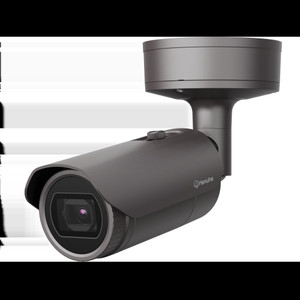


Product images are provided for reference and may not represent the exact model, configuration, or included
components.
Overview
SKU:
XNO-6120R/LPR
UPC:
8801089102478
Condition:
New
Availability:
Usually Ships Same Business Day
Warranty
3-year warranty
Write a Review
 25% OFF
Write a Review
Hanwha
Hanwha XNO-6120R/LPR 2MP License Plate Recognition Camera

Hanwha XNO-6120R/LPR 2MP License Plate Recognition Camera
2MP license plate recognition bullet with 1.5m IR and IP66 durability

Hanwha XNO-6120R/LPR 2MP License Plate Recognition Camera
$2,000.00
$1,497.99
Your recommended setup
Review items below — quantities update pricing automatically.
Item
Qty
Status
Price
Optional Add-Ons recommended
Services optional
Bundle Summary
Bundle Subtotal:
$0.00
Optional Add-Ons:
$0.00
Services:
$0.00
Total:
$0.00
Overview
SKU:
XNO-6120R/LPR
UPC:
8801089102478
Condition:
New
Availability:
Usually Ships Same Business Day
Warranty
3-year warranty
No Bots, Just Experts
Questions about this product? Free pre-sales support from a senior specialist — product questions, compatibility checks, BOM quotes, price confirmation — typically answered within one business day. Need camera placement or system design work? Engineering time is $175 per hour (qty 1 = 1 hour). Hardware buyers get up to one hour ($175) credited back on their order.

Send Laura a Message
Senior Specialist · Typically replies within 1 business day
Description

Hanwha XNO-6120R/LPR 2MP License Plate Recognition Camera
The XNO-6120R/LPR is a specialized 2MP bullet-style IP camera built explicitly for license plate recognition in low-speed vehicle environments. Unlike general surveillance cameras that prioritize scene width, this unit concentrates optical resolution on a narrower field to maximize plate legibility at the moment of capture—a crucial distinction when accuracy and long-term evidentiary value matter. The camera supports standard IP network integration via ONVIF, making it compatible with most third-party video management systems and analytics platforms.
Key Features
- 2MP LPR-optimized sensor: Resolution focused on plate clarity rather than wide scene coverage. At access points or parking entries where vehicles approach predictably, this concentration delivers usable plate reads consistently, reducing downstream manual review and verification overhead.
- 1.5m IR illumination: Infrared range scaled for close-proximity installations (3–15 feet typical at gates or lot entries). Unlike long-range IR cameras designed for distant recognition, this 1.5m projection suits chokepoint deployments where subjects remain under controlled approach angles.
- WDR (Wide Dynamic Range): Balances exposure in mixed lighting—critical because license plates and reflective frames often overexpose in bright sunlight or when captured against dark vehicle bodies. WDR prevents blown-out plate regions that would render recognition software unreliable.
- IP66 and IK10 durability: IP66 rating means direct rain and dust ingress won't disable the optics or housing. IK10 vandal rating handles moderate physical impact—relevant in unsecured parking facilities or public access points. Skip this model if full submersion or extreme weathering is expected; those scenarios require IP67 or specialized marine-grade housings.
- PoE Class 3 (under 13W): Standard 802.3af PoE eliminates need for separate 12V power runs or transformers at each location. On multi-camera deployments, lower per-unit power consumption reduces switch overhead and simplifies cable infrastructure planning.
- H.265, H.264, and MJPEG codec support: H.265 cuts recorded file sizes approximately 40–50% versus H.264 at equivalent quality—a tangible benefit when storing 24/7 LPR footage across dozens of cameras. Storage and bandwidth savings compound over months or years of continuous operation.
- MicroSD local storage: On-camera card slot enables edge-side backup if primary recorder fails or network connectivity is interrupted. Provides a safeguard for critical plate capture data during power or network outages.
- HTTPS encryption: Secures live and recorded streams between the camera and NVR/VMS, required for chains of custody in traffic enforcement, toll collection, and parking violation documentation.
Deployment Context
The XNO-6120R/LPR excels in controlled-speed, fixed-geometry scenarios: parking lot or garage entry/exit lanes, residential community access gates, toll plaza lanes, fleet yard checkpoints, and event venue vehicle documentation. In each, vehicles approach at low speed and predictable angles, allowing the camera's narrower field to consistently frame plates for automated recognition.
General-purpose IP camera models designed for broader scene coverage typically deliver lower plate legibility at distance because resolution is spread across a wider horizontal field. Conversely, dedicated outdoor IP cameras optimized for LPR maintain higher pixel density on the license plate region, improving recognition confidence and reducing false positives when integrated with automatic license plate recognition (ALPR) software.
Integration & Compatibility
ONVIF Profile S support ensures compatibility with major video management systems (VMS) platforms and ALPR engines. Standard RJ-45 connection and PoE simplify network switch provisioning. Camera firmware can be updated via standard ONVIF or HTTP methods, and the unit supports basic HTTP API calls for integration with custom scripts or third-party alerting systems.
Frequently Asked Questions
Q: What is the maximum effective distance for license plate capture with the XNO-6120R/LPR?
A: The 2MP resolution and optics are optimized for close-range recognition, typically 3–15 feet from the camera. Beyond 20 feet, plate legibility degrades. Position the camera perpendicular to the vehicle approach vector for best results.
Q: Does the XNO-6120R/LPR work with third-party ALPR software?
A: Yes. ONVIF compatibility allows the camera to stream to any ONVIF-capable ALPR platform. Confirm the specific ALPR vendor supports H.265 and MJPEG streams, as some legacy systems may require H.264 fallback.
Q: Can I mount the XNO-6120R/LPR on a ceiling or wall?
A: The bullet form factor supports both wall and ceiling mounting using standard bracket hardware. Ensure mounting angle points perpendicular to vehicle approach for optimal plate framing.
Q: What is the warranty coverage on the XNO-6120R/LPR?
A: Refer to the manufacturer's warranty statement for specific terms. Typical industrial cameras in this class carry 2–3 year limited hardware warranties; confirm with your supplier.
Q: Does the camera support remote focus or motorized lens adjustment?
A: The XNO-6120R/LPR uses a fixed-focal-length lens. Manual focus adjustment during installation is required. No motorized zoom or autofocus is provided, simplifying deployment but requiring careful mounting geometry planning.
Q: How much local storage capacity is available with the microSD card?
A: The camera supports microSD cards up to typical commercial limits (commonly 512GB or higher depending on card availability). Actual retention depends on video resolution, codec, and frame rate settings.
Marty Allison
Perspective based on aggregated IP Security Depot and affiliated engineering team experience.
The XNO-6120R/LPR is purpose-built for a narrow but critical niche: low-speed license plate recognition where capture accuracy and environmental durability are non-negotiable. Unlike general-purpose surveillance cameras that spread resolution across a wide field, this unit concentrates its 2MP sensor on plate legibility, delivering the pixel density necessary for automated recognition engines to work reliably. This focused optical design is the key differentiator—you're not getting a compromise between scene coverage and plate clarity; you're getting a camera engineered specifically for plates.
Technical Highlights:
- 2MP LPR optics: Resolution optimized for plate region, not wide scene. Delivers plate clarity suitable for ALPR processing at 3–15 foot distances—the zone where access gates and lot entries naturally position vehicles.
- 1.5m IR + WDR combination: The 1.5m infrared range is appropriately scaled for close-proximity scenarios. WDR's ability to balance backlit plates (e.g., a dark vehicle body with a bright white plate) prevents overexposure artifacts that would break recognition confidence. This pairing is particularly valuable in mixed lighting transitions at parking lot entries.
- H.265 codec reduces storage footprint 40–50%: On 24/7 multi-camera LPR deployments, codec selection directly impacts NVR capacity planning. H.265 at equivalent quality vs. H.264 means fewer storage upgrades or longer retention windows without additional drives—a real cost factor over 12–36 months.
- PoE Class 3 (sub-13W): Minimal power draw prevents switch oversubscription and simplifies long cable runs common in distributed parking facilities. No additional power infrastructure required per camera.
- IP66/IK10 durability: IP66 withstands direct rain and dust without optical degradation. IK10 vandal resistance handles moderate impact. However, IK10 is not equivalent to explosion-proof or extreme-environment hardening—if the unit will face aggressive impact or marine spray, this is not the model.
Deployment Considerations:
- Fixed focal length demands precise mounting geometry. The camera must be positioned perpendicular to vehicle approach vector; angled or off-axis mounting reduces plate legibility dramatically. Survey the installation site for lighting transitions (shadows, reflection zones) before final positioning.
- 1.5m IR illumination is modest by industrial standards. Outdoor installations with heavy ambient light (e.g., brightly lit toll plazas, gas station forecourts) may not benefit significantly from IR—test or request trial footage in your actual lighting conditions.
- MicroSD backup is a valuable safeguard but not a substitute for primary recording. Treat it as edge-side failover only, not the primary archive.
Position the XNO-6120R/LPR at controlled-speed chokepoints—parking lot entry lanes, residential access gates, fleet yards, toll booths—where vehicles approach at predictable speed and angle. In these scenarios, the camera's focused LPR optics and modest IR range become strengths rather than limitations.
Specifications
Type:
Bullet
Product Type:
Bullet
Connectivity:
Wired
IP Rating:
IP66
Features:
WDR
Night Vision:
IR
Power Type:
PoE
PoE Class:
3
Form Factor:
Bullet
Vandal Rating:
IK10
Compatibility:
ONVIF
Resolution:
2MP
Video Compression:
H.265, H.264, MJPEG
IR Distance:
1.5m
Built-in IR:
Yes
Day/Night:
Yes
Storage Support:
microSD
Outdoor Ready:
Yes
HTTPS Encryption:
Yes
WDR:
WDR
Wide Dynamic Range:
WDR
Housing Color:
White
Environment Rating:
Outdoor
Warranty:
3-year warranty
Have Questions?
Ask an Expert.
Videos Hide Videos Show Videos
Your recommended setup
Review items below — quantities update pricing automatically.
Item
Qty
Status
Price
Optional Add-Ons recommended
Services optional
Bundle Summary
Bundle Subtotal:
$0.00
Optional Add-Ons:
$0.00
Services:
$0.00
Total:
$0.00
RELATED PRODUCTS


Hanwha
SKU: XNV-6120R/LPR
Hanwha XNV-6120R/LPR 2MP LPR PTZ Dome Camera
2MP PTZ dome with LPR analytics for vehicle tracking in parking & access control
- PTZ with optical zoom + 2MP resolution captures readable license plates in low-speed zones
- 2.1m IR night vision + WDR handles backlighting and extreme lighting conditions 24/7
- IP66 weather-sealed, IK10 vandal-proof, PoE Class 3 powered for outdoor durability
Special Order · Usually Ships in 2-3 Weeks
$2,000.00
$1,497.99
Save $502.01

Hanwha
SKU: XNO-6120R
Hanwha XNO-6120R 2MP Outdoor Bullet IP Camera 12x Zoom
2MP outdoor bullet with 12x optical zoom and 70m IR for perimeter surveillance
- 12x motorized zoom (5.2–62.4mm) with auto iris captures detail at distance without digital loss
- 70m IR illumination and 0.03Lux color sensitivity for 24/7 identification in darkness or dim light
- 150dB WDR and H.265 codec reduce washout in high-contrast scenes and cut bandwidth by ~50%
In stock · Usually Ships Same Business Day
$1,500.00
$1,123.99
Save $376.01
Hanwha
SKU: LPR-Application
Hanwha LPR-Application Low-Speed License Plate Recognition
$99,999.99
System Design, Deployment & Technical Support
Support services and planning resources for commercial surveillance, access control, and infrastructure deployments.
Fixed scope • Fixed price
System Design Assistance
- Get help validating product compatibility
- Coverage requirements
- Storage planning and deployment architecture before you buy.
Deployment & Configuration Support
- Access fixed-scope support for rollout planning
- User setup guidance
- Migration and system standardization across single-site or multi-site deployments
Guides, Tools & Calculators
- PoE requirements
- Storage retention
- Camera selection and deployment methodology