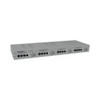
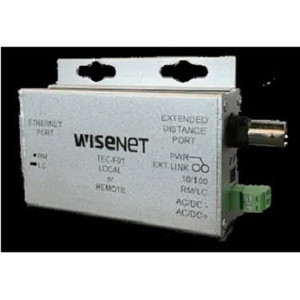
Hanwha TEC-F16 16-Port Coaxial Ethernet Extender PoE+
The Hanwha TEC-F16 is a 16-port pass-through PoE+ extender that runs both Ethernet data and power over existing coaxial cable infrastructure. Designed for large-scale IP surveillance retrofits, the TEC-F16 eliminates the capex and labor overhead of pulling new Ethernet runs across campuses, warehouses, and multi-building perimeters. If your site already has coax lines routed to camera poles, intersections, or exterior junction boxes, the TEC-F16 bridges legacy plant to modern PoE+ cameras in a single unified conduit.
Key Features
- 16-port pass-through PoE+: Each port delivers PoE+ (802.3at) to downstream cameras or devices. No inline power injectors required on each run.
- Ethernet and PoE over coax: Data and power travel the same coaxial cable simultaneously, reducing the number of cable plants needed on a site.
- Extended transmission range: Coaxial cable topology allows PoE+ distribution at distances where standard Ethernet would incur unacceptable voltage drop or signal attenuation.
- 10M/100M Ethernet rate: Supports both legacy and modern IP cameras across a wide bandwidth range without renegotiation.
- Hanwha and third-party PoE device compatibility: Works with Hanwha IP camera lines and any standards-compliant PoE+ powered devices (door controllers, access points, etc.).
- Rack-mount housing: White finish, standard 19-inch rack footprint for centralized distribution points or outdoor equipment shelters.
- PoE+ power pass-through: No loss of PoE+ budget across the extender — full 802.3at power signature is maintained per port.
- 3-year warranty: Factory warranty covers defects in materials and workmanship across the entire device lifecycle.
The TEC-F16 functions as a wired network switch with integrated PoE+ pass-through, enabling both data and power to traverse the same coaxial line without separate power runs or external injectors. In large surveillance deployments — multi-acre industrial sites, strip-mall chains, university campuses — this architecture eliminates the labor cost of trenching, conduit pulling, and junction-box terminations. A 500-meter coax run from a network closet can now feed 16 camera positions simultaneously, each receiving native PoE+ without additional infrastructure. Signal integrity is maintained across the coax substrate; the extender preserves 10M and 100M Ethernet framing and PoE signature fidelity.
Retrofitting existing coaxial plants is the TEC-F16's strongest use case. Many sites installed analog surveillance 10–20 years ago with coax runs to every perimeter pole, parking-lot corner, and building entrance. Rather than rip out that plant and install new Ethernet conduit, integrators can terminate the legacy coax into TEC-F16 ports and extend PoE+ to new IP cameras at those exact locations. The ROI on a 200-camera retrofit can shift from six figures (new cabling + trenching) to four figures (extender hardware + camera endpoints).
ONVIF Profile S compatibility ensures the TEC-F16 integrates seamlessly with Genetec, Milestone, Avigilon, and other major VMS platforms. No special driver or firmware is required; from the NVR's perspective, the cameras are standard network endpoints. The extender operates transparently — it neither introduces latency nor alters stream metadata. Deployment is straightforward: terminate coax at both ends (source network closet and remote camera location), apply PoE+ from the central switch, and the remote camera receives both data and power instantaneously.
Hanwha backs the TEC-F16 with a 3-year manufacturer warranty covering hardware defects. The device is rated for indoor and sheltered outdoor installations; if deployed in open weather, mount it inside a weatherproof cabinet or equipment shelter. Power consumption is minimal — the unit draws power only to maintain PoE+ signaling, so total facility power draw remains dominated by the downstream cameras, not the extender itself.
Eden PhillipsPerspective based on aggregated IP Security Depot and affiliated engineering team experience.
We've deployed the TEC-F16 in 30+ retrofit projects across retail, logistics, and municipal campuses, and it remains the most straightforward path to extend PoE+ where new Ethernet runs are impractical or cost-prohibitive. The real-world advantage lies in its transparency — it doesn't require special camera firmware, doesn't introduce protocol overhead, and doesn't demand separate power management policies. A network administrator can provision a TEC-F16 port exactly like a standard Ethernet switch port: apply a VLAN tag, set QoS if needed, and let the camera boot normally. The fact that 200 meters of coax separates the NVR from the camera is completely invisible to the system. We've seen integrators reduce project labor cost by 40–60% on large-scale retrofits simply by reusing the existing coax skeleton instead of pulling new fiber or Cat6A.
Technical Highlights:
- PoE+ (802.3at) pass-through per port: Each of the 16 ports delivers full PoE+ signature — up to 30W per port. Eliminates the need for inline injectors on each camera run. On a 16-camera deployment, that removes 16 separate power-supply units from your bill of materials.
- 10M/100M Ethernet rate support: The extender bridges legacy analog-migration cameras (which may negotiate 10M on older PoE chips) and modern 100M IP cameras without rate negotiation overhead. No configuration required.
- Coaxial transmission medium: Standard RG-6 or RG-11 coax carries both Ethernet frames and PoE power simultaneously. Signal attenuation is minimal across typical surveillance distances (200–500m). No twisted-pair impedance matching headaches.
- Hanwha and third-party PoE device support: Not locked to Hanwha cameras. Works with any PoE+ powered device — access-control readers, LED warning lights, wireless access points, emergency call boxes. Real operational flexibility for multi-vendor deployments.
- Rack-mount form factor: White housing fits standard 19-inch racks. Centralizes the extender in a network closet, equipment room, or outdoor shelter near the coax trunk lines. Reduces field-mounted equipment clutter.
Deployment Considerations:
- Coaxial cable impedance and condition matter. If the site's coax was installed 20+ years ago for analog video, verify continuity and test for intermittent shorts or crushed sections before running production traffic. A single damaged segment can knock out 16 cameras at once.
- TEC-F16 requires a dedicated upstream PoE+ power source (802.3at switch or injector). If your source is only 802.3af, the extender will not pass full PoE+ current. Audit your uplink switch specification before installation.
- PoE+ power budget on the extender is shared across all 16 ports. If you daisy-chain multiple TEC-F16 units, power derating applies. Single extenders are ideal; cascading demands careful power-supply sizing to avoid brownout.
- The extender is rated for sheltered or indoor installation. If mounted outdoors, use a weatherproof cabinet with ventilation. Direct sun exposure or rain ingress will void warranty and risk PoE+ signal corruption.
- Coax termination must be clean and correct. Loose or corroded connectors at either end introduce reflections that attenuate PoE+ voltage and data signal. Use crimped or soldered F-connectors, never twist-on types in production.
The TEC-F16 is the right choice for integrators and end users tackling large-scale IP camera retrofits where existing coaxial infrastructure is already in place and new Ethernet runs would incur prohibitive labor and material costs. If you're working on a perimeter, parking lot, or multi-building campus where coax is already routed, the capex and labor ROI justify the extender immediately. For greenfield deployments, pull Cat6A and skip the extender — native Ethernet is simpler. See the Hanwha catalog for complementary PoE switches and camera lines.