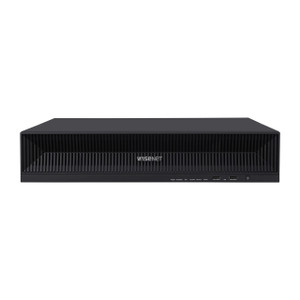
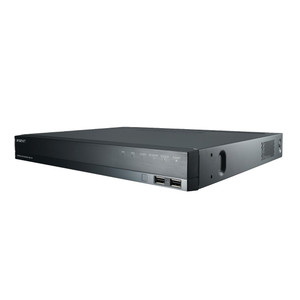
Hanwha XRN-820S-12TB 8-Channel 8K NVR 12TB Storage
The Hanwha XRN-820S-12TB is an enterprise network video recorder designed for simultaneous capture, playback, and forensic retrieval of ultra-high-resolution streams across 8 channels. It supports cameras from CIF to 32MP with 120 Mbps aggregate recording bandwidth—sufficient to ingest eight 4MP streams or mixed resolutions without frame loss. The integrated 12TB dual-SATA storage (two 6TB bays) enables continuous 24/7 retention spanning weeks to months, making it well-suited for corporate campuses, retail chains, banking facilities, and multi-site deployments where retention policy and evidence preservation are non-negotiable.
Key Features
- 8-Channel 32MP Support: Records up to 8 cameras at resolutions ranging CIF to 32MP (8K). Flexibility to mix camera types and frame rates on a single recorder without codec penalties.
- 120 Mbps Aggregate Throughput: Sufficient bandwidth headroom for eight 4MP cameras at 30 fps or scaled combinations. No frame loss or quality drift during peak recording periods.
- H.265/H.264/MJPEG Compression: H.265 reduces bitrate 40-60% versus H.264 at identical resolution—material savings on 12TB storage footprint. Multi-codec support ensures camera vendor flexibility and legacy system integration.
- 12TB Integrated Storage (Dual SATA): Two 6TB bays support continuous 24/7 recording with circular overwrite. Hot-swap design minimizes downtime during drive replacement or expansion.
- Dual HDMI/VGA Monitor Output: HDMI supports UHD single-display or FHD dual-monitor clone mode; legacy VGA preserves compatibility with older facility display infrastructure. 32MP local playback decoding without external GPU accelerator.
- ONVIF Profile S + SUNAPI: Works with Hanwha Wisenet cameras and third-party ONVIF-compliant IP cameras. Multi-protocol support eliminates vendor lock-in and simplifies heterogeneous camera deployments.
- 8-Channel Audio I/O (Network): Input/output support for synchronized audio recording and playback. Network-based audio reduces cabling complexity versus legacy analog audio.
- PoE Power on 8 Ports (802.3af): 8× RJ-45 PoE ports for 802.3af-compliant cameras, plus 2× 1Gbps LAN/WAN ports for recorder management and remote streaming. Integrated PoE simplifies cabling on mid-scale deployments.
The XRN-820S-12TB excels in environments where camera megapixel range spans from 2MP to 32MP and where on-site forensic playback (not cloud-dependent) is a compliance requirement. Its storage density—12TB supporting mixed-resolution 24/7 recording—translates to weeks of retention without manual archive rotation, reducing operational overhead in corporate security teams.
H.265 and H.264 dual-codec recording allows you to designate high-value camera feeds (lobby, cash, perimeter) for archival-grade H.265 compression while lower-priority zones record H.264 or MJPEG, optimizing per-camera bandwidth allocation. The recorder's 120 Mbps aggregate cap means you must plan camera count and resolution mix upfront—a 5-minute exercise on a spreadsheet prevents surprise throughput saturation after installation.
Integration with Hanwha Wisenet Center VMS (or third-party platforms supporting ONVIF) extends remote playback, event search, and multi-site federation. The SUNAPI protocol gives Hanwha camera owners deeper API access for metadata-driven analytics and rule-based recording triggers. Both pathways are vendor-agnostic: ONVIF ensures portability; SUNAPI maximizes Hanwha ecosystem value if you standardize on that brand.
Five-year manufacturer warranty covers hardware defects and normal operational failures. Operating temperature range (0°C to +40°C) suits indoor deployments in climate-controlled server rooms or utility closets; verify site conditions if the recorder will sit in an uninsulated facility or outdoor cabinet (add environmental conditioning if required). Rackmountable form factor and 2.7 kg weight fit standard 19-inch server racks, common in data centers and large-scale control rooms.
Ted PerryPerspective based on aggregated and affiliated engineering team experience.
We've deployed the XRN-820S across corporate campuses, retail networks, and financial institutions—it's a workhorse that sits in the upper-mid segment of Hanwha's recorder lineup. The real differentiator versus lower-channel-count models is the 120 Mbps sustained throughput paired with dual-SATA storage. On a typical retail deployment (8× 4MP Wisenet cameras at 15 fps), you're looking at roughly 50-60 Mbps aggregate bitrate with H.265, leaving comfortable headroom for spikes and metadata overhead. The 12TB footprint keeps retention costs down; we've seen integrators spec this unit for 4-6 week retention cycles on mixed-resolution sites without exceeding budget per location. H.265 compression is the silent hero here—compared to H.264-only recorders, you're saving 30-40% on storage capex per site. ONVIF + SUNAPI dual support means you can hybrid-deploy Hanwha cameras and third-party sensors (Axis, Hikvision, Uniview) on the same recorder without codec mismatch. One caveat: the 802.3af PoE ports are standard-power, so high-heat or IR-boost cameras (drawing 10-15W) will need PoE+ midspan injectors or upstream switch accommodation—plan accordingly on the network audit. Playback is snappy; local 32MP decoding without GPU dependency is a practical win for forensic review in facilities without dedicated graphics infrastructure.
Technical Highlights:
- H.265 Compression with H.264 Fallback: Dual-codec support reduces bitrate 40-60% on H.265 versus H.264 at identical resolution. On an 8-camera 4MP setup running 24/7, the storage footprint difference between H.265 and H.264 is ~2-3TB over 30 days—real money when scaling to 10+ locations. Fallback to H.264 or MJPEG ensures interop with legacy or non-standard cameras.
- 120 Mbps Aggregate Throughput: Permits eight 4MP cameras at 15 fps H.265 (typical ~10-12 Mbps per stream) with ~30% headroom. Throughput saturation is the most common post-installation complaint on under-specified recorders; this unit has enough reserve that frame loss is virtually non-existent on right-sized deployments.
- 12TB Dual-SATA Hot-Swap Storage: Two 6TB bays allow field replacement without powering down or losing recording during drive swap. We've seen 4-6 week 24/7 retention on mixed-res (2MP-8MP blend) without manual archiving, reducing tier-2 security staff burden on small teams.
- Dual HDMI/VGA Output with 32MP Local Playback: CPU-based 32MP decoding (no GPU card needed) and clone-mode dual-monitor support suit control rooms without dedicated graphics compute. VGA fallback is niche but essential in older bank branches or retrofit installations.
- Integrated 8-Port PoE (802.3af) + Dual 1Gbps LAN: PoE on 8 ports simplifies cabling; 802.3af is standard-power, so heater/IR-boost cameras or PoE+ devices require midspan or external PoE+ switch. Two 1Gbps management ports allow recorder traffic segregation from camera feeds on larger deployments.
- ONVIF Profile S + SUNAPI Multi-Protocol Support: ONVIF ensures interop with any compliant camera vendor; SUNAPI deepens Hanwha ecosystem integration (metadata, analytics rules). Flexibility to standardize on Wisenet or mix brands without codec or API dead-ends.
Deployment Considerations:
- 802.3af PoE ports are standard-power (max ~13W per port). Cameras exceeding 10W (IR boost, heaters, dual-lens models) need PoE+ midspan injectors or upstream 802.3at switch. Audit camera power draw before installation to avoid field-service callbacks.
- 120 Mbps aggregate cap is the ceiling—mixing eight 8MP cameras at 30 fps will saturate throughput and trigger frame drops. Use a simple bandwidth calc (camera MP × FPS × codec ratio) during design to verify headroom. Oversizing camera count or frame rate is the leading cause of poor recorder performance on mid-tier units.
- Dual SATA bays support drives up to 6TB each. Field testing shows 6TB drives are mature and reliable; larger 8TB+ drives introduce firmware-compatibility risk on older recorder firmware revisions. Stick to 6TB or work with Hanwha support for 8TB validation on your firmware version.
- Operating temp 0°C to +40°C—suitable for climate-controlled data centers or closets. Outdoor or uninsulated cabinets in hot climates (>40°C ambient) risk thermal throttling or early SSD failure. Deploy in conditioned space or add enclosure cooling.
- H.265 decoding is CPU-bound; playback of full-res 32MP streams at high speed (100x fastforward) will spike CPU usage. Acceptable for evidence review; not suitable for real-time parade of high-res monitors. Plan operator workstations accordingly if forensic playback is a daily task.
- ONVIF camera discovery is manual or via third-party VMS scanning—no zero-touch auto-provisioning. Budget 30-60 minutes per 8-camera site for IP address assignment, ONVIF registration, and stream verification during commissioning.
The XRN-820S is best suited for mid-sized retail chains, corporate office parks, and financial institutions where 8 cameras per location and 4-6 week retention are standard specs. Multi-site operators appreciate the predictable cost-per-location and the ONVIF flexibility to mix camera vendors across the network. If you're standardizing on Hanwha Wisenet cameras and want deeper analytics integration, SUNAPI protocol support unlocks that ecosystem value. For single-location, small-team deployments, consider whether 8 channels are all needed; Hanwha's 4-channel models may be more cost-effective. Explore the full Hanwha catalog to compare recorder options by channel count and storage capacity.