Comnet FDC80R485 8-Channel Contact Closure Receiver (RS485)
Overview
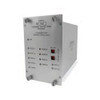
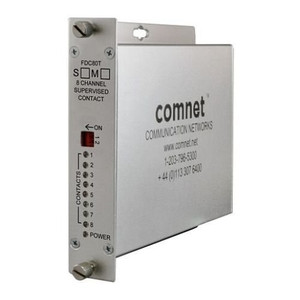
The Comnet FDC80R485 is an 8-channel supervised contact closure receiver designed to accept dry switch and relay contact states transmitted over a two-wire RS485 copper circuit. Unlike simple signal repeaters, the FDC80R485 uses microprocessor-based logic with packet validation to prevent random relay state changes — critical in fire alarm, intrusion detection, and building automation installations where a false trigger can cascade into costly false dispatches. The receiver supports normally open or normally closed contact inputs on the transmitter side, applies supervision to detect circuit faults, and outputs relay contacts rated for 30 VDC at 1A, making it compatible with legacy panel inputs and modern sensor interfaces alike. This is a 2-slot rack-mount module paired with a Comnet FDC80 series transmitter over fiber or copper.
Key Features
- 8 independent output channels: Each receiver output is a discrete 30 VDC, 1A relay contact — one for each monitored sensor or switch state on the transmitter. Allows modular alarm and automation logic without additional external relays.
- Microprocessor-based packet validation: Garbled or out-of-sequence packets are discarded rather than causing random contact closure events. In an eight-story fire alarm installation, false triggers on a single channel can cascade; packet logic prevents this.
- Supervised circuit detection: External series and shunt resistors (included) enable the transmitter to detect open or short circuit conditions on each supervised input. Fault conditions trigger a summary alarm contact (Form C, 30 VDC, 1A, non-latching) on the receiver, alerting your monitoring center or BMS to a wiring failure before it affects operation.
- 25 msec typical, 35 msec maximum response time: Contact closure state changes are relayed with <35 ms latency — fast enough for access control door strike logic and PIR-based intrusion systems without perceptible delay.
- RS485 transmission up to 457 meters (1500 feet): Two-wire copper wiring eliminates the cost and installation complexity of optical fiber for most campus or facility-scale deployments. If longer distances or electrically noisy environments are your constraint, pair this with a Comnet fiber-based transmitter instead.
- Low power consumption (3W max): Draws minimal current from a standard 8–15 VDC power supply — typical for rack-mount installations where multiple modules share a single supply. No separate 24V converter required.
- Wide operating temperature range (-40°C to +75°C): Rated for outdoor fiber termination boxes, unheated equipment rooms, and hot-roof HVAC sensor enclosures. Storage tolerance extends to -40°C to +85°C, covering shipping and warehouse conditions.
- Automatic resettable solid-state current limiters: Protects relay outputs from transient overcurrent; faults clear automatically without replacing fuses or resetting breakers. Reduces on-site service calls for minor electrical hiccups.
- Hot-swappable rack modules and Form C summary fault alarm: The FDC80R485 can be installed or replaced in a powered rack without powering down. The receiver's Form C fault relay (dry contacts) integrates with any monitoring panel, BMS, or dedicated fault logger.
- LEDs for power, contact closure status, and summary fault: On-site troubleshooting is visual — no need to open the enclosure or connect a laptop to diagnose which channels are active or if a fault is present.
- Lifetime warranty: Comnet backs this unit for the life of the product, reducing lifecycle cost in fixed-installation environments where replacement is disruptive.
Integration and Compatibility
The FDC80R485 pairs with any Comnet FDC80 series transmitter over a single RS485 twisted-pair cable (or over optical fiber if you opt for a fiber-based transmitter variant). Input contact ratings support both normally open and normally closed switch logic, so legacy dry-contact sensors, door strike circuits, and occupancy switches integrate without additional conversion. Output relay contacts are sized for standard fire panel inputs, building automation system (BAS) dry-contact zones, and electromechanical access control hardware. The non-latching relay configuration means the FDC80R485 requires continuous supervision from the transmitter; if the link drops, relay outputs default to their de-energized state — a fail-safe design for safety-critical systems. Interchangeability between standalone and rack-mount use (with appropriate holders, sold separately) allows flexible deployment in confined or distributed equipment rooms.
Environmental and Installation Notes
Operating humidity tolerance of 0–95% non-condensing suits standard indoor equipment rooms and sealed outdoor enclosures. The 6.1 x 5.3 x 2.2 inch form factor occupies two standard rack slots, integrating cleanly into C1 rack systems or standalone configurations. Shipping weight under 2 lb simplifies field installation; power and signal connections use screw terminals, avoiding proprietary connectors. The unit accepts 8–15 VDC input (or draws power directly from a compatible C1 rack supply, sold separately), making it suitable for both centralized power distribution and distributed battery-backed supplies in critical facilities.
What's in the Box
Exact package contents are not detailed in available documentation. Verify inclusion of external series and shunt resistors (referenced as included for contact supervision) with the distributor or manufacturer before deployment.
Frequently Asked Questions
Q: Can I use the FDC80R485 with fiber or copper transmission?
A: The FDC80R485 is the copper/RS485 receiver variant. If you need fiber, use the FDC80RM1 or FDC80RS1 (single-mode or multimode fiber receivers). The same receiver logic applies; the difference is the input interface.
Q: What happens if the RS485 link between transmitter and receiver drops?
A: The non-latching relay outputs on the FDC80R485 de-energize (open), and a summary fault alarm contact closes to alert your monitoring system. This fail-safe design prevents false closures if the communications link is severed.
Q: How far can I run the RS485 cable?
A: Up to 457 meters (1500 feet) from the transmitter to the receiver over standard twisted-pair copper. Distances beyond that require fiber-based variants or additional RS485 repeaters.
Q: What relay contact ratings do the outputs support?
A: Each output relay is rated 30 VDC at 1A resistive load, normally open. This is suitable for fire panel inputs, BAS dry-contact zones, and low-current logic circuits. Do not exceed 1A or 30 VDC, and do not use inductive loads without a snubber diode.
Q: Can I detect a broken or shorted transmitter input wire?
A: Yes. The supervision function in the paired FDC80 transmitter uses external series and shunt resistors (included) to detect open and short circuits on supervised inputs. Faults trigger the summary alarm contact on the FDC80R485 receiver.
Q: Is there a latching version of the FDC80R485?
A: Yes. The FDC80RM1 is the latching fiber variant; check with Comnet for a latching copper receiver model if latch-on-receipt behavior is required. The FDC80R485 is non-latching only.
I've fielded a lot of false-alarm callbacks on systems where a garbled RS485 packet caused a relay to close unexpectedly. The Comnet FDC80R485 solves that with microprocessor-based packet validation — out-of-sequence or corrupted packets are discarded, not acted upon. That 25 msec typical response time keeps the relay contact changes snappy enough for door strikes and PIR logic without introducing perceptible lag.
Technical Highlights:
- Packet validation logic: Prevents random relay state changes from corrupted RS485 transmissions. In fire alarm systems with eight supervised zones, a single false trigger can dispatch unwanted crews; this eliminates that risk at the receiver level.
- Supervised input detection (via paired transmitter): Open and short circuit faults on any of the eight transmitter inputs are detected and reported via a Form C summary alarm relay on the FDC80R485 — giving your monitoring center real-time visibility into wiring health before a silent failure occurs.
- 457-meter RS485 range: Standard twisted-pair copper carries the signal across an entire facility campus without the cost of optical fiber runs. If you need to go longer or cross electrically hostile environments (parking lots, motor control rooms), you swap to a Comnet fiber transmitter instead.
- 30 VDC, 1A output relays: Every one of the eight channels outputs a dry relay contact sized for legacy fire panels, BAS inputs, and electromechanical access hardware. No active buffers or power conversion required on the downstream logic.
Deployment Considerations:
- The FDC80R485 is non-latching — relay outputs reset as soon as the link recovers or the transmitter stops sending the closure. If you need latch-on-receipt behavior, you must use a latching variant or add an external latching relay in your downstream logic.
- Each output is rated for resistive load only at 1A max; inductive loads (door strike solenoids, horn relays) will kill the contact prematurely without a snubber diode. Size your loads ahead of time and verify compliance with the 1A limit, or you'll be replacing contacts in the field.
- The 8–15 VDC power input is tighter than a standard 12 VDC supply tolerance. If your facility power distribution has sagging rails or an undersized backup battery system, verify your supply stays within band, or the receiver may reset unexpectedly.
This is the right choice for fire alarm annunciation, building automation zone logic, and multi-location sensor supervision where you need packet integrity and fault awareness built into the receiver itself, not bolted on as an afterthought. Size your supply correctly, pair it with the matching Comnet transmitter, and you've got a solid foundation for two-wire supervised contact transmission across a campus or multi-building facility.