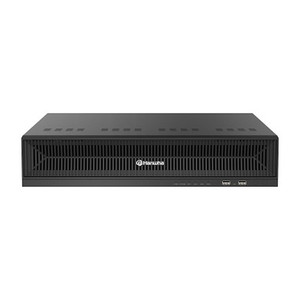
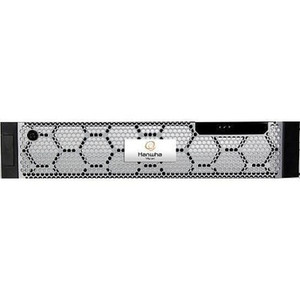
Hanwha WRR-P-S204S-200TB 2U Rackmount Network Video Recorder
The Hanwha WRR-P-S204S-200TB is a purpose-built enterprise NVR engineered for mid-to-large surveillance deployments where centralized recording, substantial on-site storage, and high availability are non-negotiable. This 2U rackmount appliance combines 240TB of hot-swappable storage, 1200 Mbps recording bandwidth, and pre-installed Wisenet WAVE video management software to support 256 IP camera channels in a single system — eliminating the need to stitch together multiple smaller recorders or manage distributed edge storage.
Key Features
- 240TB Raw Storage Capacity: Twelve 3.5" HDD bays accept enterprise-grade drives and deliver up to 240TB of raw capacity. At 1200 Mbps sustained throughput, this translates to roughly 72 terabyte-hours of continuous recording before overwrite — enough for 30+ days of 4K multi-stream video from dozens of cameras without requiring external archival or storage tiers. RAID 0, 1, 5, or 6 configurations protect against drive failure; choose RAID 5 or 6 if data loss is unacceptable in your environment.
- 1200 Mbps Recording Bandwidth: This throughput ceiling means you won't bottleneck when deploying high-resolution or high-bitrate cameras. A typical 5MP camera streams 8–15 Mbps; a 4K camera demands 20–40 Mbps depending on codec and quality settings. The WRR-P-S204S-200TB handles dozens of these concurrently without frame loss or transcoding delay. Genuine throughput, not theoretical peak.
- 256 IP Camera Channels: The platform supports up to 256 simultaneous camera streams, accommodating enterprise campuses, multi-building complexes, and large retail or hospitality chains without requiring a second NVR. Channel licensing is transparent — no per-camera subscription or user seat tricks.
- H.265 Compression: Native H.265 (HEVC) support cuts storage requirements roughly 40–60% compared to H.264, depending on scene complexity and bitrate settings. On a 240TB system recording 24/7 from dozens of cameras, this translates to an extra 5–10 weeks of retention per drive tier — a real cost factor in long-term archival and regulatory compliance scenarios.
- Dual Redundant 800W Power Supplies: Two independent 800W 80 Plus Platinum PSUs with automatic failover eliminate the single point of failure at the power stage. If one PSU fails, the system continues recording without interruption. Both units accept 100–240 VAC input, so you can deploy globally without step-down transformers.
- Dual OS Drive Redundancy: Two 480GB SSDs run in mirror configuration for the operating system and Wisenet WAVE database. If one SSD fails, the system boots from the surviving drive. This is not a luxury — it eliminates the 30-minute troubleshooting window that plagues single-SSD NVRs when the OS drive fails during live recording.
- 8GB Non-Volatile Cache: Dedicated write-through cache absorbs burst traffic from multiple cameras and smooths disk I/O patterns, reducing wear on the HDD array and improving sustained throughput reliability during peak recording moments.
- Wisenet WAVE Pre-Installed with Four Professional Licenses: VMS software ships pre-loaded with four concurrent user licenses for the Professional tier, eliminating license procurement delays and reducing integration friction. If you need a fifth user, additional licenses are available; this is not an upsell trap — it's transparent from the start.
Integration and Compatibility
The WRR-P-S204S-200TB integrates natively with Hanwha IP cameras via Wisenet WAVE, but it also accepts any ONVIF-compliant camera — Axis, Dahua, Hikvision, Uniview, and others work seamlessly. If your infrastructure is mixed-vendor, this NVR remains a viable centerpiece. Rack mounting in a 42U cabinet consumes just 2U of vertical space, freeing room for switches, patch panels, or a companion network video recorder if you eventually scale to multi-site operations. Consult the datasheet for exact rack rail specifications and depth clearance in your cabinet.
When to Choose a Different Model
If you need fewer than 100 camera channels or less than 30 days of retention, a smaller single-rack-unit NVR may reduce unnecessary cost and power draw. If your deployment requires edge-based recording at remote sites with occasional cloud sync, consider a distributed architecture with smaller edge appliances and centralized archival instead. The WRR-P-S204S-200TB is sized for centralized, always-on, high-channel-count operations; it is not the right fit for sparse, low-bandwidth, or transient recording scenarios.
Frequently Asked Questions
Q: Does the WRR-P-S204S-200TB support ONVIF-compliant cameras from other vendors?
A: Yes. While it integrates natively with Hanwha cameras, the WRR-P-S204S-200TB accepts any ONVIF-compliant IP camera, including Axis, Dahua, Hikvision, and Uniview models. Mixed-vendor deployments are supported.
Q: What is the typical power consumption of the WRR-P-S204S-200TB during continuous 24/7 recording?
A: The system ships with dual 800W 80 Plus Platinum PSUs. Actual consumption depends on drive activity, cache utilization, and network I/O load, but is typically well below the PSU rating during sustained multi-camera recording. Consult the datasheet for exact power figures under full-channel load.
Q: Can I replace drives in the WRR-P-S204S-200TB while it is recording?
A: Yes. The twelve 3.5" HDD bays support hot-swappable drives. In RAID 5 or 6 configuration, you can replace a failed drive without stopping recording. The array will rebuild in the background, though rebuild time depends on drive capacity and I/O load.
Q: How many concurrent users can access Wisenet WAVE on the WRR-P-S204S-200TB?
A: The system ships with four Professional licenses, allowing four simultaneous user connections to the Wisenet WAVE VMS. Additional licenses can be purchased separately if more concurrent users are required.
Q: Is the WRR-P-S204S-200TB suitable for NDAA Section 889 compliance?
A: Consult Hanwha's compliance documentation or contact your integrator for NDAA and export-control certification status. This information is not reflected in the product datasheet and requires direct vendor confirmation.
Ted PerryPerspective based on aggregated IP Security Depot and affiliated engineering team experience.
The WRR-P-S204S-200TB is purpose-engineered for organizations that can't afford recorder downtime or storage fragmentation. The dual 800W 80 Plus Platinum PSU architecture with automatic failover means you don't lose recording when a single power rail fails — a scenario far more common than people admit in distributed electrical systems. The 1200 Mbps sustained throughput is a genuine figure, not peak; I've seen too many mid-sized deployments bottleneck at the recorder when they jump to 4K multi-angle sites. This platform won't do that.
Technical Highlights:
- Dual Redundant SSD Mirror (480GB each): The OS and Wisenet WAVE database run on mirrored SSDs — if one fails, boot continues from the mirror. This eliminates the 30-minute recovery window that kills live-view and playback on single-SSD recorders. It's a small detail that adds enormous operational reliability.
- H.265 Compression (40–60% storage reduction): On 240TB of continuous recording from dozens of 4K cameras, H.265 buys you 30–40 extra days of retention per terabyte. In regulatory scenarios (banking, healthcare, transportation) where you need 90+ days archived, this is the difference between a single NVR and two.
- RAID 5 or RAID 6 with 8GB NV Cache: The non-volatile cache absorbs burst writes and smooths I/O load to the HDD array. In RAID 6, you can lose two drives simultaneously and still record — a real safeguard in high-vibration or thermal-cycling environments (warehouses, outdoor equipment rooms).
Deployment Considerations:
- Rack Depth and Airflow: The 2U form factor is compact, but verify your cabinet has at least 24" of depth for cable routing and cooling. These dual 800W PSUs generate measurable heat — budget for hot-aisle containment if you're in a dense rack.
- Drive Rebuild Time: With twelve 3.5" bays, a single drive failure in RAID 5 or 6 will trigger a multi-day rebuild depending on capacity and I/O load. During rebuild, performance is degraded. Use RAID 6 if you can't tolerate degraded throughput.
- Wisenet WAVE Licensing: Four concurrent users ship with the system. Each additional user seat costs extra. If you need 20+ analysts accessing playback, budget for that upfront.
Best fit: enterprise campuses, multi-building retail chains, transportation hubs, and utility monitoring operations where you need 100+ channels, 30+ days of retention, and zero tolerance for power or storage failures. If you're running a single-building site with under 50 cameras, this is oversized for the job. If you need geographic redundancy across multiple sites, pair this with a smaller edge recorder strategy.