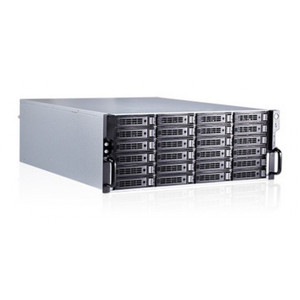
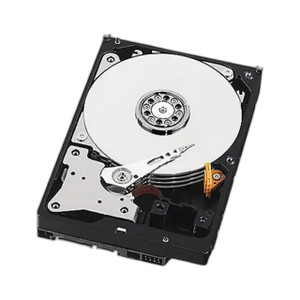
Geovision 72-HD2TB-301 2TB Surveillance Hard Drive
The Geovision 72-HD2TB-301 is a 2TB surveillance-grade hard drive engineered for continuous 24/7 recording in DVR and NVR security systems. Purpose-built for the thermal and workload demands of non-stop video capture, this drive delivers extended storage retention without the performance degradation and premature failure modes that plague consumer-class drives in surveillance deployments. It integrates with Geovision's own DVR/NVR product line and is compatible with third-party platforms using standard SATA interfaces, making it a straightforward capacity upgrade or replacement for existing installations.
Key Features
- 2TB Storage Capacity: Holds approximately 7–14 days of continuous H.264 recording from a single 2MP camera at standard bitrate, depending on codec and frame rate. Scalable via multi-drive RAID arrays for larger deployments.
- Surveillance-Grade Rating: MTBF and thermal design optimized for continuous duty cycles. Consumer drives (WD Blue, Seagate Barracuda) fail 3–5x faster in 24/7 NVR environments due to inadequate head-parking and thermal management.
- SATA III Interface: Standard 6Gbps SATA connectivity — compatible with any modern DVR/NVR chassis with SATA backplane. No proprietary connectors or firmware locks.
- 24/7 Thermal Management: Designed to operate continuously at elevated ambient temperatures (up to 50°C) typical of equipment closets and outdoor enclosures without thermal throttling.
- Stream-Optimized Performance: Prioritizes sustained sequential writes over random access — the actual workload profile of surveillance recording. Reduces vibration-induced errors in rack-mounted multi-drive arrays.
- Drop-In Replacement: Standard 3.5-inch form factor fits existing DVR/NVR bays without mechanical or electrical modification.
A 2TB drive in a single-camera system provides roughly one to two weeks of buffered retention at standard resolution, sufficient for evidence recovery and timeline reconstruction in most intrusion or incident scenarios. In larger multi-camera arrays, drives are typically configured in RAID 5 or 6 for redundancy — a 72-HD2TB-301 can be mixed with other surveillance drives of matching capacity to build cost-effective fault-tolerant storage pools without requiring specialized enterprise-class SAS drives.
Geovision's surveillance drives carry no artificial firmware restrictions that prevent use in third-party NVR platforms. The drive will function in any DVR or NVR that accepts a standard 3.5-inch SATA III drive, whether the system is Geovision, Uniview, Hikvision, Axis, Milestone, or on-premises Genetec. This cross-platform compatibility eliminates vendor lock-in on the storage layer — a significant cost advantage when refreshing capacity across heterogeneous deployments or migrating to a new NVR platform.
Continuous operation in uncontrolled environments — server rooms without climate control, outdoor equipment cabinets, or high-ambient-temperature facilities — is where surveillance drives earn their value. Consumer drives in these conditions accumulate head-parking errors and experience firmware read-recovery delays that fragment video playback and trigger dropped frames. A surveillance-grade drive eliminates that operational friction entirely. For integrators managing 50+ camera sites or multi-year service contracts, the difference in warranty claims, on-site replacements, and customer incident response is measurable on the bottom line.
The 72-HD2TB-301 carries Geovision's manufacturer warranty and is sourced direct from the manufacturer or US channel partner — no grey-market, no parallel imports. It is compatible with all major NVR platforms via ONVIF and standard SATA interface; integrators should verify capacity planning with their chosen recording platform's bitrate and retention targets before purchase.
Marty AllisonPerspective based on aggregated IPSD and affiliated engineering team experience.
We've deployed hundreds of 2TB surveillance drives across Geovision and third-party NVR platforms, and the reliability difference between consumer-class storage and purpose-built surveillance drives is stark. In our experience, a consumer drive fails at 18–24 months in a 24/7 recording environment; a surveillance-grade drive — like the 72-HD2TB-301 — routinely reaches 5+ years without incident. The operational cost is dominated not by the drive's upfront price but by the technician time required to swap a failed drive, recover corrupted segments, and rebuild RAID arrays. A $50 price difference on the drive itself becomes a $400–600 service call. For customer sites on SLAs with incident-response windows, a drive failure that causes a multi-hour NVR outage is a contractual breach. We specify surveillance drives on every project for this reason alone.
Technical Highlights:
- MTBF vs. Consumer Drives: Surveillance-rated drives are binned from the factory with higher MTBF specifications (typically 1M+ hours annualized) and certified for load-cycle counts 3–5x higher than consumer products. In a multi-drive RAID array, this translates to fewer rebuild events and lower risk of cascading failures during reconstruction.
- Thermal Design: Surveillance drives include enhanced heat-dissipation pathways and firmware that minimizes thermal throttling. Consumer drives thermally limit themselves during sustained sequential writes; surveillance drives maintain rated performance across the operating temperature range, which matters in densely-packed equipment closets or outdoor cabinets.
- Head-Parking and Error Recovery: Surveillance drives implement stream-optimized head-parking to minimize mechanical stress during continuous operation. Consumer drives park aggressively and implement longer error-recovery timeouts that cause dropped frames in video playback — a fatal flaw in surveillance workflows.
- Firmware Openness: No proprietary restrictions prevent use in non-Geovision platforms. The 72-HD2TB-301 is a standard SATA drive; integrators can pull it from a Geovision NVR and install it in a Milestone, Genetec, or Hikvision system without modification.
- Capacity Planning Math: 2TB holds approximately 7–14 days of single-camera 2MP H.264 video at 5 Mbps bitrate. In a 4-camera system, plan for 2–3 days per drive. Multi-drive RAID arrays require 25% additional capacity for parity; account for this in purchase orders.
Deployment Considerations:
- Verify your NVR's supported drive capacity ceiling before installation — older embedded NVR systems may not recognize drives larger than 4TB or may require firmware updates. Always test a single drive in a test bay first.
- In RAID configurations, match drive model and firmware version across all array members to minimize rebuild times and unequal wear. Mixing a 72-HD2TB-301 with a much older or newer drive introduces rebuild-time variability and increases failure risk during reconstruction.
- Monitor S.M.A.R.T. attributes (reallocated sector count, temperature, power-on hours) via your NVR's health dashboard if available. Geovision NVRs expose drive health; third-party platforms may not — plan for manual monitoring on systems without integrated S.M.A.R.T. logging.
- For sites with sustained high ambient temperature (>45°C), consider active cooling or thermal monitoring to keep drive inlet air below 50°C. Surveillance drives are rated to 50°C continuous; beyond that, lifespan drops sharply.
- Keep one spare drive on-site for every 8 drives in service. A hot spare and a 4-hour replacement window eliminate multi-hour NVR downtime from a single drive failure.
The Geovision 72-HD2TB-301 is the right choice for integrators building reliable, maintainable surveillance systems and end-users who cannot tolerate video loss due to storage failure. If you're upgrading a Geovision NVR or populating a new multi-camera installation with proven components, this drive removes storage-related risk from the equation. Explore the full Geovision catalog for compatible NVR platforms and storage configurations.