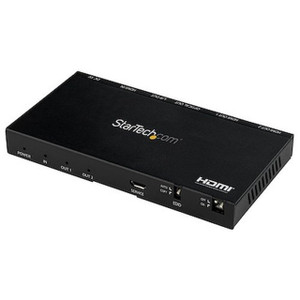
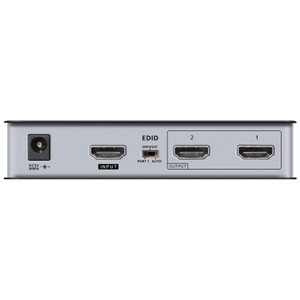
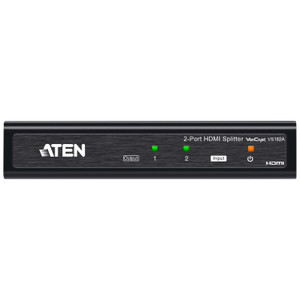
StarTech HDMI-SPLITTER-4K60UP 2-Port 4K 60Hz HDMI Splitter
Overview
The StarTech HDMI-SPLITTER-4K60UP is a 2-port HDMI splitter that distributes a single 4K 60Hz source signal to two displays simultaneously — without downscaling. If you're running a video wall, dual-monitor briefing room, or a surveillance display array where a single player or decoder needs to feed two screens at full resolution, this is the category of device to evaluate. The HDMI-SPLITTER-4K60UP (often searched as HDMI SPLITTER 4K60UP) fits the use case where you need identical output on two displays from one source, avoiding the cost of a second output card or a second media player.
Key Features
- 4K 60Hz Signal Distribution: Passes 4K resolution at 60Hz to both outputs — both displays receive the full-bandwidth signal rather than a downscaled fallback. This matters in briefing rooms and control centers where 1080p on a 4K screen is visually unacceptable.
- 2-Port HDMI Output: Splits one HDMI source to two displays in a single unit. Reduces cabling complexity compared to running separate players or using a matrix switcher for a simple 1-in/2-out scenario.
- HDMI Connectivity: Standard HDMI interface on both input and output ports means compatibility with the broad ecosystem of AV sources — media players, NVR HDMI outputs, decoders, and workstations — without adapters in most installs.
Integration and Compatibility
The HDMI-SPLITTER-4K60UP is relevant in surveillance and AV-over-IP contexts where a single NVR or video decoder HDMI output must feed a primary monitor and a secondary display — a common requirement in guard stations and lobby reception desks. Verify HDCP compatibility with your source device and displays before deploying in a content-protected signal chain. For multi-source or multi-display environments beyond a 1-in/2-out topology, evaluate a larger HDMI matrix switch instead.
Frequently Asked Questions
Q: Does the HDMI-SPLITTER-4K60UP support 4K at 60Hz on both outputs simultaneously?
A: Based on the product specification, the HDMI-SPLITTER-4K60UP is rated for 4K 60Hz output — both ports receive the same signal from the single HDMI input at that resolution and refresh rate.
Q: Can I use the HDMI-SPLITTER-4K60UP to connect two different sources to one display?
A: No. This is a splitter, not a switcher. It takes one HDMI input and mirrors it to two HDMI outputs. For multiple sources to one display, you need an HDMI switcher.
Q: Is the HDMI-SPLITTER-4K60UP compatible with NVR HDMI outputs for surveillance display setups?
A: It is designed for standard HDMI signal distribution. Compatibility with a specific NVR depends on that NVR's HDMI output specification and HDCP settings. Verify your NVR's HDMI output resolution and HDCP version match the splitter's supported range.
Q: Does the HDMI-SPLITTER-4K60UP require external power?
A: Power requirements are not confirmed in available evidence for this SKU. Consult the StarTech product datasheet or packaging for power input details before purchasing.
The HDMI-SPLITTER-4K60UP addresses a specific and recurring problem in control room and guard station builds: one HDMI source, two displays, full 4K 60Hz on both — no compromise on refresh rate or resolution. It's a narrow use case, but when that's exactly what you need, a dedicated splitter is cleaner than repurposing a matrix switcher.
Technical Highlights:
- 4K 60Hz Pass-Through: Both output ports carry the full 4K 60Hz signal — no frame rate reduction or resolution downscale to the secondary display, which matters when the second monitor is a supervisor screen that needs the same image fidelity as the primary.
- 2-Port HDMI Architecture: A 1-in/2-out topology keeps the installation simple. There's no configuration overhead — signal in, two identical signals out.
- Standard HDMI Interface: Works with the HDMI outputs already present on NVRs, decoders, and workstations without requiring DisplayPort adapters or active converters in most deployments.
Deployment Considerations:
- Confirm HDCP version compatibility between your source device and both destination displays before installation — HDCP handshake failures are the most common cause of blank-screen issues in splitter deployments.
- Available spec data for this SKU is limited; verify power input requirements and maximum cable length support directly from the StarTech datasheet prior to finalizing your BOM.
Best fit for guard stations or briefing rooms where a single NVR or video decoder HDMI output must drive a local operator monitor and a wall-mounted display simultaneously at 4K 60Hz — without adding a second output device to the rack.