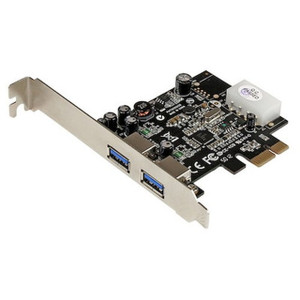
StarTech O1210I-NETWORK-CARD 2-Port 10GbE SFP+ OCP 3.0 Server Network Card
Overview
The StarTech O1210I-NETWORK-CARD is a dual-port 10 Gigabit Ethernet OCP 3.0 mezzanine card built around the Intel X710-BM2 controller — a controller with a proven track record in high-density server deployments where consistent throughput and low CPU overhead matter more than spec-sheet marketing. If you are speccing 10GbE connectivity into an OCP 3.0 chassis for a video surveillance back-end, network video recorder cluster, or enterprise storage node, this card slots directly into the OCP 3.0 mezzanine connector and delivers dual SFP+ ports without consuming a PCIe slot.
The OCP 3.0 form factor is the key differentiator here. Unlike a standard PCIe NIC that occupies a full-height or low-profile slot, the O1210I-NETWORK-CARD (often searched as O1210I NETWORK CARD) connects via a single 168-pin 4C+ host connector and integrates with OCP-ready server platforms — common in hyperscale-derived and open-rack server designs from major OEM vendors. If your chassis is not OCP 3.0 compatible, this card simply will not fit — that is the first question to answer before ordering.
Key Features
- Intel X710-BM2 Controller: Intel's X710 silicon is widely supported across Linux and Windows Server environments with mature, well-maintained driver stacks. For surveillance back-ends running on Linux kernel 2.6.x or later, or Windows Server 2012 and up, driver integration is straightforward with no third-party shim layers required — reducing driver-related support calls in production.
- Dual SFP+ Ports at 10Gbps Each: Two independent 10Gbps lanes give you 20Gbps aggregate throughput potential. For a 64-camera NVR node ingesting 4K streams at 10–15 Mbps each, that aggregate headroom is substantial — you can saturate both uplinks before the NIC becomes the bottleneck.
- OCP 3.0 Mezzanine Interface (168-Pin 4C+): The OCP 3.0 form factor eliminates PCIe slot competition in chassis where slot count is constrained by GPU, HBA, or RAID controllers. It also supports PCIe 3.0, 2.1, and 2.0 host buses, which means backward compatibility in older OCP-capable platforms — useful when phasing in new NICs across a mixed-generation server fleet.
- 9K Jumbo Frame Support: Enabling 9K jumbo frames on your SAN, NAS, or iSCSI storage fabric reduces CPU overhead per frame and increases effective throughput for large sequential writes — exactly the workload profile of continuous video recording. Requires end-to-end MTU alignment across your switch fabric; confirm your network switches support 9K MTU before enabling.
- IEEE 1588 Precision Time Protocol: PTP support allows hardware-level timestamp synchronization across network devices. For multi-camera forensic deployments where frame-accurate event correlation across cameras matters — think synchronized multi-angle review — PTP provides the timing infrastructure that NTP alone cannot match at sub-millisecond precision.
- IEEE 802.1Q / 802.1ad VLAN and QinQ: Native VLAN tagging and double-tagging (QinQ) support lets you segment surveillance traffic from corporate LAN traffic at the NIC level. In converged network architectures, isolating video streams on a dedicated VLAN prevents surveillance bandwidth from competing with ERP or VoIP traffic without requiring a separate physical network.
- IEEE 802.3ad Link Aggregation: LACP-capable bonding across both SFP+ ports gives you active-active redundancy or bandwidth aggregation depending on your switch and OS configuration — useful for keeping video recording live during a single-link failure.
- Compact Mezzanine Footprint (5.2 x 3.3 x 0.6 in, 3.7 oz): The physical profile is purpose-built for dense server chassis. At 3.7 oz and under an inch tall, it adds negligible thermal mass and does not interfere with adjacent card airflow in standard OCP chassis configurations.
- Operating Range 0°C to 60°C: Covers standard data center and server room environments. Not rated for outdoor or industrial edge deployments — keep this in mind if you are speccing video analytics servers for warehouse floors or factory environments that run hot.
Integration and Compatibility
The O1210I-NETWORK-CARD is compatible with Windows Server 2012 and later, Windows 10 and later, and Linux kernel 2.6.x and later. The Intel X710-BM2 driver ecosystem is one of the most stable in enterprise networking — Inbox drivers are available in recent Windows Server builds, and the i40e driver for Linux is included in mainline kernels, which matters when you need to deploy without custom driver packages.
PCIe backward compatibility spans 3.0, 2.1, and 2.0 host interfaces, so the card can operate in OCP 3.0 platforms running older PCIe generations without requiring a new host platform. Standards compliance covers IEEE 802.3 (base Ethernet), 802.3ae (10GbE), 802.1Q (VLAN), 802.1p (QoS), 802.1ad (QinQ), 802.3ad (LACP), and IEEE 1588 (PTP) — a full complement of data center networking standards that aligns with most enterprise managed switch configurations.
For video surveillance infrastructure specifically, pairing this card with a network video recorder running on an OCP 3.0 server platform gives you a clean 10GbE uplink path without consuming a PCIe expansion slot. Consult your VMS vendor's NIC compatibility list — most enterprise VMS platforms (Milestone, Genetec, Nx Witness) do not impose NIC restrictions beyond OS-level driver support, which the X710-BM2 satisfies on all listed operating systems. For broader context on building out surveillance network infrastructure, the surveillance networking guide covers bandwidth planning and switch selection in detail.
Storage temperature tolerance runs from -10°C to 70°C with 5%–90% RH (non-condensing), which covers standard shipping and warehousing conditions. The 2-year manufacturer warranty applies to this SKU.
Frequently Asked Questions
Q: Is the O1210I-NETWORK-CARD compatible with standard PCIe slots?
A: No. The O1210I-NETWORK-CARD uses the OCP 3.0 mezzanine interface with a 168-pin 4C+ host connector. It is not a standard PCIe add-in card and will only install in servers or chassis with a compatible OCP 3.0 mezzanine slot. Confirm your server platform supports OCP 3.0 before purchasing.
Q: What operating systems are supported?
A: The card supports Windows Server 2012 and later, Windows 10 and later, and Linux kernel 2.6.x and later. The Intel X710-BM2 controller uses the i40e driver on Linux, which is included in mainline kernels, and inbox drivers are available on recent Windows Server releases.
Q: What is the warranty on the O1210I-NETWORK-CARD?
A: StarTech provides a 2-year manufacturer warranty on the O1210I-NETWORK-CARD.
Q: Does the O1210I-NETWORK-CARD support jumbo frames?
A: Yes. The card supports jumbo frames up to 9K MTU. For this to benefit throughput, jumbo frames must be enabled end-to-end — your switch fabric and connected storage or server interfaces must also be configured for 9K MTU, otherwise standard 1500-byte MTU will be used.
Q: Can this NIC be used in a video surveillance server deployment?
A: Yes, provided your NVR or video analytics server uses an OCP 3.0 compatible chassis. The dual 10Gbps SFP+ ports provide ample bandwidth for high-camera-count deployments, and IEEE 1588 PTP support enables precise timestamp synchronization across cameras and recording infrastructure.
Q: Does the O1210I-NETWORK-CARD support link aggregation or VLAN tagging?
A: Yes. The card supports IEEE 802.3ad (LACP) for link aggregation across both SFP+ ports, and IEEE 802.1Q / 802.1ad for VLAN tagging and QinQ double-tagging. Both features require compatible managed switch configuration on the network side.
The O1210I-NETWORK-CARD is one of the cleaner solutions I've seen for adding dual 10GbE to an OCP 3.0 server without burning a PCIe slot — and the Intel X710-BM2 controller is the reason I'd reach for it over lesser-known silicon. That controller has a mature, actively maintained driver stack on both Linux and Windows Server, which matters the moment you need to troubleshoot a throughput anomaly at 2 AM on a live recording cluster.
Technical Highlights:
- Intel X710-BM2 Controller: Stable i40e Linux driver included in mainline kernel builds; Windows Server inbox driver support from 2012 onward — no custom driver packages to manage in your deployment pipeline.
- 9K Jumbo Frame Support: Reduces per-frame CPU overhead on iSCSI and NAS-backed storage fabrics — directly relevant for sequential write workloads like continuous video recording across 30+ camera streams.
- IEEE 1588 PTP: Hardware-level precision time protocol support enables sub-millisecond clock synchronization across your recording infrastructure — critical for frame-accurate multi-camera event correlation in forensic review workflows.
Deployment Considerations:
- Verify OCP 3.0 mezzanine slot availability on your target server before ordering — this card's 168-pin 4C+ connector has no adapter path to a standard PCIe slot.
- Operating temperature tops out at 60°C, which is fine for conditioned data center environments but leaves no margin for poorly cooled edge server deployments on warehouse floors running above ambient.
This card is a well-suited pick for OCP 3.0 server platforms acting as NVR back-ends or video analytics nodes in enterprise surveillance environments — specifically where you need dual 10GbE SFP+ uplinks, PTP timing, and a controller with a driver history you can trust across Linux distributions without chasing vendor-specific packages.