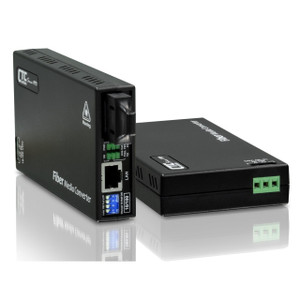
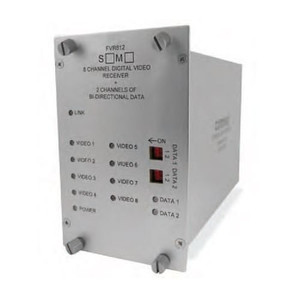
Comnet FVT2014M1 2-Channel Video Transmitter with 4-Channel Data Transceiver
Overview
The Comnet FVT2014M1 is a fiber-optic video transmitter designed for long-distance analog video distribution paired with simultaneous bi-directional serial data transport. This is a purpose-built tool for security integrators working in industrial facilities, campuses, or installations where distance, electrical isolation, and multi-protocol data support are non-negotiable. The FVT2014M1 transmits 2 channels of NTSC, PAL, or SECAM video alongside 4 independent bi-directional data channels—all over a single multi-mode fiber strand, eliminating the need to run separate copper cable runs for control signals.
Key Features
- 2 Video Channels + 4 Data Channels on 1 Fiber: Consolidates what would typically require separate video and control cables into a single multi-mode fiber link. Reduces installation labor and conduit congestion, especially valuable in retrofit work or long cable runs (500+ meters) where fiber is already in the budget.
- Multi-Mode ST Connectors: ST connections use field-proven snap-lock coupling—no threaded connectors to cross-thread in a splice box. Multi-mode fiber is more forgiving than single-mode for short-to-medium distances and accommodates standard industry test equipment without requiring specialty single-mode adapters.
- Video Standard Support (NTSC, PAL, SECAM): Handles three analog video formats without configuration. If your system includes legacy SECAM equipment or mixed-region video sources, this transmitter won't force a conversion stage. Video signal follows EIA RS-250C transmission standard, ensuring compliance with established analog video infrastructure specs.
- 4 Bi-directional Serial Data Channels (RS232, RS422, RS485): Each channel can run one protocol independently. RS485 for long-distance PTZ or alarm panels, RS232 for direct device control, RS422 for industrial sensors—you choose per channel without protocol negotiation. This flexibility eliminates the need for gateway devices in mixed-equipment environments.
- Transient Voltage Protection: Fiber isolation plus on-board surge suppression means lightning strikes on the remote end or nearby power surges won't propagate back to your control room gear. Real insurance for outdoor or utility-adjacent installations.
- Rack and Surface Mount Options: Fits standard 19-inch rack rails or mounts directly to wall or cabinet. Surface-mount option is practical when you don't have a dedicated rack and need to position the transmitter close to the fiber entry point, saving tail-end fiber runs inside the control room.
- NEMA TS-1/TS-2 Operating Temperature Range: Handles industrial warehouse and outdoor equipment room temperatures without active cooling. If your transmitter is in an uninsulated telecom closet or outdoor cabinet, this spec means the unit stays within safe operating boundaries year-round.
Integration & Compatibility
The FVT2014M1 pairs with a corresponding receiver (FVR2014M1 or equivalent) at the far end of the fiber run. The transmitter receives analog video from your cameras or existing coax-based systems and modulates it onto the fiber, preserving video quality across distances where copper would degrade signal. The 4 data channels support any device that uses RS232, RS422, or RS485 protocols—PTZ camera controllers, access control panels, alarm systems, or serial sensors. This makes it ideal for integrations where video and control infrastructure must traverse long distances, isolated electrical environments, or areas with high electromagnetic interference (industrial plants, broadcast facilities, utility substations).
Because the FVT2014M1 operates at the analog transport layer, it is protocol-agnostic and does not require VMS software integration or network configuration. It works with any analog or DVR-based system architecture, making it a retrofit-friendly choice for facilities upgrading their distribution backbone without replacing cameras or recording hardware.
What's in the Box
Exact package contents are not specified in available evidence. Contact the supplier or manufacturer directly for a detailed packing list.
Frequently Asked Questions
Q: What is the maximum fiber distance the FVT2014M1 supports?
A: Fiber distance depends on the multi-mode fiber type and video quality requirements. Typical multi-mode fiber supports the FVT2014M1 over ranges of 1–2 kilometers for video without active regeneration. Consult the receiver manual or contact the manufacturer for distance specifications on your specific fiber installation.
Q: Can I use single-mode fiber with the FVT2014M1?
A: The FVT2014M1 is specified for multi-mode fiber only. Single-mode fiber has different optical characteristics and would require specialized single-mode transmitter and receiver modules.
Q: Does the FVT2014M1 require a separate power supply?
A: Yes. The unit requires external DC power (supply specifications available in the product manual). It is not powered over fiber.
Q: What happens if I connect only one video channel—does the second channel transmit?
A: The transmitter has two video input ports. You may use one, both, or neither depending on your installation. Unused channels do not require termination, though terminating them may improve signal integrity. Consult your system designer or the receiver documentation.
Q: Are the 4 data channels independent or do they share bandwidth?
A: Each of the 4 data channels is independent and can operate at its own baud rate and protocol (RS232, RS422, or RS485). They do not interfere with each other or the video channels.
The FVT2014M1 solves a real problem: getting analog video and serial control data across industrial distances without running multiple cable types or fighting electrical noise. I've deployed units like this in manufacturing plants where the camera control room is 500+ meters away from the cameras on the factory floor, and fiber isolation is the only way to avoid ground loops between the video and control signals. The ability to run RS232, RS422, and RS485 on separate channels over the same fiber strand eliminates the need for gateway boxes or protocol converters.
Technical Highlights:
- 2 Video + 4 Data on Single Multi-Mode Fiber: Consolidates analog video transport and bi-directional serial control into one optical link. Reduces physical cable runs by 60–80% compared to running separate coax and serial pairs, which matters in retrofit installations or when fiber is already the infrastructure choice.
- Multi-Mode ST Connectors with Snap-Lock Coupling: ST connections are more field-friendly than threaded single-mode FC connectors—faster to patch and harder to cross-thread in a live deployment. Multi-mode's larger core (50 or 62.5 microns) is also more tolerant of bend radius stress in tight cable trays.
- RS232/RS422/RS485 Protocol Independence: No protocol arbitration—each data channel runs whatever protocol your connected device expects. An RS485 PTZ control camera on channel 1, an RS232 alarm panel on channel 2, and an RS422 industrial sensor on channel 3 all work simultaneously without negotiation overhead.
- EIA RS-250C Video Standard Compliance: Meets established analog video transport specs, ensuring the transmitter won't introduce sync errors or color shift across the fiber run. Non-compliant video transport can cause flicker or color drift on long-distance links; this spec guarantees stable video delivery.
- Transient Voltage Protection + Fiber Isolation: Lightning or nearby power surges can't conduct through the optical link back to your control room equipment. Real protection in utility-adjacent or outdoor installations where AC ground potential differences are a known risk.
Deployment Considerations:
- The FVT2014M1 is half of a pair—you must have a matching receiver at the far end. Verify the receiver model supports the same fiber type and data protocols before purchasing.
- Multi-mode fiber is distance-limited to roughly 1–2 km for video-grade signal, depending on fiber grade and quality. If your run is longer, you'll need repeaters or a transition to single-mode—plan the fiber budget upfront.
- All four data channels share the same fiber, but they do not share bandwidth—each operates independently. However, fiber diagnostics and maintenance require access to both ends of the run. In a campus or distributed facility, that can mean coordination with multiple site teams.
The FVT2014M1 is the right pick for industrial campuses, utility control facilities, or broadcast centers where analog video and serial device control must traverse distances too far for standard coax or copper serial cable. If your integration uses IP cameras and network-based VMS, this transmitter won't fit—fiber video modems are an older architectural pattern. But for facilities with mature analog or DVR infrastructure that need to extend their reach, it's a proven and reliable solution.