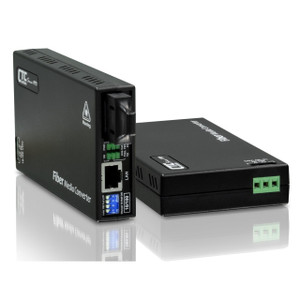
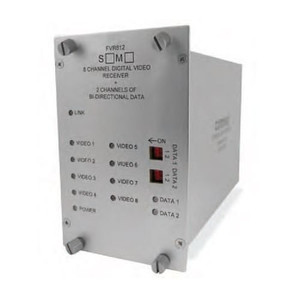
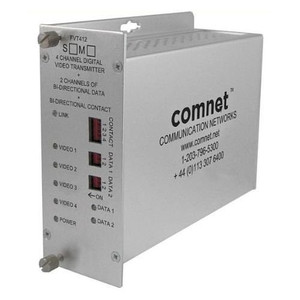
Comnet FVT2014S1 2-Channel Digitally Encoded Video Transmitter
Overview
The Comnet FVT2014S1 is a fiber-based video and data transmission platform designed for long-distance surveillance deployments where electrical isolation and extended reach are critical. This unit transmits two video channels plus four independent bi-directional data lines over a single strand of single-mode fiber — meaning one fiber strand carries both video and control signals simultaneously. The 10-bit digital encoding ensures clean, noise-free transmission over distances where analog copper would degrade or require repeaters.
Common deployments: large perimeter security systems, airport tarmac monitoring, utility corridors, and industrial sites where fiber infrastructure already exists or where EMI immunity is non-negotiable. If your site has fiber runs in place and you need to avoid copper altogether, the FVT2014S1 eliminates the cost and complexity of hybrid copper-fiber solutions.
Key Features
- 2-Channel Video over Single Fiber: Both video channels ride the same fiber strand using wavelength division multiplexing (1310nm and 1550nm) — cuts your fiber count in half compared to single-channel designs and simplifies splicing and termination in the field.
- 10-Bit Digital Encoding: Converts analog video (EIA RS-250C standard) to 10-bit digital format for transmission. This resolution reduces quantization noise and preserves fine detail, particularly useful in forensic playback scenarios where shadow detail matters.
- Four Bi-Directional Data Channels: Native RS232, RS422, and RS485 interfaces let you send camera control commands (PTZ, iris, focus), alarm signals, and sensor data back over the same fiber without additional copper runs. Real-world benefit: one fiber cable replaces what would typically require three separate runs (two video coax + one control twisted pair).
- Dual Wavelength Architecture (1310nm / 1550nm): Industry-standard wavelengths ensure compatibility with existing telecom-grade fiber infrastructure. If your facility already has multimode or single-mode fiber in the walls, you can often tie into existing conduit without pulling new cable.
- NEMA TS-1/TS-2 Temperature Rating: Operates across a wide temperature band suited to outdoor equipment shelters and unheated cabinets. No need for separate climate control on the transmitter itself — relevant for remote camera stations or unmanned utility sites.
- Transient Voltage Protection: Built-in protection against surges and transient events common in industrial and outdoor installations. Reduces the need for external surge suppression on video and data lines.
Integration & Compatibility
The FVT2014S1 is a transmitter-only device; it pairs with a matching Comnet receiver (such as the FVR2014S1) to complete the video and data link. The unit accepts standard analog video inputs (NTSC/PAL, EIA RS-250C) — if your source cameras output composite video, this device handles the digitization and fiber transport. The four data channels are software-configurable for your specific control protocol (RS232, RS422, RS485), making integration straightforward into legacy PTZ camera systems or SCADA control loops.
Fiber type is single-mode only — verify your fiber plant supports SMF before purchase. Single-mode fiber is narrower and requires different splicing equipment than multimode, but offers much longer transmission distances (tens of kilometers) compared to multimode (2 km typical). Installation should be performed by a technician familiar with fiber termination; poor splicing introduces signal loss and data errors.
What's in the Box
Evidence of exact package contents was not available in the source materials provided. Contact the manufacturer or your distributor for a full list of included connectors, adapters, and documentation.
Frequently Asked Questions
Q: Does the FVT2014S1 require a matching receiver to work?
A: Yes. This is a transmitter-only device. You will need a compatible Comnet receiver (typically the FVR2014S1 or similar) at the remote end to decode the video and data signals arriving on the fiber.
Q: Can I use this with multimode fiber?
A: No. The FVT2014S1 is designed for single-mode fiber only. The wavelengths (1310nm and 1550nm) and the optics are optimized for SMF. Attempting to use multimode fiber will result in signal loss and likely transmission failure.
Q: What video standards does the FVT2014S1 accept?
A: The unit accepts analog video in EIA RS-250C standard format (NTSC or PAL), which covers standard composite video from legacy analog cameras and DVR outputs. It does not accept digital video inputs (no HDMI, SDI, or IP input).
Q: How are the four data channels assigned?
A: The FVT2014S1 has native RS232, RS422, and RS485 interfaces. You configure which data channel uses which protocol based on your control devices (PTZ camera controllers, relay modules, etc.). This is typically done at commissioning time — consult the receiver manual for port mapping details.
Q: Is this device NDAA Section 889 compliant?
A: Evidence of NDAA compliance for the FVT2014S1 was not found in the source materials. Contact Comnet directly or consult your procurement officer if this certification is mandatory for your project.
Q: What's the maximum fiber distance for the FVT2014S1?
A: Maximum distance specifications were not included in the source evidence. Single-mode fiber systems can typically support 20–40 km depending on loss budget and receiver sensitivity. Consult the datasheet or contact the manufacturer to confirm the specific range for your installation.
I've specified the FVT2014S1 in several large perimeter and utility corridor deployments. The core value here is the 10-bit digital encoding paired with wavelength division multiplexing — you get two video channels and four control channels on a single fiber strand with zero crosstalk. That bandwidth density matters when you're pulling fiber through existing conduit or when fiber runs are long enough that cost per meter adds up fast.
Technical Highlights:
- 10-Bit Digital Video: Converts analog EIA RS-250C video to 10-bit format before transmission, cutting quantization noise compared to 8-bit systems. On long fiber runs (10+ km), this translates to noticeably cleaner playback in forensic review, especially in shadow detail and color fidelity.
- Dual Wavelength (1310nm / 1550nm): Two video channels ride separate wavelengths on one fiber using standard telecom-grade optics. Eliminates the cost and splicing complexity of running dual fibers — a real win in retrofit projects where fiber conduit is already congested.
- Four Native Data Channels (RS232 / RS422 / RS485): PTZ camera control, alarm relay outputs, and sensor input all travel the same fiber without a separate control cable. Real-world impact: eliminates the copper-to-fiber-to-copper hybrid typical in legacy installations, reducing grounding noise and simplifying termination.
Deployment Considerations:
- This is transmitter-only hardware — you must budget for a matching receiver at the far end. Most sites pair FVT2014S1 with an FVR2014S1 or equivalent; verify model compatibility with Comnet before procurement.
- Single-mode fiber only — multimode fiber will not work. If your site has legacy multimode installed, you'll need to provision new SMF or accept a multimode-capable variant from Comnet's product line. Splicing requires SMF-trained technicians; poor splices degrade signal and introduce unrecoverable data loss on long runs.
Deploy the FVT2014S1 when your site already has fiber infrastructure or when EMI immunity and cable cost justify the upfront investment. It's the right call for airport perimeter, utility substation, and petrochemical plant surveillance — environments where analog copper either suffers interference or requires expensive shielding and grounding. Not suitable for short-haul runs or greenfield sites where IP over Ethernet offers simpler installation and lower total cost of ownership.