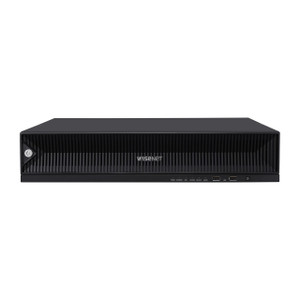
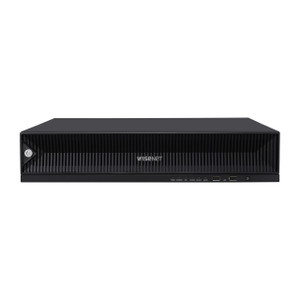
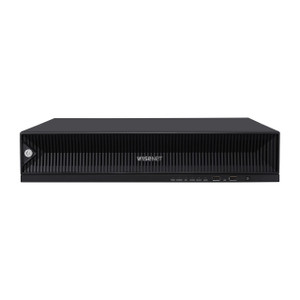
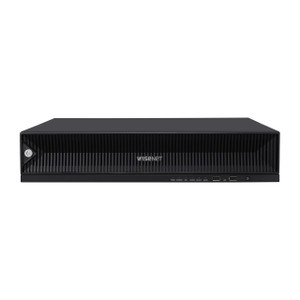
Hanwha PRN-1600B2-8TB 16-Channel 32MP Enterprise NVR
The Hanwha PRN-1600B2-8TB is a 16-channel network video recorder engineered for large-scale facility monitoring, critical infrastructure protection, and enterprise security operations centers. It ingests camera feeds up to 32MP, records in H.265, H.264, MJPEG, and WiseStream dual-stream formats, and provisions 8TB of internal storage across eight fixed SATA drives (expandable to 80TB with external arrays). The operational advantage is the edge-resident AI analytics engine—Best Shot, attribute-based filtering, object detection, and license plate recognition—eliminating tedious frame-by-frame manual review during incident investigation and forensic playback. Dual HDMI outputs deliver simultaneous 4K (3840×2160 @ 30Hz) and 1080p (1920×1080 @ 60Hz) display, while the plugin-free Web UI 2.0 supports remote administration from any browser without client software overhead.
Key Features
- 16-Channel 32MP Input: Accepts up to 32MP per camera input; codec-agnostic architecture supports H.265, H.264, MJPEG, and WiseStream. Reduces capex by decoupling camera resolution from NVR recording limitations.
- H.265 Compression with WiseStream: Dual-stream technology reduces bitrate 40-60% versus H.264 on equivalent quality. On a 16-camera 24/7 recording deployment, measurable storage savings and lower bandwidth consumption.
- AI Analytics at the Edge: License plate recognition, object detection, Best Shot (highest-quality frames), and attribute-based filtering run locally on the NVR. Eliminates server-side analytics licensing and cloud storage for search operations.
- 250 Mbps Distributed Mode Recording Bandwidth: Supports simultaneous recording of 16 high-resolution streams without frame drops or bandwidth contention. Meets concurrent multi-stream ingest on mission-critical deployments.
- 8TB Internal Storage (Expandable to 80TB): Eight 10TB-max SATA drive bays with RAID 5/6 redundancy. Single or dual drive failure protection preserves evidence continuity on 24/7 operations.
- Dual HDMI Display Outputs: 4K and 1080p simultaneous streams enable SOC multi-monitor setups (main wall + analyst workstation) without HDMI switching or splitter overhead.
- 64 Simultaneous Playback Channels: 16 local + up to 16 channels per remote user (4 concurrent users maximum). Multi-forensic-analyst capability without bottleneck contention.
- ONVIF Profile S Compliance: Integrates with non-Hanwha IP cameras (Axis, Uniview, Bosch, Dahua, Hikvision) without vendor lock-in. Future camera replacement or mixed-brand migration remains operationally feasible.
The PRN-1600B2-8TB is built on Intel x86 architecture, delivering predictable performance scaling and mature Linux-based stability. Distributed mode recording at 250 Mbps assumes network switches and PoE infrastructure are dimensioned for aggregate throughput; typical deployments run 16 cameras at 8-15 Mbps each, leaving substantial headroom for redundancy or future expansion.
Edge AI analytics eliminate the need for separate analytics appliances or third-party VMS plugins. Best Shot automatically surfaces the sharpest frame of a person or vehicle during forensic review—critical when license plate or facial detail is required for investigative handoff to law enforcement. Attribute-based filtering (color, size, direction, dwell time) reduces false-positive noise from dynamic outdoor scenes, enabling alert policies that fire only on operationally relevant events.
Storage configuration is straightforward: eight fixed SATA HDD bays pre-installed at purchase. RAID 5 protects against single drive loss; RAID 6 adds dual-drive fault tolerance for higher-availability deployments. Automatic Recovery Backup exports footage to external USB or NAS for compliance or offsite archival. Dynamic layout, virtual channel view, and clone/expand modes permit flexible display layouts and remote monitoring without client software installation.
The PRN-1600B2-8TB is compatible with Hanwha Wisenet IP camera families and any third-party ONVIF-compliant camera (Axis, Bosch, Uniview, Dahua, Hikvision). Web UI 2.0 removes plugin dependencies—remote users operate the system from Chrome, Firefox, or Safari without Java or ActiveX runtime. Includes Manufacturer Warranty covering hardware defects. Hanwha Wisenet integration through native API and SDK enables custom automation, mobile alerting, and SOC dashboard integration.
Ted PerryPerspective based on aggregated IP Security Depot and affiliated engineering team experience.
We've installed the PRN-1600B2-8TB across campus security, critical infrastructure, and enterprise retail deployments—anywhere 16+ cameras converge on a single recording platform and forensic review efficiency directly impacts incident response. The real differentiator versus comparable competitors (Uniview NVRs, Hikvision pro-series recorders) is the edge AI analytics maturity. Best Shot search cuts investigative time on license-plate-related incidents from 20–30 minutes down to 3–5 minutes—that operational win alone justifies the platform. On a 150-camera campus distributed across three NVRs, the aggregate reduction in forensic labor is measurable. Attribute-based filtering (vehicle color, pedestrian direction, loitering duration) on the NVR itself means your SOC doesn't get alert fatigue from every parking-lot shadow or rain drop triggering motion detection. H.265 codec with WiseStream dual-stream cuts storage consumption approximately 50% versus H.264 on the same bitrate settings, which compounds when you're running 24/7 recording at 32MP input. RAID 6 adds peace of mind for 24/7 deployments—we've seen drive failures twice on a 500+ camera network; dual-drive fault tolerance kept evidence intact both times. The 250 Mbps distributed mode bandwidth is adequate for 16 cameras at 12–15 Mbps each, but if you're planning 4K video from multiple cameras simultaneously or need very high bitrate for forensic detail, verify your network switch and PoE infrastructure can deliver that throughput without contention. The system is plug-and-play on network discovery, but initial configuration (RAID level, recording policy, analytics rule tuning) does require 2–3 hours of setup time with someone familiar with NVR parameters.
Technical Highlights:
- H.265 + WiseStream Dual-Stream: Reduces bitrate footprint 40-60% versus H.264 on matching quality. On 16 simultaneous 8MP cameras at 24/7 recording, translates to approximately 3–4 TB monthly storage versus 6–8 TB with H.264—real money on 5-year lifecycle.
- Best Shot + Attribute Filtering at NVR Edge: Eliminates server-side analytics licensing and cloud storage for investigative search. License plate recognition, object detection, and color/size/direction filtering happen locally; no bandwidth to third-party analytics platforms.
- RAID 5/6 Redundancy with 8 SATA Bays: Single or dual drive failure does not corrupt the recording database. Critical for 24/7 operations where a storage fault means loss of legal evidence. Rebuild times on RAID 6 are 12–18 hours per 10TB drive; plan maintenance windows accordingly.
- 250 Mbps Distributed Mode Bandwidth: Supports 16 high-resolution streams without frame drops. Assumes 1 Gbps network segment and PoE infrastructure sized for 150+ watts aggregate power (typical). On undersized networks, fallback to normal mode (150 Mbps) or reduce per-camera bitrate.
- 64 Simultaneous Playback Channels (16+48 remote): Multiple forensic analysts can review footage concurrently without server bottleneck. Each remote user can access up to 16 channels; system supports 4 concurrent remote sessions (expandable via API integration).
- ONVIF Profile S Compliance: Works with any ONVIF-compliant camera (Axis, Bosch, Uniview, Dahua, Hikvision). Avoids vendor lock-in; future camera refreshes or mixed-brand migrations remain operationally seamless.
Deployment Considerations:
- Network Switch Sizing: 250 Mbps distributed mode assumes a managed Gigabit switch with adequate backplane capacity. If your network segment is contended (VoIP, guest WiFi traffic on same VLAN), aggregate throughput will throttle. Verify switch specifications and QoS policies before installation.
- RAID 6 Rebuild Windows: Dual-drive redundancy adds protection but increases rebuild time to 12–18 hours per 10TB drive. Plan maintenance or drive replacement during low-activity windows (nighttime, weekends) to minimize performance impact during rebuild.
- Storage Capacity Planning: 8TB internal storage on 16 channels at 8 Mbps per camera (H.265) yields approximately 7–10 days retention. Adjust per-camera bitrate or add external NAS storage if your compliance or operational requirement exceeds 30 days. We've seen undersized deployments where management didn't budget for external archival.
- Web UI Remote Access: Plugin-free architecture means no Java Runtime or ActiveX installation on analyst workstations. Improves security posture, but verify IT policies permit cross-site HTTPS access and that remote DNS/firewall rules forward Web UI port (typically 443) correctly.
- Best Shot Analytics Tuning: Out-of-box sensitivity is conservative; expect fine-tuning over first 1–2 weeks to reduce false positives (blurry frames, shadows). Work with integration partner or Hanwha technical support to tune attribute filters for your specific environment (lighting, PTZ motion, foliage).
The PRN-1600B2-8TB is the right fit for enterprise facilities and critical infrastructure where 16+ cameras feed a single recording node, forensic analytics must run at the network edge (not cloud), and compliance requires RAID-protected storage with multi-user concurrent playback. It's not the right choice if you need more than 16 local channels or distributed multi-site federation (use a Hanwha Wisenet software VMS instead). For integrators and end users prioritizing operational efficiency during forensic investigations and storage cost-per-megabyte-per-day, see the Hanwha catalog for additional recording platforms and camera families.