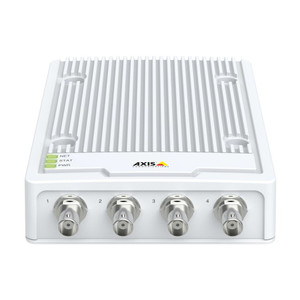
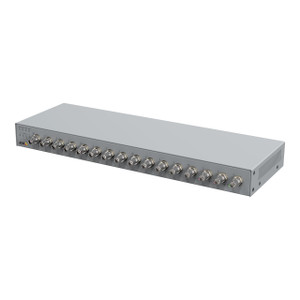
i-PRO VP-16-V2-16 16-Channel HDTVI Video Encoder
Overview
The VP-16-V2-16 is a 16-channel freestanding encoder that converts HDTVI (HD-over-coax) and analog camera feeds into H.264 or H.265 IP streams. Deploy this unit when you have existing HDTVI or analog cameras already cabled through a facility and need to upgrade to network-based NVR storage or VMS without rewiring. This encoder sits between your coaxial camera plant and IP infrastructure — it bridges analog-era installations to modern IP surveillance workflows without full infrastructure replacement. Each of the 16 BNC input ports accepts composite video or coaxial baseband signals over standard RG-59/RG-6 cabling, including runs exceeding 300 meters — a significant advantage when legacy cable routes are embedded in walls or conduit and physical access is limited.
Compatibility
The VP-16-V2-16 accepts input from any HDTVI or analog camera delivering standard composite or coaxial baseband video. Output streams conform to ONVIF standards, enabling integration with any ONVIF-compatible NVR, Milestone XProtect, AXIS Camera Station, or third-party VMS platform that supports H.264 or H.265 IP streams. Direct connectivity to IP-based network video recorders, appliance recorders, or cloud gateways requires no intermediate gateway or proprietary software bridge. Ethernet output connects via standard CAT5e/CAT6 to your switch or recorder. PoE-capable switching is available if redundancy or extended network runs require power injection at the recorder end.
Installation Notes
The unit is freestanding — no rack mounting required, though cabinet or equipment-room placement is permitted. Each coaxial input terminates in standard BNC connectors; no special connectors or tools beyond a standard screwdriver and cable crimpers are needed. Power is supplied via dedicated external supply (voltage and current specifications are documented in the product datasheet). Ethernet output is standard RJ-45; integrate with your existing IP network configuration without special switching or routing. Manual video quality diagnostics per channel are available for troubleshooting individual feeds without accessing VMS logs or database queries.