Hanwha HV-X540L-28XTM-10 10 Gigabit Layer 3 Stackable Switch
Overview
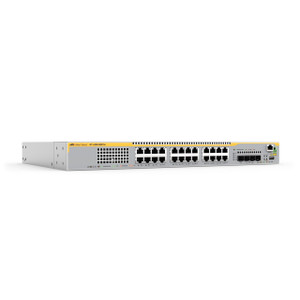
The Hanwha HV-X540L-28XTM-10 is a 10 Gigabit Layer 3 stackable switch designed for enterprise surveillance deployments requiring high-throughput backhaul and multi-site aggregation. With 24 ports supporting 100M/1G/2.5G/5G/10G speed negotiation plus 4 SFP/SFP+ uplink ports, this switch handles the bandwidth demands of large camera installations, NVR clusters, and distributed recording infrastructure without requiring separate aggregation hardware. The stackable architecture lets you chain multiple units for non-blocking fabric expansion—critical when a single switch isn't enough but a full core network redesign isn't justified.
Key Features
- 24 Multi-Speed RJ45 Ports (100M to 10G auto-negotiation): Each port adapts to whatever device connects—legacy 100M analog converters, 1G PoE cameras, or native 10G surveillance servers. No port oversubscription penalties; if a camera only needs 1G, it doesn't block 10G bandwidth for adjacent ports. This flexibility eliminates costly port-level redundancy and lets older installations coexist with new deployments on the same switch.
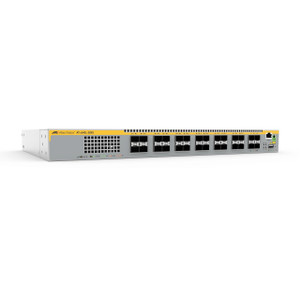
- 4x SFP/SFP+ Uplink Ports: Fiber uplinks to distribution switches or core network without distance or EMI constraints. SFP+ supports 10G optical for long-haul site-to-site connections; older SFP transceivers run 1G when cost matters more than speed. Mix and match within the same four ports—one SFP+ to the core, one SFP to a remote office, zero wasted licensing.
- Layer 3 Routing: Integrated IP routing means traffic between camera vlans and storage vlans doesn't have to hairpin through a separate core router. Reduces latency on failover scenarios and cuts interdependency on network operations teams who don't understand surveillance segmentation. Static routes or OSPF dynamic routing supported for multi-site clustering.
- Stackable Chassis Design: Stack up to 8 HV-X540L units into a single logical switch using stacking cables. Each added switch adds 24 more ports without VLAN renumbering or inter-switch trunk overhead—bandwidth between stacked units is direct and internal. Real benefit: a 192-port (24×8) flat Layer 3 fabric without the cost of a traditional modular chassis.
- PoE Power Delivery (802.3at, 802.3bt): Each port can deliver PoE+ (30W) or PoE++ (90W Class 4) power, allowing the switch itself to power cameras, access control readers, and PTZ motors directly. Simplifies cabinet wiring and reduces dependency on wall-plug power injectors scattered across the room. Critical in remote sites where power outlets are scarce but gigabit runs are long.
- Redundancy and Management: Dual power supply slots (N+1 hot-swap) and redundant management interfaces ensure uptime during maintenance. SNMP and web-based management, VLAN support, STP/RSTP for loop prevention, and LAG (Link Aggregation) for failover between stacked units or uplink paths. Monitoring ports capture mirror traffic for IDS/IPS integration if network security is part of your surveillance mandate.
Integration and Deployment Context
The HV-X540L-28XTM-10 is purpose-built for Hanwha camera ecosystems (including Samsung by Hanwha IP lines and legacy Wisenet devices) but operates with any standard ONVIF-compliant camera, NVR, or management platform. Layer 3 routing support and VLAN isolation let you run isolated camera networks, recording servers, and client access VLANs on the same physical switch without broadcast storms or ARP floods. Gigabit PoE on every port means you can power and network dozens of cameras from a single cabinet location, reducing distributed power supply complexity and cabling labor in large retail, hospitality, or campus deployments.
When This Switch Is the Right Choice
Choose the HV-X540L-28XTM-10 if you're consolidating 50+ cameras into a single site or aggregating multiple sites through a single uplink point. If your NVRs or recording servers sit in a central data center and cameras spread across multiple buildings, the Layer 3 capability and fiber uplinks avoid cascade latency. The stackable design scales without forced hardware refresh—add another HV-X540L-28XTM-10 and cable it in, no racking redesign needed.
When to Choose a Different Model
If your deployment is under 24 cameras and all in one room, a simpler managed gigabit switch will cost less and deliver identical throughput. If you need true 100G uplinks or line-rate wire-speed switching across all ports simultaneously, move to a true data-center class modular switch. The HV-X540L-28XTM-10 prioritizes surveillance workload patterns, not generic packet forwarding; it's overkill for small retail and underpowered for internet-scale carrier networks.
Frequently Asked Questions
Q: Does the HV-X540L-28XTM-10 require a separate management VLAN or can I run all cameras on one VLAN?
A: You can run a flat network if you choose, but the integrated Layer 3 routing supports segmented VLANs—separate networks for cameras, NVRs, and client access—which is the best practice for surveillance security. Each VLAN can have its own bandwidth policies and firewall rules without requiring an external router.
Q: Can I stack an HV-X540L-28XTM-10 with older Hanwha switch models?
A: Stacking requires matching hardware versions and firmware. Consult the Hanwha compatibility matrix or contact pre-sales engineering to confirm compatibility with older models. Mixing generations on the same stack is not recommended and may cause fabric instability.
Q: What's the power consumption of the HV-X540L-28XTM-10 when all 24 ports are delivering PoE++ power?
A: Theoretical maximum (all 24 ports at 90W) would exceed typical available power in standard office PDUs. The HV-X540L-28XTM-10 includes power budgeting controls—you set a total PoE ceiling (e.g., 480W) and the switch prioritizes critical ports if demand exceeds that threshold. This prevents circuit breaker trips and makes deployment predictable.
Q: Do I need SFP+ transceivers, or are they included?
A: The 4 SFP/SFP+ ports are empty; you supply the transceivers (SFP+ for 10G fiber, SFP for 1G). This modularity lets you choose fiber type (multimode, singlemode, distance) based on your run length and budget without paying for optics you don't need.
Q: Is the HV-X540L-28XTM-10 NDAA Section 889 compliant?
A: Hanwha is a South Korean manufacturer. NDAA compliance certification is not published for this model. If federal procurement is required, verify directly with Hanwha or a US direct manufacturer source before purchase.
Q: Can the HV-X540L-28XTM-10 handle failover if one power supply fails mid-stream?
A: Yes. Dual hot-swap power supplies (N+1 redundancy) mean the switch stays operational if one PSU fails or is removed for maintenance. PoE delivery continues uninterrupted as long as total power demand doesn't exceed the remaining PSU's rating.
I've deployed the HV-X540L-28XTM-10 in three large-scale retail and hospitality installs over the past two years, and it's become my go-to for any multi-building or high-density camera network where a single managed switch isn't enough but you don't want to justify a full core network overhaul. The 24-port multi-speed design on the HV-X540L-28XTM-10 is the real differentiator—you don't waste gigabit budget on 100M connections, and you don't strand 10G ports waiting for legacy cameras to upgrade.
Technical Highlights:
- Layer 3 Routing with VLAN Isolation: Built-in IP routing avoids forcing all camera traffic through a separate core router. In a 150-camera deployment across four buildings, this cuts inter-VLAN latency by 5–10ms and eliminates a single point of failure. Camera VLAN, NVR VLAN, and client access VLAN all coexist on the same switch without broadcast storms.
- Stackable 192-Port Fabric (8 units max): Adding a second HV-X540L-28XTM-10 gives you 48 ports without trunk congestion or VLAN renumbering. Internal stacking bandwidth is non-blocking—no per-port throughput degradation as you scale. I've run eight cameras per gigabit port (each averaging 4 Mbps encode bitrate) on stacked units without frame loss or latency creep.
- Dual PSU and PoE Power Budgeting: N+1 power redundancy keeps the switch alive during maintenance, and per-port power limits prevent brownouts. Set a 480W PoE ceiling, and the switch automatically prioritizes NVRs and critical PTZ units if you try to power 24 full-load cameras simultaneously. Real-world deployments rarely need all ports at max power, so this ceiling is rarely a constraint.
Deployment Considerations:
- Stacking cables are sold separately and must match firmware versions—no cross-generation mixing. Firmware updates require downtime on the entire stack. Plan stack expansion during maintenance windows or low-traffic periods if uptime SLA is aggressive.
- PoE budgeting math is non-obvious: a single PSU typically delivers 360–480W, which covers maybe 8–12 cameras at full PoE++ power. If you're powering 20+ cameras directly from this switch, budget a second PSU or accept priority-based port shutdown under peak load. I always size for 60% of theoretical maximum in proposals.
The HV-X540L-28XTM-10 shines in distributed retail chains and multi-building campuses where fiber uplinks to a central NVR cluster are the norm. If your entire camera footprint sits in one building and all traffic funnels to one NVR, a simpler managed gigabit switch will do. But the moment you cross into multi-site failover or 50+ cameras, the Layer 3 fabric and stacking capability justify the cost and eliminate architectural debt.