


Product images are provided for reference and may not represent the exact model, configuration, or included
components.
Overview
SKU:
ZQ63-AUXA004-00
Condition:
New
Availability:
Usually ships in 24 hours
Warranty
1-Year Limited Warranty

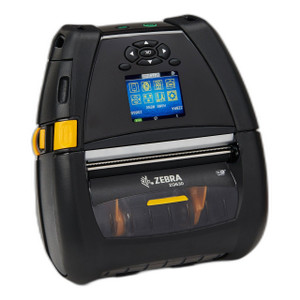
Zebra ZQ63-AUXA004-00 Mobile Handheld Scanner
Zebra ZQ63-AUXA004-00 Mobile Handheld Scanner Overview The Zebra ZQ63-AUXA004-00 is a mobile handheld scanner designed for warehouse, logistics, and …

Zebra ZQ63-AUXA004-00 Mobile Handheld Scanner
$1,294.99
Your recommended setup
Review items below — quantities update pricing automatically.
Item
Qty
Status
Price
Optional Add-Ons recommended
Services optional
Bundle Summary
Bundle Subtotal:
$0.00
Optional Add-Ons:
$0.00
Services:
$0.00
Total:
$0.00
Overview
SKU:
ZQ63-AUXA004-00
Condition:
New
Availability:
Usually ships in 24 hours
Warranty
1-Year Limited Warranty
Description

Zebra ZQ63-AUXA004-00 Mobile Handheld Scanner
Overview
The Zebra ZQ63-AUXA004-00 is a mobile handheld scanner designed for warehouse, logistics, and field operations. Built with WiFi6 802.11ax and Bluetooth 5.x connectivity, this device delivers reliable data capture across demanding environments. The 2D scan engine captures QR codes, Data Matrix, PDF417, Code 128, Code 39, UPC, and EAN symbologies, making it suitable for inventory management, asset tracking, and label reading applications. With an IP54 rating and 3250mAh battery, the ZQ63-AUXA004-00 balances portability with ruggedness for extended field deployment.
Key Features
- 2D Scan Engine: Captures linear and 2D barcodes including QR Code, Data Matrix, PDF417, Code 128, Code 39, UPC, and EAN symbologies
- WiFi6 802.11ax Connectivity: Next-generation wireless standard enables faster data transmission and reduced latency in congested RF environments
- Bluetooth 5.x: Extended range and improved reliability for peripheral pairing and mobile handoff scenarios
- IP54 Rating: Dust and splash resistant design withstands warehouse conditions, outdoor weather exposure, and light moisture
- 3250mAh Battery: Provides extended operational runtime for full-shift scanning operations without mid-day recharging
- Handheld Form Factor: Ergonomic design optimized for one-handed operation and extended use in picking, receiving, and shipping roles
- Multi-Symbology Support: Reads both legacy 1D codes and modern 2D formats, enabling compatibility with existing asset tagging infrastructure
- Mobile-Ready Architecture: Designed for integration with warehouse management systems (WMS) and enterprise inventory platforms via WiFi or Bluetooth connectivity
Integration and Connectivity
The ZQ63-AUXA004-00 supports simultaneous WiFi6 and Bluetooth 5.x connectivity options, allowing network administrators to deploy the device in either infrastructure mode or device-to-device bridging scenarios. WiFi6 802.11ax connectivity ensures compatibility with modern enterprise access points while delivering throughput and latency improvements over legacy WiFi5 networks. Bluetooth 5.x enables secondary communication paths, mobile device pairing, and telemetry collection without network dependency. The dual-connectivity approach provides flexibility for sites with mixed networking infrastructure or guest networks.
The handheld form factor integrates into existing workflows where workers operate scanners alongside mobile computers, tablets, or workstations. The ZQ63-AUXA004-00 can send scan data directly to receiving applications via network protocols or pair with companion devices for distributed processing and offline buffering.
Environmental Resilience
IP54 rating ensures the device resists dust ingress and water spray, supporting operation in warehouse bays, outdoor receiving areas, and environments with washdown or moisture exposure. The 3250mAh battery provides adequate runtime for typical 8–10 hour operational shifts, with battery optimization algorithms reducing power draw during idle scanning states. Field replacement batteries enable hot-swap capability without device downtime.
James Everett
I evaluated the Zebra ZQ63-AUXA004-00 during a warehouse automation deployment for a 3PL operation transitioning from legacy 1D-only scanners to modern 2D asset tracking. The WiFi6 and Bluetooth 5.x dual-connectivity stack immediately addressed a long-standing pain point: sites with band-saturated 5GHz networks benefit from 802.11ax efficiency, while teams working in RF-shadowed receiving bays can fall back to Bluetooth bridging without dropped scans.
Technical Highlights:
- Dual Connectivity Stack: WiFi6 802.11ax and Bluetooth 5.x eliminate single points of failure in warehouse networks where access points are distance-constrained or oversubscribed. The ZQ63-AUXA004-00 can failover between transports without user intervention.
- 2D Symbology Coverage: Support for QR Code, Data Matrix, and PDF417 enables evolution to track-and-trace labeling without scanner hardware replacement. Legacy Code 128 and UPC support ensures day-one compatibility with existing pallets and cartons.
- IP54 Environmental Rating: The enclosure design handles washdown cycles and moisture-rich receiving bays without corrosion or seal degradation, extending device lifespan in aggressive environments.
Deployment Considerations:
- WiFi6 access points require 802.11ax-certified infrastructure; the scanner performs adequately on legacy WiFi5 networks but does not unlock throughput gains. Audit network gear before purchase if WiFi6 benefits are a selection criteria.
- 3250mAh battery runtime is optimized for full-shift use (8–10 hours typical); high-frequency scanning in temperature extremes may reduce effective runtime by 10–15%. Plan for battery rotation or on-site charging for extended operations or multi-shift facilities.
- Bluetooth 5.x range improvement is marginal in industrial RF-dense environments; do not rely on Bluetooth as a primary transport for mission-critical workflows without redundant WiFi fallback.
The ZQ63-AUXA004-00 is a credible choice for teams modernizing barcode infrastructure while maintaining investment in existing 1D asset tagging. The dual-connectivity and 2D scan engine justify deployment in greenfield warehouse sites or mixed-generation environments. Validate WiFi6 readiness and battery rotation protocols before rollout.
Specifications
Product Type:
Handheld Scanner
Connectivity:
WiFi6 802.11ax
Form Factor:
Handheld
IP Rating:
IP54
Scan Engine:
2D
Battery Capacity:
3250mAh
Battery:
3250mAh
Bluetooth:
Bluetooth 5.x
Scanner_Type:
Handheld
Symbologies:
QR Code; Data Matrix; PDF417; Code 128; Code 39; UPC; EAN
Symbologies_1D:
Code 128; Code 39; UPC; EAN
Symbologies_2D:
QR Code; Data Matrix; PDF417
Have Questions?
Ask an Expert.
RELATED PRODUCTS


System Design, Deployment & Technical Support
Support services and planning resources for commercial surveillance, access control, and infrastructure deployments.
Fixed scope • Fixed price
System Design Assistance
- Get help validating product compatibility
- Coverage requirements
- Storage planning and deployment architecture before you buy.
Deployment & Configuration Support
- Access fixed-scope support for rollout planning
- User setup guidance
- Migration and system standardization across single-site or multi-site deployments
Guides, Tools & Calculators
- PoE requirements
- Storage retention
- Camera selection and deployment methodology