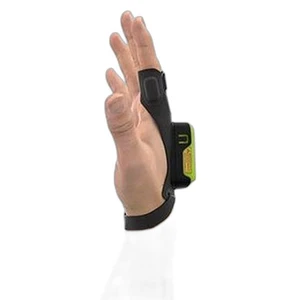
Zebra WS5012-0B3J1020ENA Wrist-Mounted Wearable Scanner
Overview
The Zebra WS5012-0B3J1020ENA is a back-of-hand wearable barcode scanner engineered for warehouse and logistics operations where hands-free mobility is critical. This Wi-Fi-enabled device runs Android natively, allowing operators to scan inventory, manage picking tasks, and perform receiving workflows without holding a separate handheld terminal. The form factor distributes weight across the wrist rather than loading the operator's hands, reducing fatigue during extended shifts and improving throughput in high-velocity picking environments.
Key Features
- Wi-Fi Connectivity: Real-time communication with warehouse management systems means scan-to-system latency is minimal. Data synchronization happens instantly rather than at shift-end or dock connections, reducing pick errors and improving inventory accuracy across your operation.
- Android Operating System: Native Android support means compatibility with standard warehouse applications and mobile data collection platforms already deployed across your warehouse infrastructure. Developers can integrate custom workflows without proprietary middleware layers.
- 1300mAh Rechargeable Battery: Provides all-shift runtime on a single charge, with quick-dock recharging between shifts. Battery capacity supports sustained scanning in high-throughput environments without mid-shift battery swaps that interrupt operations.
- Back-of-Hand Mounting: Wrist-mounted placement keeps both hands free for handling merchandise, boxing, and palletizing. Unlike body-worn terminals worn on a belt or shoulder harness, the back-of-hand position reduces collision risk in crowded aisles and allows ergonomic trigger access with minimal arm movement.
- Warehouse Management Integration: The WS5012-0B3J1020ENA integrates with Android-based warehouse execution systems, supporting standard picking, receiving, and cycle-count workflows. Real-time Wi-Fi sync eliminates batch uploads and allows supervisors to monitor operator progress in real time.
- Enterprise-Ready Deployment: Integrates with mobile data collection applications already running on your warehouse network. No requirement for separate infrastructure or specialized cloud platforms—connects directly to your existing Wi-Fi and backend systems.
Integration and Compatibility
The WS5012-0B3J1020ENA operates within Android-based warehouse ecosystems, supporting major warehouse management systems and mobile data collection platforms. Wi-Fi connectivity enables real-time transaction posting, eliminating batch processing workflows. The Android foundation allows integration with existing enterprise applications without requiring terminal-specific middleware or custom adapters. Organizations using mobile computers or warehouse automation platforms should verify application certification through the respective software vendor before large-scale deployment.
When to Choose a Different Model
If your operation requires cellular fallback (remote sites with poor Wi-Fi coverage), consider a model with integrated 4G LTE or multi-band cellular support. If scanning volume is extremely high and you need extended outdoor range, evaluate models with higher-power radio options. If you require IP67 rating for washdown or immersion environments, verify this model's environmental rating with the manufacturer—back-of-hand devices typically prioritize ergonomics over full submersion resistance.
Frequently Asked Questions
Q: Does the WS5012-0B3J1020ENA work without a dedicated Wi-Fi network?
A: No—this model requires Wi-Fi connectivity to sync with your warehouse management system. Without Wi-Fi, the scanner cannot post transactions in real time. If your facility lacks adequate Wi-Fi coverage, you'll need offline caching capability built into your application or a cellular-enabled model.
Q: What barcode symbologies does the WS5012 support?
A: The evidence provided does not specify supported barcode types (1D codes like Code128, EAN; 2D codes like QR, PDF417). Contact the manufacturer directly to confirm compatibility with your labeling standard before purchasing.
Q: Can the battery be replaced in the field?
A: The evidence lists a 1300mAh rechargeable battery but does not specify whether it is user-replaceable or proprietary. Confirm battery serviceability and spare availability with the vendor before deployment.
Q: How long does a full charge last during a warehouse shift?
A: Battery runtime depends on scan frequency, Wi-Fi radio duty cycle, and display usage. The evidence does not provide hour-of-operation specifications. Request expected runtime from your Zebra representative for your specific use case (light picking vs. high-velocity receiving).
Q: Is the WS5012-0B3J1020ENA compatible with my existing WMS application?
A: Compatibility depends on whether your application is built on Android and designed to integrate with ONVIF or standard warehouse APIs. Contact your WMS vendor to confirm WS5012 certification before purchasing.
Ted PerryPerspective based on aggregated IP Security Depot and affiliated engineering team experience.
The Zebra WS5012-0B3J1020ENA trades the traditional handheld terminal for a wrist-mounted form factor—a straightforward ergonomic choice that frees both hands. The 1300mAh battery and Wi-Fi radio are the critical specs here, and they enforce a hard requirement: your facility must have solid Wi-Fi coverage. If you don't, this device becomes a brick mid-shift.
Technical Highlights:
- 1300mAh Battery / Full-Shift Runtime: Sized to handle a complete picking or receiving cycle without mid-shift recharge. On paper this sounds adequate, but real-world runtime depends heavily on Wi-Fi radio utilization and barcode scan frequency—dense picking floors with constant scans drain faster than slow-moving receiving. Request duty-cycle specifics from the field engineer before committing to fleet size.
- Wi-Fi Connectivity / Real-Time Sync: Real-time posting eliminates batch uploads and allows supervisors to monitor operator progress live. This is powerful for identifying bottlenecks, but it also means your Wi-Fi network becomes a critical path item. A single dead zone in your warehouse becomes a hard stop for that operator.
- Android OS / Standard Application Integration: Running stock Android means you're not locked into a Zebra-only software ecosystem. That said, not all Android warehouse apps are tested on wrist-mounted devices—many expect a larger screen or different interaction model. Validation with your WMS vendor is non-negotiable before rollout.
Deployment Considerations:
- Wi-Fi coverage is a prerequisite, not a nice-to-have. Map your facility before purchase. If you have coverage gaps, budget for AP expansion or evaluate cellular-capable alternatives.
- Barcode engine capabilities (1D vs. 2D, range, speed) are not detailed in the current evidence. Verify scanning performance specifications against your label standards—especially if you're using dense QR codes or damaged labels in outdoor receiving areas.
The WS5012-0B3J1020ENA is a fit for facilities with strong Wi-Fi infrastructure and Android-native WMS platforms (think modern cloud-based warehouse execution systems). It's not a match for warehouse sites relying on legacy Windows-based terminals, cellular-only operations, or locations with intermittent connectivity. If your operation is hybrid—Wi-Fi in some zones, offline elsewhere—don't force this into that scenario.