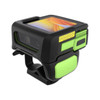
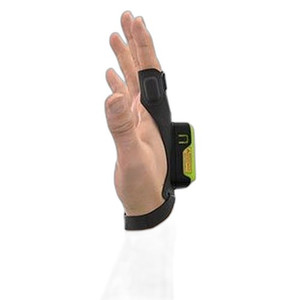
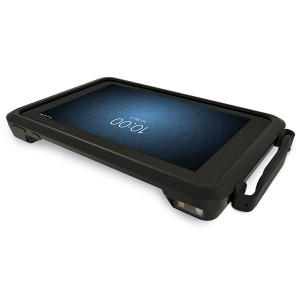
Zebra WS5012-0F3J1020ENA Wrist-Mounted Wearable Scanner
Overview
The Zebra WS5012-0F3J1020ENA is a wrist-mounted wearable scanner purpose-built for warehouse and logistics operations where workers require continuous scanning without handheld devices. The finger-mount form factor eliminates the need to juggle devices during high-velocity picking, receiving, and sorting tasks—critical in environments where throughput and accuracy directly drive operational margins. Built on Android OS, the device integrates with standard enterprise mobility platforms, reducing custom development overhead and deployment timelines.
Key Features
- Wrist-Mounted Form Factor: Scanning capability remains on the worker's arm, freeing both hands for item handling, stacking, or double-checking SKUs. This configuration cuts task cycle time in order fulfillment compared to alternating between handheld and other tools—especially valuable in cross-dock operations with 2–4 hour task windows.
- Wi-Fi Connectivity: Real-time data synchronization with your warehouse management system (WMS) eliminates batch-mode delays and mismatches. Workers see immediate confirmation on task completion, reducing re-scans and audit exceptions during shift.
- 1300mAh Battery: Delivers sustained runtime across full shift cycles—typically 8–10 hours depending on scanning frequency and display activity. Reduces mid-shift charging interruptions common in high-volume distribution centers, where dock restarts cost operational time and complicate team coordination.
- Android OS Foundation: Familiar development environment for enterprise integrators. Existing WMS connectors, barcode libraries, and BYOD mobile frameworks often port with minimal adaptation, reducing engineering cost relative to proprietary platforms.
- Hands-Free Scanning: Ideal for order fulfillment, inventory counts, and receiving workflows. Workers maintain grip on totes, pallets, or conveyors while scanning—reducing ergonomic strain and drop damage on fragile items.
- Enterprise Mobility Integration: Supports standard enterprise MDM (Mobile Device Management) deployment patterns. Device provisioning, remote lock, and app distribution align with existing corporate mobile fleet procedures.
Deployment Context
The WS5012-0F3J1020ENA fits high-touch, high-frequency scanning roles: order picking (5+ picks per minute), inventory counts across large warehouse zones, and cross-dock sortation where workers move continuously. If your operation relies on stationary scanning stations or low-frequency exception handling, a handheld device or fixed reader typically offers better ergonomics and durability per dollar. If workers need hands free for heavy lifting or climbing, wrist-mount scanning becomes cost-justified immediately.
Integration & Compatibility
Android OS underpins compatibility with most enterprise WMS platforms that support standard barcode APIs and SOAP/REST integrations. Verify your WMS vendor supports Android client deployment; older legacy systems (pre-2015) may require custom bridging. Wi-Fi connectivity requires 802.11 coverage across your scanning zones—assess dead spots in freezer areas or metal-racked high-bay sections before rollout. The device pairs with standard enterprise Wi-Fi management: 802.1X, EAP-TLS, and captive portal support documented in Zebra mobility documentation.
Sizing Your Deployment
Plan for 1.5–2 devices per full-time operator if shift rotation or extended downtime (breaks, meetings) applies. A 50-person picking team typically runs 30–35 WS5012 units in rotation. Wi-Fi AP density should target 1–2 APs per 2,000 sq ft of scanning zone; measure signal strength (-67 dBm or better) in your highest-density picking areas before ordering units.
Frequently Asked Questions
Q: Does the WS5012-0F3J1020ENA work with my WMS if it's cloud-hosted?
A: Yes, provided your WMS exposes a REST or SOAP API and supports Android clients. Verify cloud connectivity stability and firewall rules allow outbound HTTPS from warehouse Wi-Fi to your cloud endpoint. Test failover behavior if your cloud link drops mid-shift.
Q: What barcode formats does the WS5012 read?
A: The device supports standard 1D (Code 128, UPC, EAN, Interleaved 2/5) and 2D (QR, Data Matrix, PDF417) symbologies typical in warehouse labels. Confirm your current label format compatibility with Zebra before deployment.
Q: How long does a full charge last in a typical picking shift?
A: The 1300mAh battery typically sustains 8–10 hours of mixed scanning and idle time. Heavy scanning (500+ scans/hour) may reduce runtime by 15–20%; conversely, light scanning (50–100/hour) may extend it. Plan daily charging at end of shift.
Q: Can I use the WS5012-0F3J1020ENA in a cold storage environment?
A: Operating temperature limits and battery performance degradation in cold environments are not specified in available documentation. Contact your Zebra partner for cold-chain suitability and thermal testing data before deploying in freezer or cooler operations.
Q: What happens if a worker loses or damages the device?
A: Replacement cost and warranty terms depend on your agreement and coverage level. Standard commercial warranties typically cover manufacturer defects, not user damage. Plan for ruggedized cases and strap anchoring to reduce loss/drop incidents.
Q: Does the WS5012 support offline scanning if Wi-Fi drops?
A: Offline capability depends on your WMS client implementation. Android apps can cache transactions locally and sync when connectivity returns—discuss this capability and data reconciliation logic with your systems integrator before go-live.
Ted PerryPerspective based on aggregated IP Security Depot and affiliated engineering team experience.
The Zebra WS5012-0F3J1020ENA (often searched as WS5012 0F3J1020ENA) addresses a specific operational pain point: high-frequency scanning in environments where a handheld device becomes a bottleneck to task completion. The wrist-mount form factor is not a luxury feature—it directly reduces picking cycle time and ergonomic fatigue in operations running 8+ hour shifts with 500+ scans per day per worker. The 1300mAh battery is sized for a full shift without mid-day recharging, which matters when your dock is 200 meters from the charger and workers are scattered across multiple zones.
Technical Highlights:
- Android OS: Eliminates vendor lock-in for WMS integration. Most enterprise logistics platforms published after 2015 offer Android clients or REST APIs compatible with third-party Android apps. Your development cost is often 30–50% lower than proprietary wearable platforms.
- Wi-Fi Real-Time Sync: Immediate barcode confirmation feedback to workers reduces exception scans and task rework. If your WMS processes orders in batch mode (reconciliation at shift end), this device becomes much less attractive—the speed advantage disappears.
- 1300mAh Battery Endurance: Expected 8–10 hour runtime under typical warehouse scanning load. If your team works 10+ hour shifts or you have mobile equipment constantly moving workers between zones with no charging access, plan for rotating spare units or evaluate higher-capacity alternatives.
Deployment Considerations:
- Wi-Fi infrastructure must be stable and present across your entire scanning zone. Dead spots in metal-racked aisles or freezer areas will create sync delays and frustration—conduct a site survey and address coverage gaps before rollout.
- Wrist-mount devices increase loss risk: plan for tracking/MDM, strap anchoring, and replacement inventory. A lost unit costs more than device depreciation; it disrupts team scheduling and training continuity.
- Cold-storage compatibility is not documented. If you operate freezer picking, contact Zebra technical support for thermal performance data before committing budget—battery life may degrade 20–30% in sub-zero environments.
The WS5012-0F3J1020ENA is the right choice for high-frequency order picking and inventory count operations where workers move constantly and both hands matter. It's overspecified for low-volume exception scanning or fixed-zone receiving, where a handheld device will serve you just as well at half the per-unit cost. Evaluate your peak scanning volume (scans per minute per worker); if it's above 100 scans/shift, the wrist-mount ROI becomes obvious.