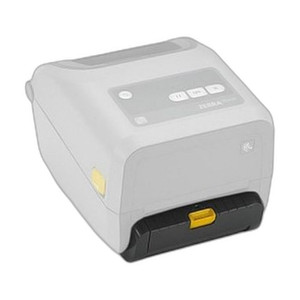
Zebra P1112640-231 Dispenser Upgrade Kit for ZD421T
Overview
The Zebra P1112640-231 is a purpose-built dispenser upgrade module that transforms a ZD421T thermal printer into an automated labeling system. This kit adds hands-free label dispensing—critical in high-volume warehouse, logistics, and retail operations where operator fatigue and throughput constraints matter. The P1112640-231 integrates mechanically and electrically with ZD421T architectures without requiring firmware changes or complete printer replacement, making it a cost-effective path to dispensing automation for facilities already running Zebra thermal printers.
Dispenser upgrade kits are essential when your operation moves beyond simple print-and-collect workflows. The Zebra thermal printer line includes models designed for modular enhancement, and the P1112640-231 exemplifies this approach: you keep your existing printer investment and add only the dispensing capability you need.
Key Features
- ZD421T Mechanical Compatibility: Purpose-designed for ZD421T mounting points ensures precise alignment without adapter plates or custom fabrication—installation takes minutes, not hours.
- Automated Label Dispensing with Peeling: Provides motorized feed and automated separation, eliminating manual label removal and reducing operator handling time by up to 50% in repetitive labeling tasks.
- Wi-Fi Connectivity: Integrated Wi-Fi support enables wireless printing commands and dispenser control across distributed warehouse workstations—no hardwired printer tether needed, so you can relocate stations without rewiring infrastructure.
- Thermal Transfer and Direct Thermal Support: Works with both print technologies, so you maintain flexibility to switch between ribbon-based and direct thermal labels based on label material cost or durability requirements without hardware changes.
- Native ZD421T Print Speed: Dispenser operation does not reduce the printer's standard thermal output speed—throughput remains consistent even with automated label removal.
- Modular Integration: Upgrade architecture allows side-by-side deployment with non-dispensing ZD421T units in the same facility, supporting gradual rollout across multiple workstations without standardizing entire warehouse fleets immediately.
- WMS and Label Design Software Compatibility: Integrates with existing warehouse management systems and standard label design tools already linked to your ZD421T fleet—no middleware or translation layers required.
Integration and Deployment Context
The P1112640-231 is deployed in order fulfillment centers, logistics sort facilities, retail backroom operations, and manufacturing production lines where label velocity and operator efficiency directly impact cost per unit shipped or processed. Automated dispensing is particularly effective in packing operations where one person may generate hundreds of labels per shift—removing the manual peel-and-place step cuts fatigue and error rates.
Network deployment across multiple ZD421T units with P1112640-231 upgrades supports centralized print job queuing and label dispensing coordination through standard warehouse management platforms. Wi-Fi enables flexible workstation placement within facility layouts—you are no longer constrained by printer cable runs, which is especially valuable in mobile or temporary pack stations.
Installation does not require firmware reconfiguration or network protocol changes. The kit integrates with standard Zebra printer drivers and ZPL (Zebra Programming Language) commands, so existing label templates and print jobs require no modification. Compatibility with industry-standard thermal printer selection criteria means procurement teams evaluating label production upgrades can confidently integrate the P1112640-231 into roadmaps already planned around ZD421T infrastructure.
When to Choose a Different Approach
If your facility requires dispensing speeds significantly faster than the ZD421T's standard throughput or if you need sub-second label separation precision for applications like pharmacy or blood bank labeling, evaluate higher-speed Zebra dispenser-integrated printers in the same family rather than retrofit kits. For operations with very high label volume (50,000+ labels per day per station), a purpose-built industrial dispenser system may reduce cost per label over time.
Frequently Asked Questions
Q: Is the P1112640-231 compatible with ZD421T models using thermal transfer or direct thermal printing?
A: Yes. The P1112640-231 supports both thermal transfer and direct thermal printing modes, maintaining full print technology flexibility.
Q: Does installation require firmware updates or reconfiguration of existing ZD421T settings?
A: No. The upgrade integrates without firmware modifications or extensive reconfiguration. Existing network infrastructure and WMS integration remain consistent with native ZD421T implementations.
Q: Will adding the dispenser module reduce the printer's thermal output speed?
A: No. The dispenser operation maintains the standard ZD421T print speed performance across the upgraded configuration.
Q: Can multiple P1112640-231 upgraded printers be coordinated in a single warehouse deployment?
A: Yes. Network deployment across multiple ZD421T units with P1112640-231 upgrades supports centralized print job queuing and label dispensing coordination through standard WMS platforms.
Q: What are typical deployment scenarios for the P1112640-231?
A: Common applications include high-speed order fulfillment operations, logistics sorting facilities, retail backroom label generation, and manufacturing production line identification.
Q: Does the P1112640-231 require any special power supply beyond the ZD421T's existing power configuration?
A: Integration details depend on your specific facility power architecture. Consult the manufacturer's installation guide or your systems integrator for dispenser motor power requirements and electrical integration specifics.
Ted PerryPerspective based on aggregated IP Security Depot and affiliated engineering team experience.
The Zebra P1112640-231 is a straightforward upgrade path—if you're already running ZD421T thermal printers and your operation is losing throughput or operator efficiency to manual label peeling, this kit addresses that single constraint without forcing a complete printer swap. The modular design means you can retrofit one or two stations and leave others unchanged while you prove the ROI.
Technical Highlights:
- Motorized Label Separation: Automated peeling and feed reduces per-label handling time significantly—in repetitive packing operations, this translates to measurable labor cost reduction and lower error rates from fatigue.
- Wi-Fi Integration: Wireless connectivity eliminates fixed printer locations; workstations become mobile within facility coverage, valuable for flexible fulfillment or temporary surge capacity during peak seasons.
- No Print Speed Penalty: The dispenser does not throttle ZD421T throughput—you maintain the printer's native speed while gaining automation, which is critical for high-volume operations where label velocity directly affects order cycle time.
- Transparent Software Integration: ZPL commands and existing label templates work unchanged; WMS integration requires no middleware or custom drivers, reducing commissioning time and integration risk.
Deployment Considerations:
- Verify that your ZD421T inventory is actually running the dispenser-compatible firmware; older ZD421T units may require a firmware refresh before P1112640-231 installation.
- Dispenser motor power draw and electrical integration specifics should be confirmed with your site power architecture—facility electrical documentation is essential before ordering multiple units.
- If your label throughput is already pushing ZD421T limits (very high volume, sub-second cycle times), consider whether a higher-speed integrated dispenser printer in the Zebra family might be more cost-effective long-term than retrofit kits across your fleet.
The P1112640-231 is the right choice for facilities with existing ZD421T investments that need to reduce manual label handling without capital-intensive equipment replacement. It's particularly effective in order fulfillment and logistics operations where operator fatigue and label velocity directly impact unit economics.