
Showing Results for Cutters & Peelers
-
Save $58.54
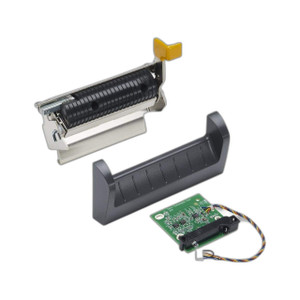
Zebra P1123335-042 Peel Option Kit for ZT111/ZT231
Automatic label peeling kit for Zebra ZT111 and ZT231 printers
- Eliminates manual label stripping on ZT111 and ZT231, reducing operator touchpoints.
- OEM-spec construction ensures reliable continuous operation in high-demand environments.
- Backed by a 1-year warranty, supporting deployment confidence in production settings.
Usually Ships in 2-3 Weeks Free shipping over $499$281.53 $222.99 Save $58.54 -
Save $144.01

Brother PA-CU-004 Auto Cutter Kit for Label Printers
Inline auto cutter for Brother label printers—high-volume finishing
- Mounts to Brother TJ-series accessory interface for inline label cutting without manual separation.
- Compatible with TJ4010TN, TJ4020TN, TJ4120TN, TJ4021TN, and TJ4121TN printer models.
- Compact 7.30" × 5.00" × 9.50" footprint fits constrained inline production and label finishing setups.
Usually Ships in 2-3 Weeks Free shipping over $499$605.00 $460.99 Save $144.01 -
Save $204.01
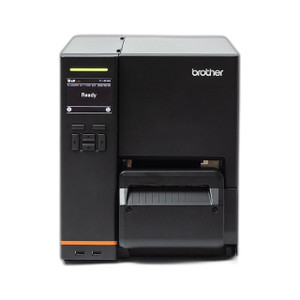
Brother PA-CU-005 Auto Cutter Kit
Automatic label cutting for Brother TJ-series industrial printers
- Automates inline label separation on TJ4420TN, TJ4520TN, and TJ4620TN printers.
- Bolt-on installation requires no firmware updates or additional drivers to deploy.
- Compact kit at 3.15 lbs fits existing media path without reconfiguring your print workflow.
Usually Ships in 2-3 Weeks Free shipping over $499$858.00 $653.99 Save $204.01 -
Save $76.01
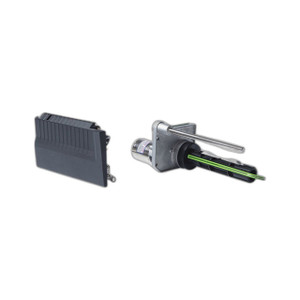
Brother PA-LP-005 Label Peeler with Rewinder Kit
Automated label peeler and rewinder for Brother printer systems
- Automates label peeling and rewinding to reduce manual finishing in high-volume runs.
- Rewinder assembly keeps finished label rolls organized, minimizing handling errors on the line.
- Compact form factor (9.1" W × 11.9" H × 5.4" D) fits tight equipment bench footprints.
Usually Ships in 2-3 Weeks Free shipping over $499$325.00 $248.99 Save $76.01 -
Save $109.01
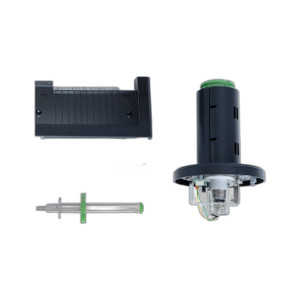
Brother PA-LP-006 Label Peeler Kit with Rewinder
Automated label peeling and rewinding for Brother TJ-series thermal printers
- Automates label peeling and rewinding to reduce manual handling in high-volume runs.
- Compatible with TJ4420TN, TJ4520TN, and TJ4620TN thermal transfer printers only.
- Includes peeler unit, rewinder mechanism, and all installation hardware in one kit.
Usually Ships in 2-3 Weeks Free shipping over $499$468.00 $358.99 Save $109.01 -
Save $307.39

Citizen Cl-S400DTBTUR-Cu Cl-S400 Dt 120V BT Ser & USB Cutter
4-inch desktop thermal printer built for high-volume label production in logistics, warehouse, and supply-chain environments
Usually Ships in 2-3 Weeks Free shipping over $499$837.38 $529.99 Save $307.39 -
Save $307.39
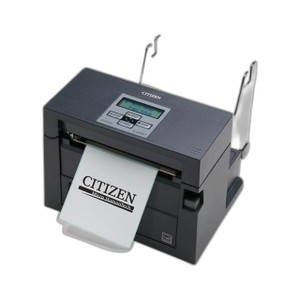
Citizen Cl-S400DTETU-R-Cu Cl-S400DT Dt 120V Cutter Ethernet
Cutter unit assembly for the Citizen CL-S400DT thermal printer series
Usually Ships in 2-3 Weeks Free shipping over $499$837.38 $529.99 Save $307.39 -
Save $291.08

Citizen CL-S521II 203DPI W/ Cutter - CL-S521IINNUBK-C
Type II direct thermal desktop printer delivering 203 DPI resolution with integrated cutter functionality
Usually Ships in 2-3 Weeks Free shipping over $499$794.07 $502.99 Save $291.08 -
Save $172.71

Citizen Ct-S281IIUSUBKPX Ct-S280II W/Cutter Usb&ser Pne Black
Compact thermal receipt printer with integrated cutter designed for point-of-sale and access-control checkpoint installations
Usually Ships in 2-3 Weeks Free shipping over $499$469.70 $296.99 Save $172.71 -
Save $167.39

Citizen CT-S281IIUSUBKXLX Label Printer - CT-S281II
Thermal label printer with integrated cutter designed for high-volume labeling in surveillance, access control, and security system deployments
Usually Ships in 2-3 Weeks Free shipping over $499$457.38 $289.99 Save $167.39 -
Save $85.64

Citizen JM98916-0 Cl-S400DTU Cutter
Cutter module (CL-S400DTU) designed for integration with Citizen label and receipt printers in the CL-S and CL-E series
Usually Ships in 2-3 Weeks Free shipping over $499$317.63 $231.99 Save $85.64 -
Save $126.66

Honeywell 205-187-004 Linerless Cutter
Wired linerless cutter for Honeywell scanning systems
- Linerless design eliminates liner waste, reducing media costs in high-volume workflows.
- Wired interface ensures stable, uninterrupted connectivity within fixed scanning deployments.
- Supports label and receipt cutting for POS, shipping, and inventory management systems.
Usually Ships in 2-3 Weeks Free shipping over $499$418.65 $291.99 Save $126.66 -
Save $0.19
Honeywell 205-188-001 Self-Strip Module
Wired self-strip module for Honeywell scanning and mobility systems
- Wired self-strip interface ensures reliable data transmission without wireless interference.
- Designed for Honeywell Scanning & Mobility systems, simplifying integration into existing deployments.
- Verify model compatibility before ordering to ensure correct fit with your Honeywell host system.
Usually Ships in 2-3 Weeks Free shipping over $499$60.18 $59.99 Save $0.19 -
Save $0.81
Honeywell 205-190-007 Cutter Tray Scanner Accessory
Wired cutter tray for Honeywell barcode scanners in high-volume operations
- Wired connectivity ensures stable, interference-free integration in high-volume scan lines.
- Cutter tray design supports inline label cutting to streamline material handling workflows.
- Backed by manufacturer warranty, reducing replacement risk in continuous-operation deployments.
Usually Ships in 2-3 Weeks Free shipping over $499$62.80 $61.99 Save $0.81 -
Save $0.88
Honeywell Scanning & Mobility 205-187-003 Linerless Platen
Linerless platen replacement for Honeywell thermal barcode printers
- Linerless design eliminates adhesive backing, cutting label material waste in high-volume runs.
- Direct replacement platen maintains print quality and scan accuracy in Honeywell thermal systems.
- Suited for warehouse, logistics, and manufacturing deployments requiring routine platen service.
Usually Ships in 2-3 Weeks Free shipping over $499$41.87 $40.99 Save $0.88 -
Save $127.66
Honeywell Scanning & Mobility 205-187-006 Cutter with Media
Wired barcode label cutter for Honeywell scanning systems
- Wired interface ensures stable, interference-free connection in high-density warehouse deployments.
- Integrated media support enables in-line label cutting without secondary handling steps.
- Designed for Honeywell scanning platforms; verify system config compatibility before deployment.
Usually Ships in 2-3 Weeks Free shipping over $499$418.65 $290.99 Save $127.66 -
Save $0.19
Honeywell Scanning & Mobility 205-189-001 Self-Strip Module
Wired self-strip module for Honeywell scanning platforms
- Wired cable interface eliminates wireless dependency for reliable fixed or mobile installs.
- Self-strip module design simplifies direct integration into Honeywell scanning platforms.
- Supports warehouse, retail, and logistics deployments requiring cable-based connectivity.
Usually Ships in 2-3 Weeks Free shipping over $499$60.18 $59.99 Save $0.19 -
Save $198.01
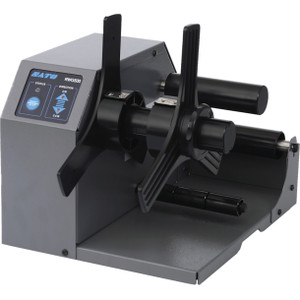
Sato 11S000201 RWG500 5-inch Rewinder Field Upgrade Kit
5-inch rewinder upgrade for SATO thermal printers, auto 110/220V
- RWG500 5-inch rewinder field upgrade for SATO printers
- Spools labels at native print speed for 24/7 production
- 25.75 lb floor unit with 1-year warranty coverage
Usually Ships in 2-3 Weeks Free shipping over $499$1,135.00 $936.99 Save $198.01 -
Save $51.01
SATO Cutter Kit Direct Thermal – WD201-021
Field-installable cutter kit for SATO direct thermal printers
- Direct thermal cutter kit for SATO desktop printers
- Inline cut at 6 ips and 203 DPI on standard labels
- Field-installable upgrade with 1-year warranty intact
Usually Ships in 2-3 Weeks Free shipping over $499$297.00 $245.99 Save $51.01 -
Save $169.23

SATO GL4E Internal Rewinder KIT WWGL15300
Internal rewinder kit for SATO GL4E thermal printers—field-installable
- Internal rewinder kit for SATO GL4E thermal printers
- Automates label rewind to eliminate manual end-of-roll handling
- Field-installable OEM kit — full SATO warranty preserved
Usually Ships in 2-3 Weeks Free shipping over $499$970.22 $800.99 Save $169.23 -
Save $0.03

SATO Rotary Cutter CP Series factory installed – 59-C2102-002
Factory-installed rotary cutter for SATO CP Series thermal printers
- Factory-installed rotary cutter for SATO CP Series
- Inline media cut for variable-length labels and tags
- Genuine SATO OEM part maintains warranty compliance
Usually Ships in 2-3 Weeks Free shipping over $499$360.02 $359.99 Save $0.03 -
Save $195.01
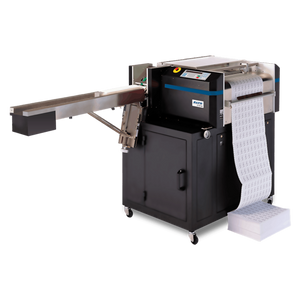
SATO RWG500 Media Rewinder Field Upgrade Kit - 11S000188
Automatic media rewinder retrofit for SATO thermal printers
- RWG500 media rewinder field upgrade for SATO printers
- Spools printed media for batch operator pickup
- 31.2 lb floor unit for continuous high-volume runs
Usually Ships in 2-3 Weeks Free shipping over $499$1,120.00 $924.99 Save $195.01 -
Save $0.01
SATO WS4 59-WD202-012 Direct Thermal Dispenser Unit
WS4 dispenser upgrade with 203 DPI, 6 ips direct thermal printing
- Direct thermal dispenser unit for the SATO WS4 printer
- Peels labels for hand-apply at 6 ips throughput
- Field-install kit preserves WS4 wireless and USB ports
Usually Ships in 2-3 Weeks Free shipping over $499$125.00 $124.99 Save $0.01 -
Save $51.01
SATO WS4 59-WT201-021 Thermal Transfer Full Cutter
Full-cut upgrade kit for SATO WS4 thermal printers, field-installable
- Full cutter kit for the SATO WS4 desktop thermal printer
- Clean label separation at 6 ips production throughput
- Field-installable upgrade keeps Ethernet/Wi-Fi/USB live
Usually Ships in 2-3 Weeks Free shipping over $499$297.00 $245.99 Save $51.01 -
Save $158.01
SATO WWCL05100 Guillotine Cutter Kit for CL4NX Plus
Guillotine cutter kit for CL4NX Plus label printer field upgrade
- Guillotine cutter kit for the SATO CL4NX Plus printer
- Inline cut for variable-length labels and tags
- Field-installable upgrade with 1-year warranty intact
Usually Ships in 2-3 Weeks Free shipping over $499$909.00 $750.99 Save $158.01 -
Save $208.01
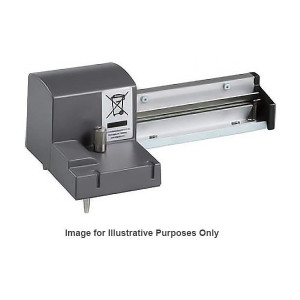
SATO WWCL95100 Guillotine Cutter Kit for CL6NX Plus
Guillotine cutter upgrade for CL6NX Plus—field-installable precision cutting
- Guillotine cutter kit for SATO CL6NX Plus industrial printers
- Automates cut-to-length for retail and warehouse label jobs
- Field-installable OEM upgrade with 1-year SATO warranty
Usually Ships in 2-3 Weeks Free shipping over $499$1,193.00 $984.99 Save $208.01 -
Save $71.25
SATO WWCL95200 CL6NX Simple Dispenser Kit
Field-installable dispenser upgrade for CL6NX Plus thermal printers
- Simple dispenser upgrade kit for CL6NX Plus industrial printers
- Adds peel-and-present functionality without factory return
- Genuine SATO part — installs by qualified service tech
Usually Ships in 2-3 Weeks Free shipping over $499$408.24 $336.99 Save $71.25 -
Save $128.01
Sato WWCL95300 CL6NX Plus Dispenser Field Upgrade Kit
Field upgrade kit for CL6NX Plus with multi-connectivity and day/night vision
- CL6NX Plus dispenser field upgrade — adds peel-and-present
- 10 ips at 203 DPI on a 6.59" wide industrial-printer base
- Field-installable kit, full OEM warranty preserved post-install
Usually Ships in 2-3 Weeks Free shipping over $499$737.00 $608.99 Save $128.01 -
Save $101.01
SATO WWCLP5200 CL4NX Plus Dispenser RTC Rewinder Kit
Field upgrade kit adds dispenser, RTC, and rewinder to CL4NX Plus
- CL4NX Plus dispenser + RTC + rewinder upgrade in one kit
- Adds peel-and-present + real-time clock to base printer
- Field-serviceable, OEM SATO warranty preserved post-install
Usually Ships in 2-3 Weeks Free shipping over $499$582.00 $480.99 Save $101.01 -
Save $347.01
SATO WWCLP5500 Rotary Cutter Kit for CL4NX Plus
Rotary cutter upgrade for CL4NX Plus automated media cutting
- Rotary cutter field kit for CL4NX Plus thermal printers
- Adds automated label cutting to base printer, no factory return
- Genuine SATO part — installs by qualified service tech
Usually Ships in 2-3 Weeks Free shipping over $499$1,990.00 $1,642.99 Save $347.01 -
Save $73.01
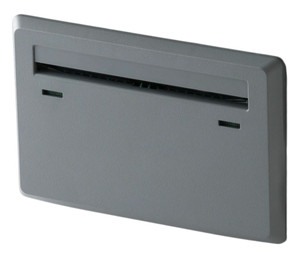
SATO WWCT0500N Cutter Kit for CT4-LX
Field-upgradeable cutter kit for SATO CT4-LX thermal printers
- Cutter kit for the SATO CT4-LX desktop thermal printer
- Inline rotary cut at 8 ips for variable-length labels
- Field-installable upgrade for CT4-LX label production
Usually Ships in 2-3 Weeks Free shipping over $499$422.00 $348.99 Save $73.01 -
Save $40.01
SATO WWCT0502N CT4-LX Dispenser Field Upgrade Kit
Field upgrade dispenser for CT4-LX thermal printers, 203 DPI
- Label dispenser upgrade for the SATO CT4-LX printer
- Auto peel-off at 8 ips for hand-applied labeling stations
- Field-installable: Ethernet, Wi-Fi, Bluetooth, USB preserved
Usually Ships in 2-3 Weeks Free shipping over $499$232.00 $191.99 Save $40.01 -
Save $205.01

SATO WWM845100 Rotary Cutter Field Upgrade Kit
Genuine SATO rotary cutter upgrade kit for field installation on thermal printers
- Rotary cutter field-upgrade kit for SATO thermal printers
- Adds automatic media cutting at 10 ips, 4.1" max width
- Genuine SATO part — installable by qualified service tech
Usually Ships in 2-3 Weeks Free shipping over $499$1,176.00 $970.99 Save $205.01 -
Save $0.01
SATO WWPW45A0N Linerless Kit for PW4NX
Linerless upgrade kit for SATO PW4NX with 7.09" print width
- Linerless printing kit for the SATO PW4NX mobile printer
- Eliminates label-backing waste on 7.09-inch print width
- IP54-rated for warehouse, retail, and mobile route use
Usually Ships in 2-3 Weeks Free shipping over $499$157.00 $156.99 Save $0.01 -
Save $164.01

SATO WWRW55300 RWG500 External Rewinder
External rewinder for SATO thermal printers, 381 mm/s label output
- External rewinder for SATO RWG500 thermal printer line
- Automates label rewinding at up to 381 mm/s — no manual handling
- Field-installable OEM accessory with 1-year SATO warranty
Usually Ships in 2-3 Weeks Free shipping over $499$944.00 $779.99 Save $164.01 -
Save $409.01
SATO WWSG04100 SG112-ex Cutter Kit
Drop-in cutter upgrade for SG112-ex thermal printers, 305 DPI
- Cutter kit for the SATO SG112-ex 10.5-inch wide printer
- Inline rotary cut for tags, tickets, and pallet labels
- 305 DPI direct thermal / thermal transfer compatibility
Usually Ships in 2-3 Weeks Free shipping over $499$2,346.00 $1,936.99 Save $409.01