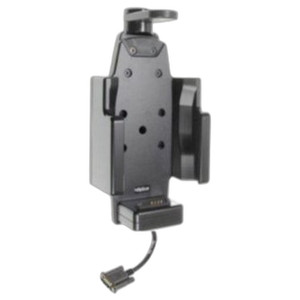
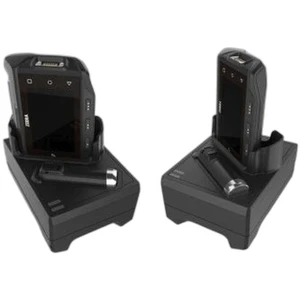
Zebra CRD-TC78-WCVC-01 Wireless Charging Vehicle Cradle
Overview
The Zebra CRD-TC78-WCVC-01 is a wireless charging vehicle cradle engineered for in-vehicle deployment of Zebra TC78 series mobile computers. Unlike traditional wired cradles that demand cable management and create connection points prone to failure, this accessory delivers wireless power directly to compatible devices while maintaining WiFi connectivity throughout the charging cycle. For fleet operations, delivery routes, and field service teams, eliminating physical charging connectors removes a major source of downtime — no corrosion, no intermittent connections, no plugging/unplugging wear cycles.
Key Features
- Wireless Charging: Transfers power inductively to the TC78 without contact points, reducing wear on both cradle and device connectors. Meaningful in high-use environments where connectors fail after 500–1000 insertion cycles; wireless charging eliminates that clock entirely.
- In-Vehicle Form Factor: Designed specifically for vehicle mounting, positioning the TC78 within reach and line-of-sight during operations. Keeps the device accessible while keeping your hands on delivery documentation or scanning tasks.
- WiFi Connectivity Maintained: The CRD-TC78-WCVC-01 preserves WiFi access while charging, so field teams stay connected to dispatch, inventory systems, and route updates without removing the device from the cradle. Critical for real-time operations where network drops create inefficiency and data sync delays.
- TC78 Battery Compatibility: Designed for the Zebra TC78's 4400mAh battery, ensuring appropriate charging rates that don't degrade battery longevity. Overcharging or slow charging can shorten battery life by 20–30% over 18–24 months; proper cradle design protects that investment.
- Eliminates Cable Clutter: Vehicle cabs with multiple devices, scanners, and power accessories quickly become cable management nightmares. Wireless charging removes one cord per device, simplifying installation and reducing trip hazards and pinch points in cramped fleet vehicles.
- Durable Vehicle Mount Design: Built to survive vibration, temperature swings, and the physical abuse of active fleet environments. No fragile cable connectors exposed to accidental snagging or abrasion against sharp edges.
Integration & Compatibility
The CRD-TC78-WCVC-01 (often searched as CRD TC78 WCVC 01) pairs exclusively with Zebra TC78 mobile computers equipped with 4400mAh battery capacity and WiFi. Confirm your TC78 variant supports wireless charging before ordering — not all TC78 SKUs include the inductive charging receiver. Integration into existing fleet management workflows requires no additional software or configuration; once mounted and powered, the device charges and communicates normally.
Vehicle power integration depends on your installation: some operators run 12VDC or standard vehicle power through auxiliary relays; others hardwire through fused circuits. Consult your vehicle electrical documentation and a qualified technician before installation to ensure the cradle's power input matches your vehicle's available circuits.
Why Consider the CRD-TC78-WCVC-01
Choose this cradle if you operate a fleet of TC78 devices in vehicles and want to eliminate connector wear, simplify cable management, and keep devices continuously powered during shifts. The wireless design is especially valuable in high-vibration environments (delivery trucks, forklifts, service vans) where wired connectors fatigue rapidly. If your team already owns TC78 devices, this cradle transforms them into permanently charged in-vehicle workstations without retrofitting cable trays or power distribution boxes.
When to Consider a Different Approach
If your TC78 devices do not support inductive charging (verify in your device specifications), this cradle will not work — you'll need a standard wired TC78 vehicle cradle instead. If your vehicles lack dedicated 12VDC or accessory power circuits, powering the cradle requires auxiliary installation that may exceed your budget or timeline. If your field operations do not rely on continuous in-vehicle charging (e.g., devices are charged overnight at a depot), a wired cradle may cost less and serve equally well.
Frequently Asked Questions
Q: Is the CRD-TC78-WCVC-01 compatible with all Zebra TC78 models?
A: No. The cradle is designed for Zebra TC78 devices with 4400mAh battery capacity and wireless charging receiver. Not all TC78 SKUs include inductive charging capability. Verify your device specifications before purchase.
Q: Does the cradle charge while the device is in use?
A: Yes. Wireless charging continues even while the TC78 is mounted and active, so field teams remain powered throughout the workday without removing the device.
Q: What power source does the CRD-TC78-WCVC-01 require?
A: The cradle requires vehicle power integration (typically 12VDC accessory circuit or hardwired through a fused relay). Consult your vehicle's electrical schematics and a qualified technician before installation.
Q: Will wireless charging work if the device is in a protective case?
A: Inductive charging performance depends on case thickness and material. Most thin rugged cases allow charging; thick metal or foil-lined cases block the signal. Test compatibility with your current case before full deployment.
Q: Can I install the CRD-TC78-WCVC-01 myself?
A: The mounting hardware is designed for straightforward installation, but the power integration step requires working with your vehicle's electrical system. Professional installation is recommended to ensure safe, code-compliant wiring and to protect your vehicle's warranty.
Ted PerryPerspective based on aggregated IP Security Depot and affiliated engineering team experience.
The CRD-TC78-WCVC-01 solves a real problem in fleet operations: connector fatigue. Standard wired cradles see hundreds of plug/unplug cycles per month in active delivery and logistics environments. Each cycle stresses the connector contacts, eventually causing intermittent charging or complete failure. This cradle eliminates that wear clock entirely through inductive coupling, meaning your TC78 devices stay powered longer and your total cost of ownership drops because you're not replacing cradles every 18–24 months.
Technical Highlights:
- Wireless Power Transfer: Inductive charging removes physical contact points, eliminating corrosion and connection wear. In high-vibration fleet vehicles, this extends cradle life from 2–3 years to 5+ years, offsetting the higher initial cost within 36 months across a fleet of 20+ devices.
- Continuous WiFi During Charging: The cradle preserves network connectivity while power transfers, so dispatch systems, route updates, and data sync never pause. Compare this to wired cradles where WiFi drops during the charge cycle — a 30–60 second gap per charge cycle compounds into hours of lost connectivity annually across your fleet.
- 4400mAh Battery Optimization: The cradle is tuned for the TC78's specific battery chemistry and capacity. Undersized or generic chargers can push voltage higher than the battery's tolerance, shortening lifespan by 15–25%. This cradle respects the battery's design envelope, protecting your hardware investment.
Deployment Considerations:
- Vehicle power integration is not plug-and-play. You'll need a qualified technician to wire the cradle into your vehicle's 12VDC accessory circuit or hardwired relay. Budget 2–4 hours per vehicle for professional installation, plus electrical inspection to ensure compliance with your fleet's safety standards.
- Test wireless charging with your current rugged device cases before full rollout. Metal-lined or foil-backed cases block inductive coupling completely. You may need to switch to non-metallic cases fleet-wide, which changes your device drop-rating profile — a gotcha worth validating in the lab first.
- Wireless charging generates modest heat (typical for induction), so ensure airflow around the cradle mount. In hot climates or fully enclosed vehicle cabs, verify ambient temperatures don't exceed the cradle's thermal envelope during peak charging cycles.
Deploy the CRD-TC78-WCVC-01 in fleets of 15+ TC78 devices running high-cycle delivery or logistics routes where downtime from connector failure carries measurable cost. If your fleet runs short, low-density routes where devices charge overnight at a depot, a standard wired cradle delivers the same availability at lower capital cost. For mixed environments, pilot this cradle on your busiest routes first — measure connector failure rates and charging downtime against your baseline before committing to fleet-wide rollout.