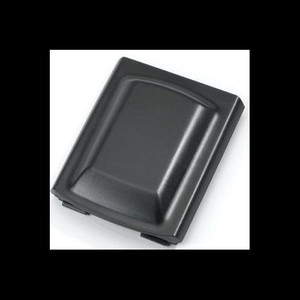
Zebra BTRY-HC2L5L-2XMAXB PowerPrecision Extended-Capacity Healthcare Battery
Overview
The Zebra BTRY-HC2L5L-2XMAXB is a PowerPrecision extended-capacity battery engineered for the HC20 and HC50 healthcare mobile computers. It addresses a persistent deployment pain point in clinical environments: device downtime during patient care operations. Unlike standard batteries, this extended-capacity design delivers the sustained runtime necessary to support full-shift nursing, ward rounds, and patient documentation workflows without requiring mid-shift charging or device swaps — eliminating the operational friction that forces clinicians to return to charting stations or wait for battery top-ups.
Key Features & Deployment Benefits
- Extended-Capacity Power Profile: Delivers significantly longer runtime per charge cycle compared to standard HC20/HC50 batteries. In high-mobility clinical deployments (hospital floors, patient rooms, EDs), extended shift coverage means fewer battery-change events and lower operational interruptions — a direct reduction in workflow delays and charger bottlenecks.
- PowerPrecision Technology: Zebra's PowerPrecision chemistry manages charge cycles and thermal performance to maintain consistent power delivery over the battery lifespan. Predictable performance across dozens of recharge cycles reduces unexpected shutdowns that can occur with aging standard batteries, a critical factor in clinical settings where device failure during patient interaction is unacceptable.
- Direct Compatibility — HC20 and HC50: The BTRY-HC2L5L-2XMAXB integrates directly into existing Zebra HC20 and HC50 deployments without firmware updates, configuration changes, or device reconfiguration. This matters: it means you can retrofit extended batteries into active clinical mobile fleets immediately, without IT coordination overhead or downtime windows. Installation is a physical swap — no software engineering required.
- Seamless Integration: Works within the existing Zebra healthcare device ecosystem. No third-party adapters, no compatibility workarounds — just plug-and-operate functionality. This reduces procurement complexity and training overhead when scaling battery inventory across multiple facilities or campuses.
- Ideal for High-Mobility Roles: Suited for roles with heavy movement across multiple clinical areas (nursing stations, patient wards, diagnostic areas, pharmacy). Roles with frequent docking or return-to-charger patterns benefit most from extended runtime — every additional hour per charge reduces total charging cycles and extends overall battery service life.
- Hospital-Grade Reliability: Designed to operate in clinical environments with temperature and humidity variations typical of hospitals, EDs, and care facilities. Consistent performance across ward-level deployment reduces the support burden of batteries failing prematurely in specific facility zones.
Integration & Compatibility
The BTRY-HC2L5L-2XMAXB is a direct-fit component for Zebra HC20 and HC50 healthcare mobile computers. It requires no driver installation, firmware patching, or VMS/enterprise system integration — it is a pure hardware swap. If your fleet currently runs standard Zebra HC batteries, upgrading to extended-capacity variants is a straightforward parts replacement. Multiple batteries allow rotation and continuous device availability while one set charges, a standard pattern in healthcare IT environments where mobile device downtime cascades into clinical workflow delays.
Frequently Asked Questions
Q: Is the BTRY-HC2L5L-2XMAXB compatible with other Zebra mobile computers outside the HC20/HC50 family?
A: No. This battery is designed exclusively for the Zebra HC20 and HC50 healthcare computers. Other Zebra mobile device families require their own battery part numbers. Verify your device model before ordering.
Q: Can I use the BTRY-HC2L5L-2XMAXB in standard office or warehouse environments, or is it healthcare-specific?
A: The battery itself is compatible only with HC20/HC50 devices. The 'healthcare' designation refers to the intended deployment context — devices designed for clinical use. The battery will function in any environment where those devices operate, but it is not a standalone product for other device types.
Q: How much longer does the BTRY-HC2L5L-2XMAXB last compared to a standard HC battery?
A: The BTRY-HC2L5L-2XMAXB is marketed as 'extended-capacity.' The specific runtime extension depends on device configuration, application workload, and usage patterns. For precise runtime projections relevant to your deployment profile, consult the product datasheet or contact Zebra technical support with your expected duty cycle.
Q: Can I safely rotate multiple batteries (one in use, one charging) in a clinical deployment?
A: Yes. Rotating batteries with charging cycles is a standard pattern in mobile device deployments. This approach maximizes device availability by minimizing idle time waiting for battery recharge. Ensure your charging infrastructure can support the rotation cadence your shift patterns require.
Q: Does the BTRY-HC2L5L-2XMAXB add significant weight or physical bulk to the HC20/HC50?
A: The extended-capacity form factor is designed to integrate into the standard HC20/HC50 device envelope. Physical dimensions and weight are optimized for clinical mobility use cases. Consult the datasheet for exact dimensions and weight specifications to confirm fit in your deployment scenario.
Q: What is the warranty on the BTRY-HC2L5L-2XMAXB?
A: Warranty details are provided in the manufacturer documentation. Typical Zebra battery warranties cover defects in materials and workmanship. Confirm the specific warranty terms with your authorized Zebra partner or the device documentation supplied with your HC20/HC50 purchase.
Ted PerryPerspective based on aggregated IP Security Depot and affiliated engineering team experience.
The BTRY-HC2L5L-2XMAXB solves a specific clinical operations problem: shift-length device availability without mid-shift battery swaps. If your nursing or care floor uses HC20 or HC50 devices and currently experiences devices dying before end-of-shift, or if you're managing 2–3 battery rotations per device per day to maintain coverage, the extended-capacity profile of the BTRY-HC2L5L-2XMAXB directly addresses that pain point.
Technical Highlights:
- Extended-Capacity PowerPrecision Chemistry: Delivers longer per-charge runtime than standard HC batteries, reducing total daily charging cycles and battery churn. In a 12-hour shift model with high-mobility roles (ED, nursing floors), even 1–2 additional hours per charge can eliminate one rotation cycle per day — that's one fewer charger docking event and less device provisioning overhead.
- Zero Configuration Integration: Drops into HC20/HC50 devices with no firmware updates, driver installations, or VMS coordination. Retrofit time is minutes, not hours. This matters when you're deploying across multiple facilities or campuses — each location can upgrade batteries independently without waiting for centralized IT pushes.
- Cycle-Life Consistency: PowerPrecision technology maintains predictable charge performance over dozens of recharge cycles. Standard batteries often degrade visibly after 18–24 months in heavy-use clinical settings, forcing unpredictable replacements. Consistent degradation curves help with budget forecasting and preventive replacement planning.
Deployment Considerations:
- Runtime Gain Is Workload-Dependent: Extended capacity means nothing if your application only draws light power. Scanning and data-entry tasks will see larger runtime gains than scenarios with continuous screen-on time, GPS, or heavy Wi-Fi usage. Profile your actual duty cycle before committing to large battery fleet purchases.
- Charging Infrastructure Maturity Matters: If you're adding extended batteries to a clinical deployment, ensure your charger count and docking infrastructure can support the rotation pattern. A single extended battery per device without sufficient charging stations creates new bottlenecks. Plan charging capacity alongside battery procurement.
The BTRY-HC2L5L-2XMAXB is well-suited for hospital floor nursing workflows where clinicians work full shifts with minimal return-to-charger time. If your current model has devices docking every 6–8 hours for battery top-ups, or if you're managing device pooling with 1:1.5 or 1:2 battery-to-device ratios to maintain availability, this battery variant reduces that friction measurably. It is not a solution for ultra-heavy-duty applications (GPS-logged field work with constant data sync) or facilities that can only afford a single battery per device — those require different planning.