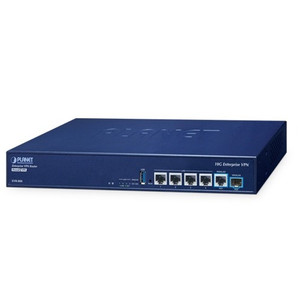
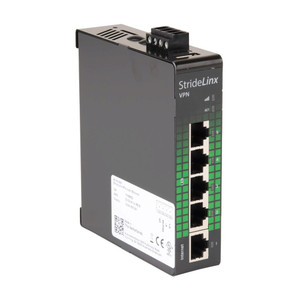
Code Blue SLNP0009 VPN Enterprise Router
The Code Blue SLNP0009 is a VPN enterprise router designed to establish secure, encrypted tunnels across distributed surveillance networks. Built for environments where multiple remote sites or branch offices need to connect back to a central network operations center, the SLNP0009 handles up to 50 peer connections — scaling from small multi-site deployments to larger enterprise architectures without requiring a complete network redesign.
Overview
VPN routing in surveillance deployments solves a real problem: you need to aggregate camera feeds, access control events, and alarm data from geographically separated locations without exposing those networks to the public internet. The SLNP0009 bridges that gap by encrypting traffic between sites and managing multiple simultaneous peer connections. This matters when you're operating warehouses, retail chains, or campus environments where direct LAN access isn't practical or secure.
Key Features
- 50 Peer Connection Capacity: Handles up to 50 simultaneous VPN tunnels, letting you integrate branch locations, remote facilities, or temporary job sites into a single encrypted network without bottlenecking at the router level.
- Enterprise-Grade VPN Tunneling: Creates secure encrypted pathways for IP camera traffic, NVR replication, and alarm system data crossing untrusted network boundaries — no camera feeds or metadata transmitted in clear text.
- Multi-Site Aggregation: Centralizes video management across distributed locations, enabling a single operator to view and respond to alerts from a headquarters NOC while maintaining encryption end-to-end.
- Flexible Deployment Model: Suitable for hub-and-spoke topologies (all branches connect to headquarters) or partial mesh configurations where certain sites maintain direct encrypted links to each other.
Integration & Compatibility
The SLNP0009 integrates with standard IP surveillance infrastructure. It sits between your branch-site network core and the WAN uplink, handling traffic from any ONVIF-compliant camera, NVR, or access control system. Configuration typically involves assigning VPN peer endpoints (IP addresses of remote SLNP0009 units or compatible third-party gateways), establishing encryption parameters, and routing surveillance traffic across the tunnels. Once provisioned, the router operates transparently to downstream video management software — your VMS sees cameras and recorders on a unified logical network, even though physical traffic is encrypted and split across multiple internet links.
Network Resilience and Failover
Multi-site surveillance deployments often depend on redundancy. The SLNP0009's support for 50 peers enables you to establish backup tunnel paths; if one internet service provider fails at a branch, encrypted traffic can reroute through an alternate peer gateway or tunnel topology without losing visibility into that location's cameras and events.
Frequently Asked Questions
Q: Does the SLNP0009 require specialized cabling or power infrastructure?
A: The SLNP0009 operates on standard PoE or DC power (sourcing details depend on your specific power supply configuration). Cabling is standard Ethernet — no special hardware required beyond your normal network infrastructure.
Q: Can the SLNP0009 work with legacy cameras and NVRs?
A: Yes. Any IP camera, NVR, or access control device that routes traffic through the SLNP0009's network will have its traffic encrypted. The router operates at the network layer, so it doesn't require protocol-level integration with individual devices.
Q: What's the typical deployment scenario for a 50-peer router?
A: A retail or warehouse chain with 40–50 branch locations, each with a local SLNP0009 unit or compatible VPN gateway, all tunneling back to a corporate headquarters NVR and management station. Smaller deployments (5–10 sites) will never approach the peer limit, but the router scales without performance degradation as you grow.
Q: Is the SLNP0009 compatible with third-party VPN gateways?
A: Compatibility depends on the VPN standards and encryption protocols supported by both devices. Verify with Code Blue technical support before deploying mixed-vendor gateway architectures.
Q: What happens if a peer connection drops?
A: The router automatically detects the loss and stops routing traffic through that peer. Rerouting depends on your tunnel topology — if you've configured redundant paths, traffic shifts to alternate tunnels. If no alternate path exists, that site becomes unreachable until the primary link restores.
The Code Blue SLNP0009 is a workhorse for multi-site surveillance architectures where security and encryption are non-negotiable. The 50-peer capacity is the critical spec here — it means you can scale from a two-branch test deployment all the way to a national retail or warehouse rollout without swapping hardware at headquarters.
Technical Highlights:
- 50 Simultaneous Peer Tunnels: Each peer represents an encrypted VPN connection to a remote location. At 50 peers, you're not counting individual cameras — you're counting distinct network segments, branches, or satellite sites. That's enough capacity for most enterprise surveillance chains without overprovisioning.
- Transparent Network Integration: The SLNP0009 encrypts all traffic between peers without requiring changes to your camera firmware, NVR configuration, or VMS software. Your management station sees a unified logical network, even though physical traffic is encrypted and fragmented across multiple internet links.
- Hub-and-Spoke or Partial Mesh Flexibility: You're not locked into a single topology. Deploy all branches talking back to headquarters, or create direct encrypted links between certain high-traffic pairs to reduce WAN load and latency.
Deployment Considerations:
- The 50-peer limit is a hard ceiling on simultaneous tunnel count. If you plan to expand beyond 50 distinct network segments, you'll need to evaluate whether to deploy additional hub routers or step up to a higher-capacity platform.
- Tunnel performance depends on the Internet Service Provider links at each peer location. A branch with a poor or congested ISP link will bottleneck video streaming for that entire site. QoS and tunnel redundancy become critical design elements as you scale.
Ideal for retail chains, hospitality groups, and logistics operators who need to centralize video evidence and access control across 20–50 branch locations without exposing unencrypted camera traffic to untrusted ISP networks. The SLNP0009 keeps compliance auditors happy and operational teams focused on actual threats, not network architecture.