
Workstations & Terminals
Showing Results for Workstations & Terminals
-

PioneerPOS
SKU: MAW-KC8FNQ-35
PioneerPOS Cyp I3 8G 120SD LT21 Msr 326f*2 - MAW-KC8FNQ-35
- Intel I3 processor with 8GB RAM sustains POS workloads across 6–12 concurrent lanes.
- 120GB SSD eliminates mechanical disk latency for fast transaction logging and offline queuing.
- Dual MSR 326 reader channels enable simultaneous ISO/IEC 7813 card-present processing.
$2,878.99 -

PioneerPOS
SKU: KC8FNQ000531
PioneerPOS CYP i3 8G 120SD LT21 MSR Base - KC8FNQ000531
- Intel Core i3 with 8GB RAM handles POS transactions and concurrent apps without lag.
- 120GB SSD delivers fast boot and application launch for single-terminal deployments.
- Integrated MSR eliminates external card swiper peripherals and reduces cable clutter.
$3,001.99 -
PioneerPOS
SKU: MAW-KC8FNQ-01
PioneerPOS CYP i3 8G 120SD LTSC2021 NoMounting - MAW-KC8FNQ-01
- Fanless design eliminates moving parts, reducing failure risk in always-on surveillance deployments.
- Windows LTSC 2021 OEM license provides long-term OS stability suited for VMS and edge analytics hosts.
- Ships without mounting hardware, so plan customer-supplied brackets for rack or shelf integration.
$2,903.99 -

PioneerPOS
SKU: KC8FPQ000035
PioneerPOS Cyp I3 8G 120SD W11LTSC USB Prnt Scsc - KC8FPQ000035
- Intel Core i3 with 8GB RAM handles concurrent POS apps and USB peripheral polling reliably.
- 120GB SSD eliminates mechanical failure risk and cuts boot latency in high-transaction environments.
- Windows 11 LTSC delivers a 10-year patch lifecycle with no forced feature updates for stable retail deployments.
$3,364.99 -
PioneerPOS
SKU: KC8FNQ000035
PioneerPOS Cyp I3 8G LT21 Prt USB - KC8FNQ000035
- PioneerPOS-branded hardware ensures OEM specification compliance for commercial deployments.
- USB connectivity simplifies integration into existing POS and access-control peripheral stacks.
- Factory-new condition with full US warranty path reduces procurement and support risk.
$3,597.99 $3,596.99 Save $1.00 -
PioneerPOS
SKU: NC8FNQ000531
PioneerPOS Cyp I5 8G 120SD LT21 Msr Base - NC8FNQ000531
- Intel i5 with 8GB RAM supports POS runtime and 2–4 camera feeds concurrently.
- 120GB SSD eliminates mechanical failure risk and accelerates application boot times.
- Integrated MSR consolidates card-read hardware and narrows PCI-DSS audit scope.
$3,444.99 -
PioneerPOS
SKU: NC8FCQ150031
PioneerPOS CYP i5 8G 120SD W10P SPK WiFi Base - NC8FCQ150031
- Fanless i5 design enables silent deployment in SOCs and retail POS environments.
- 8GB DDR4 supports Windows 10 Pro plus VMS clients like Milestone, Genetec, or ExacqVision.
- Integrated Wi-Fi and Ethernet allow flexible installs where fixed cabling is impractical.
$3,737.99 -

PioneerPOS
SKU: NC8GMQ000535
PioneerPOS Cyp I5 8G 240SD W11P Tpm Msr USB Prnt - NC8GMQ000535
- Intel Core i5 with 8GB RAM handles concurrent POS, payment gateway, and backup tasks.
- TPM 2.0 enforces domain join and encrypted credentials, blocking rogue-terminal risk.
- Integrated USB MSR and printer port deliver self-contained card transaction output.
$4,778.99 -
PioneerPOS
SKU: NC8FNQ150531
PioneerPOS CYP i5 8G LTSC2021 SPK WiFi MSR Base - NC8FNQ150531
- Intel Core i5 with 8GB RAM handles parallel POS, inventory, and payment tasks without lag.
- Windows LTSC 2021 delivers a 10-year support lifecycle with no forced OS updates.
- Integrated MSR and 802.11a/b/g/n Wi-Fi eliminate extra peripherals and fixed cabling needs.
$3,160.99 -
PioneerPOS
SKU: NC8FPQ150531
Pioneerpos Cyp I5 8G WIN11 Ltsc Spk Wifi Msr Base - NC8FPQ150531
- Intel Core i5 with 8GB RAM handles multi-app POS workloads without thermal throttling.
- Windows 11 LTSC blocks forced OS feature updates, preserving certified payment stack stability.
- Integrated MSR and 802.11ac Wi-Fi eliminate external peripherals at the checkout counter.
$3,920.99 -
PioneerPOS
SKU: NC8FMQ150531
PioneerPOS CYP i5 8G Win11 Pro SPK WiFi MSR Base - NC8FMQ150531
- Intel Core i5 with 8GB RAM sustains concurrent POS, inventory, and card processing tasks.
- Integrated MSR eliminates external USB readers, reducing countertop failure points.
- Windows 11 Pro enables BitLocker, domain join, and RDP management out of the box.
$4,336.99 -
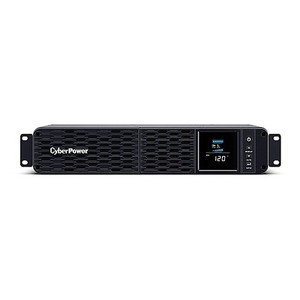
PioneerPOS
SKU: NC8FMQ150031
PioneerPOS CYP i5 8G Win11 Pro TPM SPK WiFi Base - NC8FMQ150031
- Intel Core i5 with 8GB RAM handles VMS nodes and edge analytics without virtualization overhead.
- TPM 2.0 enables secure boot and hardware-backed credential storage for enterprise platform attestation.
- 802.11ac Wi-Fi allows flexible placement where running dedicated Ethernet drops is impractical.
$3,905.99 -
PioneerPOS
SKU: AC4FNQ000535
PioneerPOS Cyp J1900 4G 120SD Msr LT21 USB Prnt - AC4FNQ000535
- Cyp J1900 4G 120SD POS terminal with USB printer
- LT21 thermal printhead rated for sustained daily volumes
- 120mm media width fits 80mm and 120mm thermal paper
$2,780.99 -
PioneerPOS
SKU: AC4FNQ05003Z
PioneerPOS CYP J1900 4GB SSD LT21 WiFi Wall - AC4FNQ05003Z
- Intel Celeron J1900 quad-core handles dual-stream H.264/H.265 decoding at the edge.
- Wi-Fi 802.11 connectivity eliminates cable runs, simplifying fixed wall-mount installation.
- 12VDC operation and SSD storage reduce mechanical failure risk in always-on deployments.
$2,251.99 -
PioneerPOS
SKU: AC8FNQ050031
PioneerPOS CYP J1900 8G LTSC21 WiFi Base - AC8FNQ050031
- Intel Celeron J1900 quad-core CPU handles POS transactions without thermal overhead.
- Windows 10 LTSC 21 eliminates forced updates, protecting uptime in 24/7 retail deployments.
- Wi-Fi connectivity removes Ethernet runs, simplifying installs in leased or retrofit spaces.
$2,374.99 -
PioneerPOS
SKU: AC8XJQ05003Z
PioneerPOS CYP J1900 8G LTSC21 WiFi Wall - AC8XJQ05003Z
- Intel Celeron J1900 quad-core handles POS transactions and peripheral drivers concurrently.
- 8GB RAM supports simultaneous POS software, inventory sync, and payment gateway workloads.
- Windows 10 LTSC 21 blocks forced updates, ensuring predictable uptime in live POS deployments.
$2,374.99
Workstations & Terminals
Surveillance workstations and terminals provide the computing power required for live monitoring, playback, and video management software (VMS) operation. Designed for control rooms and security desks, these systems ensure smooth performance in high-camera-count environments.
Plan Your Deployment
- Camera count and simultaneous live view requirements
- VMS compatibility and hardware specifications
- GPU and decoding performance needs
- Monitor output configuration and multi-display setup
- Control room ergonomics and operator workflow planning
Workstations & Terminals — Engineering-Grade Video Recording & Storage for Commercial Deployments
This category covers 13 working models of workstations & terminals sourced manufacturer-direct or through channel-direct US distribution. Build the rest of your system around the architectural choices below — compatibility, environmental rating, and lifecycle decisions made here propagate through every downstream component you specify.
What to Look For
Channel count and supported resolution define the recorder's ceiling. A 16-channel NVR rated for 8MP per channel is a different product from a 16-channel rated for 2MP — the latter throttles your future camera upgrades. Read the per-channel and aggregate bitrate ceilings (often expressed in Mbps incoming/outgoing). A safe rule: target an NVR with at least 50% headroom on bitrate, and channel count one step above current need.
Storage architecture matters as much as raw capacity. Surveillance-grade drives (WD Purple, Seagate SkyHawk) are tuned for 24/7 write loads and a small concurrent read count; desktop drives fail in months under the same workload. RAID levels affect both fault tolerance and write performance — RAID 5 for general retention with one drive of redundancy, RAID 6 or 10 for larger arrays where two-drive failure isn't recoverable in RAID 5.
VMS choice locks you into a vendor ecosystem more than any camera decision will. Genetec, Milestone, Hanwha Wisenet WAVE, Avigilon, and Axis Camera Station differ on per-camera licensing cost, third-party integrations (access control, video analytics, identity), and analyst workflow. Demo the operator interface with the people who will actually use it before committing — analyst frustration drives more replacements than technical limits.
Plan for off-site or redundant storage. Single-site recorders fail or get stolen. Cloud-archive licensing, NAS replication, and multi-site federation become important the moment a chain customer asks for centralized investigation tools. Recorders that bury cloud-archive in a per-camera SaaS bundle drive long-term costs much higher than a one-time NAS expansion.
Key Specs in This Category
| Spec | Available Options |
|---|---|
| Resolution | 8MP, Thermal |
| Connectivity | Wired, Cellular |
| Power | AC/DC, PoE++ |
| Channels | 4 |
| Storage | SSD, microSD, HDD |
| Type | NVR, Controller |
Top Brands in This Category
Frequently Asked Questions
How many drives can fit in a typical NVR?
Compact desktop NVRs hold 1-2 drives — typically capping around 16TB usable. Mid-size rack-mount NVRs hold 4-8 drives, often 32-64TB usable in RAID 5/6. Enterprise NVRs and dedicated storage servers scale to 16+ drives with hot-swap and JBOD expansion. Match drive count to your retention math; running out of drive bays mid-project means a recorder replacement, not just a drive add.
Should I use surveillance-grade or enterprise drives?
Surveillance-grade drives (WD Purple, Seagate SkyHawk) are correct for most NVRs — they're tuned for many concurrent write streams from cameras with low read count. Enterprise drives (WD Gold, Seagate IronWolf Pro, Exos) are appropriate for high-channel-count systems with many concurrent investigator clients reading recorded video. Avoid desktop drives entirely; they're rated for 8x5 light duty and fail quickly in 24/7 NVR loads.
What's the difference between an NVR and a hybrid recorder?
An NVR records exclusively from IP cameras over Ethernet. A hybrid (or tribrid) recorder accepts both IP cameras and legacy analog/HD-over-coax cameras on dedicated BNC inputs, useful for migrations where you can't replace coax runs immediately. Hybrid units cost more per channel and add complexity; if you're starting fresh or fully replacing analog, a pure NVR is simpler and almost always cheaper per usable channel.
Can I expand storage on an existing NVR?
Most rack NVRs and storage servers accept storage expansion via empty drive bays, eSATA/SAS JBOD shelves, or iSCSI targets. Desktop NVRs with only 1-2 bays generally do not. Before buying, check the recorder's supported expansion architecture and the maximum raw and usable capacity — many sub-$2,000 NVRs cap below the 24TB threshold most projects need within three years.
Do I need a dedicated VMS workstation?
For a few cameras and one or two simultaneous operators, the NVR's built-in client interface is enough. For 32+ cameras, multiple investigator seats, video walls, or wall-of-monitors operations, a dedicated workstation (or thin client) running the VMS client is standard. The workstation needs adequate GPU decode capacity for the simultaneous stream count — H.265 decode acceleration is essential at scale.
Need help choosing? Talk to a Senior Specialist — direct line 877-277-7147 or request a quote.