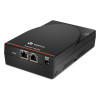
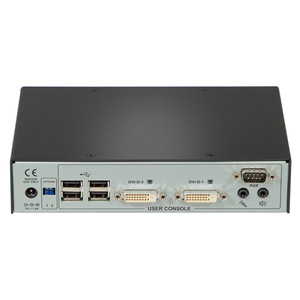
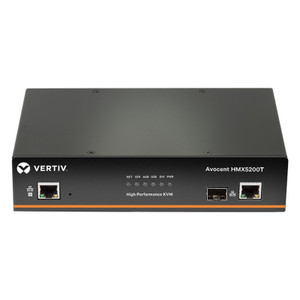
Vertiv ADX-1YSLV-IPUHD 4K Digital Infrastructure Access Node
Overview
The Vertiv ADX-1YSLV-IPUHD is a compact digital infrastructure access node engineered for data center and enterprise edge deployments where 4K local console access, dual-gigabit connectivity, and PoE+ power delivery need to coexist in a single, low-footprint appliance. Part of the Vertiv ADX product line, this unit targets IT architects and data center operators who need reliable out-of-band console access without running a rats-nest of separate power injectors and switches. If you're building or refreshing a digital infrastructure management stack and need 4K video output alongside PoE-powered edge devices, read carefully — the ADX-1YSLV-IPUHD (often searched as ADX 1YSLV IPUHD) covers a specific set of requirements that a generic KVM extender or small-form-factor switch won't.
Key Features
- 4K USB-C Display Output (24-bit, 30Hz): The single USB-C port supports DisplayPort Alternate Mode, delivering true 4K resolution at 24-bit color depth up to 30Hz. For console operators working with dense rack management GUIs, server BIOS screens, or network management dashboards, this means no more squinting at compressed 1080p — you get pixel-accurate rendering on any 4K-capable monitor connected via USB-C or a passive DP adapter.
- Dual 1G Network Interfaces with PoE+ on LAN1: Two independent 1Gbps ports separate management traffic from production LAN where needed. LAN1 carries 802.3at Type 2 PoE+, delivering enough power budget to drive PoE-dependent access points, IP phones, or edge sensors directly from the ADX unit — eliminating a dedicated PoE injector and its associated cabling in tight spaces.
- 25W External Power Supply (5V): The external 5V/25W power brick keeps heat out of the chassis and simplifies replacement without a service call. For deployments in thermally sensitive enclosures — compact edge cabinets, wall-mount racks — offloading heat generation to an external adapter matters more than it sounds.
- Micro USB Serial Console Port: The dedicated 1x Micro USB serial port gives you a hardware-level console path independent of the network stack — essential during network misconfiguration events, firmware recovery, or initial provisioning where you can't rely on IP reachability.
- USB-C + Micro USB-C Dual USB Ports: Two USB ports (1x USB-C, 1x Micro USB-C) support peripheral attachment and management access simultaneously. This matters in headless edge deployments where you may need to connect a local keyboard or USB storage for scripted provisioning without giving up the console serial path.
- Operating Temperature Range 0–50°C (32–122°F): Rated for commercial-grade ambient conditions — adequate for controlled data center floors, IDF closets with proper HVAC, and indoor edge deployments. This is not an extended-temperature unit; if your edge site runs hot (industrial plant floor, outdoor cabinet without active cooling), verify ambient temperatures against the 50°C ceiling before specifying this model.
- Single Fan Active Cooling: One onboard fan handles thermal management. In noise-sensitive environments — conference room AV racks, compact NOC stations — factor in fan acoustics. The unit is not passively cooled.
- Wide Storage Temperature Range (-20 to 70°C / -4 to 158°F): The storage temperature envelope is significantly broader than the operating range, which is relevant for units that may sit in unheated warehouses or be staged in unconditioned spaces before deployment. Ships and stores fine; just don't power it on outside the 0–50°C operating window.
Integration & Compatibility
The ADX-1YSLV-IPUHD integrates into network management and data center access architectures via its dual 1G interfaces. The PoE+ LAN1 port (802.3at Type 2) makes it straightforward to power a downstream IP endpoint — an IP phone, compact access point, or IoT gateway — directly from the ADX unit, simplifying edge rack wiring. For display connectivity, the USB-C with DisplayPort Alt Mode output works with any monitor or KVM console that accepts USB-C video or DP input; a passive USB-C-to-DisplayPort cable is all that's needed for most console station setups. Pair with a KVM switch upstream if you need to multiplex this node's console access across multiple servers. Agency approvals are listed on the manufacturer datasheet — reference that document for jurisdiction-specific compliance before specifying in regulated environments.
Frequently Asked Questions
Q: What display connection does the ADX-1YSLV-IPUHD use, and what resolution does it support?
A: The ADX-1YSLV-IPUHD uses a single USB-C port with DisplayPort Alternate Mode. It outputs 4K resolution at 24-bit color depth, up to 30Hz. A passive USB-C-to-DisplayPort adapter is compatible for monitors without a native USB-C video input.
Q: Does the ADX-1YSLV-IPUHD include PoE output, and what standard does it support?
A: Yes. LAN1 provides 802.3at Type 2 PoE+ output — sufficient to power most PoE-dependent devices such as IP phones, compact access points, or edge sensors directly from this unit without a separate injector.
Q: What is the operating temperature range for the ADX-1YSLV-IPUHD?
A: The unit operates between 0°C and 50°C (32°F to 122°F). It is designed for conditioned indoor environments — data center floors, IDF closets, and controlled edge cabinets. It should not be powered on outside this range.
Q: How is the ADX-1YSLV-IPUHD powered?
A: It uses an external power supply rated at +5V, 25W. The external adapter keeps heat out of the chassis, which is useful in thermally constrained enclosures.
Q: What serial/console access does the ADX-1YSLV-IPUHD provide?
A: The unit includes one Micro USB serial port for out-of-band console access, independent of the network interfaces. This is the recovery and initial-provisioning path when IP connectivity is unavailable.
Q: What humidity range is the ADX-1YSLV-IPUHD rated for during operation?
A: Operational humidity is rated 5% to 80% (non-condensing). Non-operational storage humidity is rated 5% to 90%.
The ADX-1YSLV-IPUHD sits in a narrow but useful niche: it delivers 4K USB-C DisplayPort Alt Mode output at 30Hz while simultaneously providing dual 1G LAN connectivity and an 802.3at Type 2 PoE+ port on LAN1 — all on a 25W external power budget. That combination matters when you're fitting a console access node into a compact edge cabinet where every port on the local switch counts and you can't justify a separate PoE injector for a downstream IP endpoint.
Technical Highlights:
- 4K/30Hz USB-C Output: DisplayPort Alt Mode over USB-C means a single cable to your console monitor with no active converter needed. At 4K 24-bit color, BIOS screens, IPMI/BMC interfaces, and hypervisor consoles render at full fidelity — no more misreading truncated text in compressed 1080p streams.
- 802.3at Type 2 PoE+ on LAN1: Type 2 PoE+ supports up to 30W at the source, which covers the majority of enterprise PoE endpoints. Eliminating a dedicated injector in a 1U or wall-mount edge rack is a real wiring and failure-point reduction, not a checkbox spec.
- 0–50°C Operating Window: Solid for controlled data center and IDF environments. The storage range extends to -20°C / 70°C, so cold-staging in a warehouse before deployment is fine — just confirm the installation site stays under 50°C ambient under load before committing this unit to an uncooled space.
Deployment Considerations:
- The single onboard fan means this unit is not silent. Measure acoustics against your environment's noise floor before installing in a noise-sensitive console station or conference-room AV rack.
- Agency approvals are listed on Vertiv's datasheet rather than in the product spec table — pull that document before specifying for jurisdictions with strict compliance requirements (UL, CE, FCC, etc.) to avoid a late-stage compliance gap.
This unit is the right pick for a compact edge infrastructure node in a conditioned IDF closet or micro-data-center where you need 4K local console access, PoE-powered downstream device support, and dual-gigabit connectivity without stacking separate devices — particularly in healthcare, finance, or enterprise campus environments where rack space is constrained and clean wiring matters.