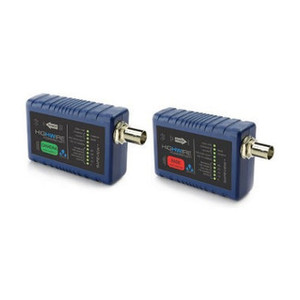
Veracity VHW-HWPS-B HIGHWIRE Powerstar PoE Extender
Overview
The Veracity VHW-HWPS-B is a dedicated Power over Ethernet extender engineered for security infrastructure deployments where standard Ethernet cable runs exceed typical distance limitations. This device regenerates and extends PoE delivery to remote IP endpoints—surveillance cameras, access control readers, networked intercoms, and I/O modules—without requiring auxiliary power infrastructure at the far end of the run. The VHW-HWPS-B (often searched as VHW HWPS B) operates as a transparent intermediary in your network topology, maintaining existing VLAN segmentation and network isolation while solving the practical problem of powering and connecting devices 100+ meters from your primary switch or injector.
If your deployment spans multiple buildings, runs cable through conduit longer than 100 meters, or needs to reach devices in areas without nearby AC power, a PoE extender becomes essential infrastructure. The VHW-HWPS-B bridges that gap without introducing network management complexity or requiring specialized switching logic.
Key Features
- 10/100 Mbps Ethernet Pass-Through: Supports standard Fast Ethernet (not gigabit), which covers most IP cameras, door controllers, and access readers in legacy and mid-range deployments. Bandwidth is adequate for 1080p and 2MP video streams, though high-bitrate 4K or multi-camera aggregation on a single run requires careful stream-rate planning.
- PoE Regeneration & Extension: Receives PoE input from your switch or injector, regenerates the power signal, and forwards it downstream to the connected endpoint. This means you can run longer cable distances than the standard 100-meter Ethernet limitation—critical for warehouse floors, campus perimeters, or parking structures where a single camera or reader sits far from powered infrastructure.
- Transparent Operation Mode: Functions as a bridge with minimal latency introduction. Your network frames, VLAN tags, and security policies pass through unchanged—no configuration required on the device itself. Install it in a wall-mounted enclosure or cabinet and it works immediately.
- Operating Temperature Range -10°C to 50°C (14°F to 122°F): Suitable for climate-controlled indoor installations and heated or cooled equipment rooms. If your deployment extends into unheated storage areas, outdoor cabinets, or areas where temperature swings are wider than this range, plan for thermal management (ventilation, auxiliary cooling) or relocate the unit to a more stable environment.
- Compact Footprint: Designed for integration into wall-mounted enclosures, 19-inch cabinet shelves, or field junction boxes without consuming excessive space. Allows co-location with patch panels, PoE switches, or other network infrastructure in tight utility areas.
- Powered Endpoint Support: Supplies consistent power delivery to downstream PoE devices, eliminating the need for local AC outlets or auxiliary 12VDC supplies at remote camera and reader locations. Reduces installation labor and cost in areas where power access is limited or expensive.
Integration & Compatibility
The VHW-HWPS-B integrates into heterogeneous security networks using standard IP and PoE infrastructure. It is compatible with 10/100 Mbps networks and operates with PoE-compatible cameras, intercoms, access control readers, and networked I/O modules from any manufacturer that supports standard PoE power delivery. Before deployment, calculate the total power consumption of all downstream endpoints and verify it does not exceed the device's available PoE budget; oversubscription will cause power-limiting or device reset.
When planning multi-building or large campus deployments, integrators should map total line-run distances, identify power constraints at remote locations, and account for network segment isolation. The VHW-HWPS-B does not provide switching intelligence, VLAN management, or network filtering—it operates as a pure PoE extender in bridged pass-through mode. For deployments requiring advanced switching, VLAN trunking, or managed network segmentation, pair this extender with an appropriate managed network switch at your primary distribution point.
Environmental & Operational Specifications
The VHW-HWPS-B maintains operational performance across a -10°C to 50°C thermal band. Operating within this envelope ensures stable PoE delivery and consistent Ethernet frame transmission without thermal throttling or component drift. For deployments in hotter environments (e.g., uninsulated outdoor cabinets in direct sunlight) or uncontrolled outdoor spaces where frost risk exists, plan for auxiliary thermal management—ventilated enclosure, shaded mounting, or active cooling—to keep the device within its rated operating range.
Installers and IT managers should account for VHW-HWPS-B placement in network topology design, ensuring the device receives stable power input, sits in an environment with adequate air circulation, and is protected from moisture ingress and physical impact. As a PoE power regenerator, the unit concentrates power delivery and should never be left exposed to rain, condensation, or mechanical abuse.
Frequently Asked Questions
Q: How much cable distance can the VHW-HWPS-B extend beyond the standard 100-meter Ethernet limit?
A: The device accepts PoE input over standard Ethernet (up to 100m from your source), regenerates the power signal, and forwards that power downstream. The distance from the VHW-HWPS-B to your endpoint is a second 100m run, effectively doubling your reach. Total deployment distance depends on cable type, gauge, and impedance; consult your cabling contractor for specific distance confirmation.
Q: Can I use the VHW-HWPS-B with gigabit cameras or 4K streams?
A: The VHW-HWPS-B supports 10/100 Mbps (Fast Ethernet), not gigabit. It will pass 1080p and 2MP video streams reliably. High-bitrate 4K or multiple simultaneous streams on a single run may experience congestion. If your deployment requires gigabit bandwidth, specify a different model or use a separate gigabit uplink.
Q: Does the VHW-HWPS-B require configuration or management software?
A: No. It operates in transparent pass-through mode and requires no configuration. Install it in your enclosure, connect PoE input and output, and it functions immediately. No IP address assignment, firmware updates, or monitoring dashboard needed.
Q: What is the maximum power budget available to downstream devices?
A: Verify the specific PoE budget (watts) in the device datasheet. Typical PoE extenders deliver 95W or less downstream. Sum the power draw of all connected endpoints (cameras, readers, intercoms) and confirm it does not exceed this budget. If it does, install a second extender on a separate line or reduce endpoint count per run.
Q: Can the VHW-HWPS-B be mounted outdoors?
A: The operating temperature range is -10°C to 50°C. In climates where temperatures routinely exceed 50°C (e.g., direct sunlight on an unshaded metal cabinet) or fall below -10°C, the device may shut down or degrade. For outdoor mounting, use a thermally insulated, shaded, or actively cooled enclosure.
Q: Is the VHW-HWPS-B compatible with access control readers and intercoms, or just cameras?
A: It supports any PoE-compatible endpoint—cameras, door readers, intercoms, wireless access points, networked I/O modules, and other IP devices that draw power via standard 802.3af or 802.3at PoE. Verify endpoint power requirements against the device's available PoE budget.
Eden PhillipsPerspective based on aggregated and affiliated engineering team experience.
During integration planning for a multi-building security deployment, the VHW-HWPS-B solves a specific and common problem: your primary switch sits in a locked utility closet in Building A, but the camera you need to monitor sits 150 meters away in Building C's warehouse, with no AC power nearby. Rather than running a second power supply and managing dual infrastructure, the VHW-HWPS-B regenerates PoE over an extended cable run, keeping your installation simple and your power budget centralized.
Technical Highlights:
- 10/100 Mbps Ethernet (not gigabit): Adequate for single 1080p and 2MP streams; avoid oversubscribing a single run with multiple high-bitrate cameras. Plan bandwidth allocation carefully in multi-device scenarios.
- -10°C to 50°C operating range: Covers climate-controlled indoor enclosures and heated equipment rooms. Unshaded outdoor cabinets in direct sun or frost-prone locations require thermal management or relocation.
- Transparent bridge mode: No configuration, no IP address, no firmware updates. Install and forget—it passes VLAN tags and network policies unchanged.
Deployment Considerations:
- Verify downstream PoE power budget before deployment. Oversubscription causes power-limiting or device resets and will frustrate end users.
- The device regenerates power but does not provide switching intelligence or network filtering. If you need VLAN management, ACLs, or advanced port control, place a managed switch upstream.
- 10/100 Mbps is a hard ceiling—gigabit cameras or aggregated 4K streams will bottleneck on this link. Know your bandwidth requirements upfront.
Best suited for campus and multi-building deployments where single cameras or readers are installed 100+ meters from your primary power and network source. Common in warehouse automation, parking structures, and perimeter monitoring where extending PoE is cheaper and simpler than running separate power circuits to remote locations.