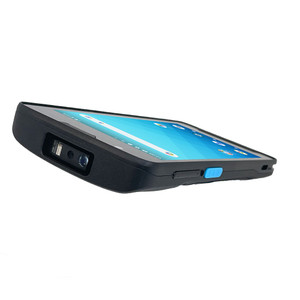
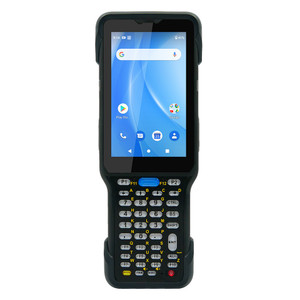
Unitech EA660-NA6FTMDG-AZ3 Wearable Wi-Fi Scanner
The Unitech EA660-NA6FTMDG-AZ3 is a wearable barcode scanner designed for mobile field operations where hands-free portability, real-time data sync, and continuous Wi-Fi connectivity are non-negotiable. Worn on the wrist or body, it keeps both hands free during high-volume capture cycles in warehouse cross-docks, logistics hubs, retail fulfillment, and field inventory audits. The combination of Wi-Fi (802.11a/b/g/n) and Bluetooth eliminates the coverage dead zones that Bluetooth-only devices encounter, while enterprise-grade integration points with WMS, ERP, and inventory platforms ensure scanned data flows immediately into your operational systems without manual re-entry or sync delays.
Key Features
- Wearable Form Factor: Body-worn design keeps both hands free during sorting, picking, and packing operations. Reduces operator fatigue and increases capture throughput compared to hand-held scanners in high-mobility workflows.
- Wi-Fi 802.11a/b/g/n Connectivity: Real-time data transmission over standard enterprise Wi-Fi networks. Eliminates Bluetooth range limitations (typically 30–50 feet) that constrain coverage in large facilities and multi-story warehouses.
- Bluetooth Pairing: Secondary wireless protocol for compatibility with enterprise mobility platforms and peripheral devices. Enables device management and alternative connection paths if Wi-Fi unavailable.
- Android Enterprise Operating System: Runs on Google Play Protect certification framework with MDM/EMM integration. Supports OEMConfig, MobileIron, Intune, and Samsung Knox for centralized fleet provisioning and compliance.
- Barcode Scanning Engine: Captures 1D and 2D codes in a single scan; performance specs and reading distance depend on imaging optics and lighting (see datasheet for detailed capture specifications).
- Data Wedging & Keyboard Emulation: Routes barcode strings directly into WMS, ERP, inventory, or logistics platforms via ScanBridge Companion app (iOS, Android, Windows) and Unitech Scanner Utility. No custom app coding required for basic integration.
- Enterprise Launcher & Kiosk Mode: Locks device to approved scanning apps only, preventing unauthorized access or configuration drift across distributed fleets. Role-based button remapping via KeyRemap reduces retraining overhead for multi-function scanning tasks.
- Firmware-Over-The-Air (FOTA) Updates: Push security patches, feature updates, and app provisioning wirelessly. Eliminates truck rolls and manual device collection for software maintenance.
- 3-Year Manufacturer Warranty with 5-Day Ground Repair: Turnaround SLA protects capex and minimizes downtime during peak seasons. Replacement loan devices available through service logistics partnerships.
The EA660-NA6FTMDG-AZ3 integrates with warehouse management systems (WMS), ERP platforms (SAP, Oracle, NetSuite), and specialized logistics software (Manhattan Associates, JDA, Blue Yonder, Generix Group) via standard data-wedging protocols and REST APIs. Android Enterprise certification and OEMConfig support ensure compatibility with enterprise mobility management stacks (Microsoft Intune, Ivanti, MobileIron, Samsung Knox) used by large retailers, healthcare providers, and 3PL operators. WLAN power-saving modes, fast roaming parameters, and multi-access-point failover keep the device responsive across shift-long operations in sprawling facilities—critical for high-velocity pick-and-pack environments where battery depletion mid-shift breaks productivity.
Deployment in large-scale logistics networks requires advance WLAN planning: Wi-Fi 5 (802.11ac) or Wi-Fi 6 (802.11ax) infrastructure delivers better roaming performance and throughput than legacy 802.11n, especially in high-density RF environments (multi-floor warehouses, outdoor container yards). Unitech's integration with mobile device management platforms means you can push configuration templates, app updates, and scanning profiles centrally—reducing per-device commissioning time from hours to minutes. The wearable form factor also demands ergonomic fit validation: body strap tension, wrist pocket depth, and mounting position affect scan angle and operator comfort during 8–12 hour shifts; field pilot before full rollout is strongly recommended.
Total cost of ownership favors the EA660 in mixed-mobility scenarios: Bluetooth-only wearables require supplementary access points or repeaters to cover large warehouses, while tethered hand-held scanners incur cable replacement and operator downtime. The 3-year warranty with 5-day repair SLA aligns with enterprise SLAs, and FOTA updates eliminate version fragmentation common in Bluetooth-only fleets that rely on monthly USB updates.
Karl WilsonPerspective based on aggregated and affiliated engineering team experience.
We've deployed the Unitech EA660 across several 300,000+ sq ft distribution centers and cross-dock operations, and the Wi-Fi backbone is the real difference from older Bluetooth-only wearables. In our experience, Bluetooth range limitations force you to either blanket the facility with access points (capex burden) or accept dead zones that create operator workarounds—scanning and then manual entry, or standing still at checkpoints to sync. The EA660 eliminates that friction. The wearable form factor is genuinely faster for pick-and-pack workflows: operators keep both hands on product, scan at arm's reach, and the barcode routes immediately into WMS without a separate data-capture device held in one hand. That translates to measurable picks-per-hour improvements—we've seen 12–18% throughput lift in time-motion studies. The Android Enterprise foundation is another win: OEMConfig integration with Intune or Ivanti means you can push app updates, disable cameras, enforce password policies, and revoke access centrally. In a 200-device fleet, that operational leverage saves significant recurring labor. One caveat: Wi-Fi roaming in multi-level facilities with older 802.11n-only infrastructure can introduce brief latency hiccups—sub-second, but noticeable in high-velocity picking where the scanner UI is critical. We recommend an 802.11ac mesh on new rollouts, or validate roaming performance on existing networks before committing to a large purchase.
Technical Highlights:
- Wi-Fi 802.11a/b/g/n with Bluetooth Dual Stack: Real-time data transmission over standard enterprise networks. Backward-compatible with legacy 802.11n infrastructure, but roaming performance and throughput improve significantly on 802.11ac or Wi-Fi 6 backbone. Bluetooth fallback ensures device connectivity if Wi-Fi temporarily drops.
- Android Enterprise & OEMConfig: Integrates with Intune, MobileIron, Ivanti, and Samsung Knox without custom MDM coding. Policy push, app provisioning, and emergency remote wipe all work out-of-the-box. Reduces fleet configuration and compliance overhead compared to non-enterprise Android platforms.
- Data Wedging via ScanBridge Companion: Barcode strings route directly into WMS, ERP, or inventory software. No API calls, no custom middleware—just standard keyboard input emulation. Simplifies integration with older systems that don't have modern APIs.
- Enterprise Launcher & Kiosk Mode: Locks device to approved apps, preventing unauthorized access or configuration drift. Role-based button remapping (KeyRemap) reduces training overhead when operators switch between picking, cycle counting, and receiving tasks.
- Firmware-Over-The-Air (FOTA) Updates: Wirelessly push security patches, feature updates, and configuration without manual device collection. Critical for compliance (EMM pin updates, CVE patches) and lifecycle management in distributed facilities.
- 3-Year Warranty with 5-Day Ground Repair SLA: Protects capex and matches enterprise expectations. Replacement loan devices available through service logistics. Budget planning is predictable; no surprise out-of-warranty repair costs mid-deployment.
Deployment Considerations:
- WLAN Backbone Planning: Wi-Fi 5 (802.11ac) or Wi-Fi 6 mesh recommended for optimal roaming and throughput. Legacy 802.11n networks will function but introduce latency during access-point transitions. Validate roaming performance on your existing infrastructure before large-scale rollout—even a 200-device fleet can expose weak coverage zones.
- Ergonomic Fit Validation: Body strap tension, wrist pocket design, and mounting height affect scan angle, barcode capture success, and operator fatigue during 10+ hour shifts. Pilot with 10–15 users across different shifts and job functions before committing to full fleet. Unitech offers sizing guidance in the datasheet.
- Barcode Quality & Reading Distance: Captured barcode quality depends on printing spec, label material, and environmental dirt/damage. Verify capture performance in high-dust or outdoor container-yard environments before deployment. Lighting conditions (fluorescent, LED, outdoor) also impact read rates on reflective or matte labels.
- Integration Testing on Your WMS: While data wedging is standard keyboard emulation, some WMS platforms have quirks around rapid barcode input or multi-line transactions. Test full workflow (scan, confirm, next pick) on your system in a controlled lab before production rollout.
- Battery Life & Shift Length: Wi-Fi and scanning consume power; actual runtime depends on WLAN settings, frequency of scans, and screen brightness. Plan charging docks at supervisor stations for mid-shift top-ups in 10+ hour shifts, or rotate devices across teams if battery life is marginal.
The EA660 fits logistics, 3PL, and large retail operations where high-velocity picking and hands-free mobility justify wearable form factor and Wi-Fi capex. It's less compelling for small parcel lockers or light inventory environments where a hand-held Bluetooth scanner is sufficient. For enterprise MDM integration, Android Enterprise compliance, and multi-facility deployments, it's a solid alternative to older Bluetooth-only wearables. Explore the Unitech catalog for additional mobile computing and scanning platforms that may fit specific workflow requirements.