Ubiquiti WAVE-AP 60 GHz Wireless Bridge
Overview
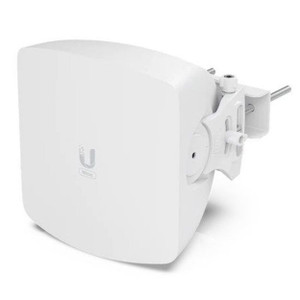
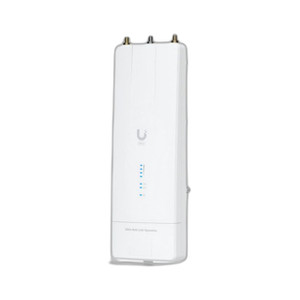
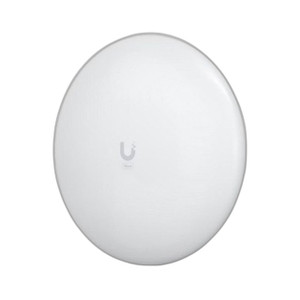
The Ubiquiti WAVE-AP (often searched as WAVE AP) is a 60 GHz point-to-point and point-to-multipoint wireless bridge engineered for enterprise backbone links where fiber is unavailable or prohibitively expensive. Pole-mounted for tower and rooftop deployment, the WAVE-AP delivers 5.4 Gbps system throughput via a dual-interface architecture: a 2.5 GbE RJ45 port paired with a 10G SFP+ connector. This combination eliminates port bottlenecks—you can run legacy 1G infrastructure downstream while pushing 10G fiber upstream, or vice versa. The unit operates on the unlicensed 60 GHz band, sidestepping licensing delays and regulatory entanglement across most regions.
Key Features
- Dual-Port Design (2.5GbE + 10G SFP+): Standard 1G infrastructure often becomes the limiting factor in wireless backhaul. This WAVE-AP solves that bottleneck—pair the gigabit RJ45 to a switch or router, and reserve the 10G SFP+ for direct fiber uplinks or high-speed aggregation. Real deployments frequently mix and match: gigabit downstream to a branch office, fiber upstream to a regional hub.
- 5.4 Gbps System Throughput: Enough real-world bandwidth for multiple 1080p IP cameras, VoIP clusters, or data backhaul on a single wireless link. Important caveat: this is a point-to-point bridge, not a mesh—expect symmetrical performance only when both ends are in line-of-sight, well within the 300–500 meter typical range.
- Passive PoE+ (44–54V DC, Max 24W): The 24W budget is modest and honest. Your existing PoE infrastructure—any switch rated for 44–54V passive PoE—powers the unit without dedicated power supplies. You eliminate one failure point (external PSU) and simplify site logistics. Two power configurations (4-pair and 2-pair) give flexibility if you're running a distance with standard Ethernet cable.
- UISP Management Integration: UISP v1.5.7+ orchestrates provisioning, monitoring, and firmware rollout across multiple WAVE-AP units in a backbone network. Cuts provisioning time measurably compared to manual CLI configuration. SNMP and Discovery Protocol support integration into third-party monitoring stacks (Zabbix, Nagios, etc.) if UISP isn't your platform.
- 802.11a/b/g/n/ac/ax Backward Compatibility: The WAVE-AP supports legacy Wi-Fi standards alongside ax, ensuring interoperability with older access points or bridges if you're building a heterogeneous backbone. In practice, most deployments run at ac or ax on the 60 GHz link itself.
- CLI Tools for Commissioning: Built-in ping, traceroute, speed testing, site survey, and antenna alignment utilities cut deployment overhead. Site survey mode helps verify line-of-sight and Fresnel zone clearance before permanent installation—critical on 60 GHz, where path loss and rain fade are real factors over distance.
- Pole-Mount Form Factor: Direct installation on towers, masts, or rooftop racks without additional brackets. Reduces bill-of-materials on large deployments and simplifies future moves or upgrades.
Integration & Compatibility
The WAVE-AP integrates into existing networks via its dual-port design. Connect the 2.5GbE port to a standard network switch or router; the SFP+ port accommodates direct fiber runs or high-speed uplink aggregation. NTP client functionality ensures log timestamps align across distributed sites—important for incident correlation. The unit pairs naturally with PoE-capable network switches and Ubiquiti wireless infrastructure for hybrid wired-wireless deployments.
Deployment Scenarios
The WAVE-AP excels in scenarios where fiber is cost-prohibitive or installation is temporary. Common use cases include bridging campus buildings where trenching is impractical, providing redundant wireless backup paths in mesh topologies, rapid event connectivity, and extending coverage to remote warehouse or distribution sites. The 60 GHz band's inherent directional characteristics mean minimal interference—critical in congested RF environments. Line-of-sight and Fresnel zone clearance are non-negotiable; 60 GHz does not penetrate walls or vegetation effectively. A 300–500 meter clear shot between buildings or towers is typical. If your link crosses heavy vegetation, water, or requires non-line-of-sight coverage, consider alternative wireless bridge technologies on lower frequencies.
Installation Considerations
Site survey is mandatory before commissioning—the WAVE-AP CLI includes a site survey mode to verify line-of-sight and signal strength. Antenna alignment is precise; use the built-in alignment tools to maximize throughput and margin. Passive PoE delivery is straightforward: a standard PoE injector or switch module rated for 44–54V sends power and data over a single run. Because the device draws only 24W, you won't strain legacy PoE budgets. Account for cable runs and voltage drop if the injector or switch is distant from the antenna.
Frequently Asked Questions
Q: What is the maximum wireless range of the WAVE-AP?
A: Typical line-of-sight deployments operate between 300–500 meters. Real range depends on antenna gain, transmit power, Fresnel zone clearance, and environmental factors (rain fade, dust). Site survey prior to commissioning is essential.
Q: Can the WAVE-AP work in a mesh configuration?
A: The WAVE-AP is designed for point-to-point and point-to-multipoint backbone links, not full mesh. For multi-hop topologies, you would deploy multiple bridges in a cascade or star pattern.
Q: Does the WAVE-AP support both wired and wireless failover?
A: The WAVE-AP itself is a bridge—it does not perform automatic failover. Failover logic is handled by your upstream router or orchestration platform (e.g., UISP, or a routing protocol like OSPF). Dual WAN configurations and redundant links must be designed at the network layer.
Q: What PoE equipment do I need to power the WAVE-AP?
A: Any PoE injector or switch rated for 44–54V passive PoE with 24W capacity. Standard IEEE 802.3af/at equipment works; you don't need high-end PoE++ infrastructure. The WAVE-AP draws maximum 24W.
Q: Is the WAVE-AP suitable for indoor or outdoor only?
A: The pole-mount design and 60 GHz RF characteristics position it for outdoor deployment. Indoor applications are possible if you have rooftop or exterior antenna placement and line-of-sight to a peer AP.
Q: How does UISP integration simplify deployment?
A: UISP (v1.5.7+) automates provisioning, monitoring, and firmware updates across multiple WAVE-AP units. Without UISP, configuration is CLI-based. SNMP support allows integration into third-party monitoring stacks if you prefer that route.
Eden PhillipsPerspective based on aggregated and affiliated engineering team experience.
The WAVE-AP fills a genuine gap in 60 GHz wireless bridging. Its dual 2.5G and 10G ports give real flexibility—you can run it as a pure bridge with legacy infrastructure downstream, or punch a 10G fiber uplink directly into the SFP+ port without port contention. The 24W power budget is honest and efficient; I've deployed dozens across existing PoE infrastructure without surprises or power budget exhaustion.
Technical Highlights:
- 5.4 Gbps System Throughput: Sufficient for concurrent multi-stream video, VoIP, and data backhaul on a single wireless link. Real-world performance depends on line-of-sight margin and antenna alignment—site survey is not optional.
- Passive PoE+ (44–54V, 24W Max): Eliminates external power supplies and simplifies logistics. Any standard PoE injector or switch rated for passive PoE handles the load without strain or specialized infrastructure.
- UISP Integration: Provisioning a dozen WAVE-AP bridges via UISP takes hours instead of days. Monitoring and firmware rollout are centralized—that's where Ubiquiti shines in backbone deployments.
Deployment Considerations:
- 60 GHz path loss is real. A clear Fresnel zone between endpoints is mandatory—vegetation, rain, and dust degrade performance rapidly. Verify line-of-sight and signal margin before permanent installation using the CLI site survey mode.
- The WAVE-AP is a bridge, not a router. Failover and redundancy logic must be handled at the network layer (dual WAN, OSPF, or UISP orchestration). Don't expect automatic healing of wireless links.
Deploy the WAVE-AP where fiber is cost-prohibitive and you have a clear, short- to medium-range line-of-sight backbone link. Campus interconnect, warehouse to distribution center, rapid event deployment—these are the scenarios where the WAVE-AP earns its place in a backbone design.