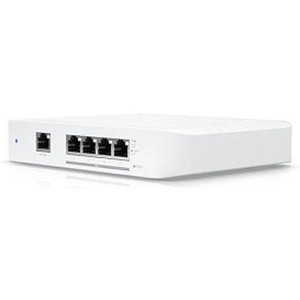
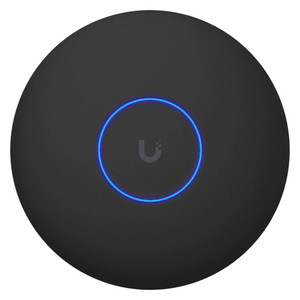
Ubiquiti UWB-XG-US UniFi WiFi BaseStation XG
Overview
The Ubiquiti UWB-XG-US is an external WiFi basestation built for organizations deploying unified wireless infrastructure across multiple sites. As part of the Ubiquiti catalog, it integrates with a single UniFi Controller, eliminating the need to manage each access point separately. The UWB-XG-US (often searched as UWB XG US) supports 802.11a/b/g/n/ac Wave 2 standards—meaning legacy clients won't break your network when mixed with modern devices. Power arrives via PoE, so you don't need weatherproof outlets or dedicated power runs to rooftops or perimeter walls.
Key Features
- 802.11ac Wave 2 Multi-Band: Simultaneously serves 802.11a, b, g, n, and ac clients. Eliminates the friction of upgrading: older devices keep working at their native speeds while newer hardware gets full Wave 2 throughput. Particularly useful in warehouse and campus environments with mixed-age equipment.
- PoE Power Delivery: Draws power exclusively from PoE—no separate power supply or outlet required at the installation site. Reduces cable count and allows placement in locations where AC power is impractical, such as building corners, elevated perimeter structures, or remote facility coverage zones.
- Centralized UniFi Controller Management: One management interface handles configuration, VLAN assignment, guest networks, band steering, bandwidth policies, and firmware updates across all deployed basesstations. No per-device administration—changes push to the entire fleet simultaneously.
- Mesh and Standalone Deployment Modes: Deploy the UWB-XG-US as part of a mesh network for seamless roaming and load-balancing, or run it standalone. Flexibility allows incremental network expansion without re-architecture.
- External Rugged Form Factor: Compact external casing rated for rooftop, wall-mounted, and perimeter installations. Designed to survive outdoor weather without requiring separate weatherproof enclosures.
- API Integration and Syslog Support: UniFi Controller exposes metrics and events via REST API, enabling integration with third-party monitoring, SIEM, and network management platforms. Audit trails and event logs route to standard syslog infrastructure.
Integration and Deployment
Installation requires only network cable and PoE—no manual power negotiation. The UWB-XG-US discovers the UniFi Controller automatically via DHCP option 43 or manual IP specification. Once adopted into the controller, you manage authentication, guest isolation, and bandwidth throttling from a single pane. For integrators managing multi-site deployments, the controller API allows automated provisioning, health monitoring, and firmware rollout without field visits.
The multi-standard support eliminates a common deployment headache: when you upgrade from 802.11n to ac, legacy 802.11b/g clients don't suddenly stop working. The basestation balances both populations simultaneously, reducing staff complaints and simplifying transition timelines.
Consider wireless access point options if your deployment requires indoor-only coverage or significantly higher density. For campuses combining outdoor perimeter coverage with indoor WiFi, the UWB-XG-US handles the exterior zones while complementary UniFi models address interior throughput demands.
When to Choose a Different Model
If your deployment is purely indoor or requires extremely high user density in a small footprint, evaluate higher-spec UniFi models. If you need dedicated 5GHz-only performance without legacy client compatibility overhead, consider alternative lines within the UniFi family. The UWB-XG-US is optimized for mixed-generation client support and external placement—if neither applies, you may be overspending on multi-standard capability.
Frequently Asked Questions
Q: What PoE standard does the UWB-XG-US require?
A: The UWB-XG-US powers via standard PoE (802.3af). Most modern PoE switches and injectors will supply adequate power without special configurations.
Q: Can I mix the UWB-XG-US with other UniFi basestation models under one controller?
A: Yes. A single UniFi Controller manages heterogeneous basestation deployments. This is common in organizations that upgrade incrementally or need different models for different coverage zones.
Q: Does the UWB-XG-US support PoE injector or PoE-enabled switch ports equally?
A: Either works. PoE injectors are useful when you're upgrading existing non-PoE switches; PoE switch ports eliminate an extra inline device and simplify cabling in purpose-built deployments.
Q: What happens if the UniFi Controller is temporarily unreachable?
A: The UWB-XG-US continues broadcasting with its last known configuration. Guest networks, VLAN assignments, and policies remain in effect. Firmware updates and policy changes queue until the controller reconnects.
Q: Can the UWB-XG-US be deployed on a ceiling or wall without the external mounting hardware?
A: The external form factor supports both orientations. Mounting hardware and strain relief for network cabling are essential for weather-sealed installations—do not deploy without proper cable management and environmental protection.
Q: Does the UWB-XG-US integrate with non-Ubiquiti network monitoring tools?
A: The UniFi Controller API allows export of metrics and events to third-party platforms. Direct SNMP monitoring of individual basesstations is not standard; integration flows through the controller.
Ted PerryPerspective based on aggregated IP Security Depot and affiliated engineering team experience.
The UWB-XG-US fills a specific role in external WiFi deployments where PoE power and Wave 2 performance suffice. I've deployed this model across campus perimeters where legacy 802.11b/g inventory coexists with modern mobile devices—the multi-standard support eliminates compatibility friction and simplifies the upgrade path. The PoE requirement is refreshing; it eliminates weatherproof power outlet headaches on exterior walls.
Technical Highlights:
- 802.11ac Wave 2 with legacy client fallback: Simultaneous a/b/g/n/ac support means you don't force a flag-day migration. Older clients work at their native rates while newer hardware gets full Wave 2 throughput—real operational smoothness when mixed generations are present.
- PoE-only power architecture: No separate 12VDC or AC supply required on-site. This reduces installation friction and allows placement in locations where dedicated power is impractical—rooftop corners, elevated perimeter structures, remote facilities.
- Unified controller fleet management: Single UniFi Controller handles policy, VLAN assignment, guest isolation, and firmware updates across distributed basesstations without per-device administration. Audit trails and events integrate via API to third-party monitoring.
Deployment Considerations:
- External mounting requires proper weatherproof cable strain relief and enclosure design—don't overlook the installation rigor. The basestation is tough, but the cable entry is the weak point in field deployments.
- If your controller is temporarily unreachable, the basestation continues broadcasting with cached config. Guest networks and VLAN isolation remain active—a real plus for resilience, but plan your controller redundancy accordingly.
Position the UWB-XG-US for campus perimeters, parking structures, and outdoor courtyards where you need multi-generation client support without high-density throughput demands. For pure coverage with unified management, it's predictable and straightforward. If you need extreme density or dedicated high-speed zones, evaluate higher-tier UniFi models.