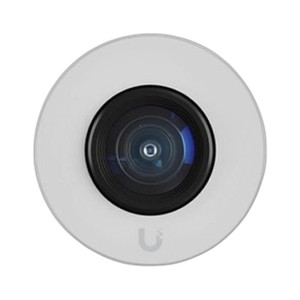
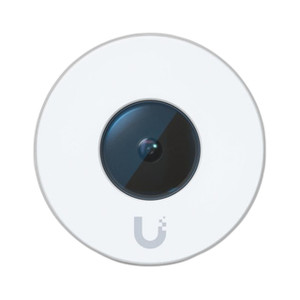
Ubiquiti UVC-AI-THETA-LENS 12MP Fisheye Lens Module
Overview
The Ubiquiti UVC-AI-THETA-LENS is a dedicated lens module for Ubiquiti IP cameras in the UniFi AI Theta platform. This is a passive optical component — not a complete camera — designed to replace or upgrade the lens assembly on existing Theta camera bodies without requiring full camera replacement. The 12MP fisheye design delivers a panoramic field of view suitable for wide-area surveillance in confined spaces, warehouses, and retail environments where a single vantage point must cover maximum area.
The UVC-AI-THETA-LENS reduces total cost of ownership by decoupling lens replacement cycles from camera body lifecycles. When optics degrade from environmental exposure or require reconfiguration for changing security needs, you swap the lens module in place rather than retire and replace an entire camera system.
Key Features
- 12MP Fisheye Optics: Delivers broad panoramic coverage — ideal for spaces where conventional narrow-angle lenses force multiple cameras. Fisheye distortion is correctable in post-processing or via UniFi Protect software dewarping.
- Modular Design: Mounts directly to UniFi AI Theta camera bodies via proprietary mechanical and electrical alignment. Installation requires only lens removal and module swap; no firmware or sensor recalibration needed.
- Aluminum Alloy + Polycarbonate Construction: Resists corrosion and mechanical shock in standard commercial and light industrial environments — matters if you're deploying near salt spray, high-vibration areas, or dusty warehouses.
- Compact Footprint: Diameter 22.8 mm, length 43.5 mm, weight just 15 g (0.5 oz). Minimal load on mounting hardware and pole brackets; works with standard camera mounts without reinforcement.
- Low Power Draw: Maximum 2.5W at 5V DC (0.5A) — any active autofocus or optical stabilization draws negligible current. Power flows through the host Theta camera's connector; no separate power supply required.
- Wide Operating Temperature Range: Functions reliably from −20°C to 40°C (−4°F to 104°F). Covers climate-controlled warehouses, unheated loading docks in temperate zones, and moderate outdoor conditions. Not rated for extreme cold or heat; skip this if you need sub-zero or desert deployments.
- FCC / IC / CE Certified: Meets North American and European electromagnetic compliance standards. Confirms the module will not introduce RF interference into your network or facility infrastructure.
Integration & Compatibility
The UVC-AI-THETA-LENS pairs only with UniFi AI Theta camera bodies. Verify your installed Theta generation before ordering — Ubiquiti has released multiple Theta revisions, and mechanical fit may differ. Contact Ubiquiti technical support or your distributor to confirm lens compatibility with your specific Theta model and firmware revision.
Video output, AI analytics, compression codecs, and network security are all handled by the host Theta camera body. The lens module is purely optical; it passes light to the imaging sensor and does not process, buffer, or modify any signal. All video encoding, frame rate, resolution downsampling, and edge analytics inherit from the parent camera's specifications and settings.
Installation requires removal of the existing lens assembly and mechanical/electrical mating of the UVC-AI-THETA-LENS to the Theta body following Ubiquiti's alignment procedures. No tools beyond a lens wrench are typically required, but always consult the official installation guide to avoid cross-threading or damaging the connector pins.
When This Is the Right Choice
Deploy the UVC-AI-THETA-LENS when optics on an existing Theta camera show visible degradation (scratches, haze, condensation seal failure), or when operational requirements shift and you need to reconfigure coverage — for example, expanding from a narrow field of view to panoramic fisheye. This modular swap avoids the cost and downtime of swapping entire camera bodies.
When to Choose Differently
If you need a complete camera system, order a full UniFi AI Theta camera body instead. If your deployment uses non-Ubiquiti platforms or legacy camera systems, you'll need lens solutions designed for those vendors. If fisheye distortion is unacceptable for your application (e.g., license plate capture in parking enforcement), consider whether a standard rectilinear lens or varifocal module from Ubiquiti's lineup fits better.
Frequently Asked Questions
Q: Is the UVC-AI-THETA-LENS compatible with all UniFi AI Theta camera bodies?
A: The lens module is designed for the Theta platform, but mechanical fit may vary across Theta hardware revisions. Verify compatibility with your specific Theta generation before ordering. Consult Ubiquiti technical documentation or contact your distributor for a compatibility matrix.
Q: Does the UVC-AI-THETA-LENS require separate power?
A: No. The module draws maximum 2.5W at 5V DC and receives power through the host Theta camera's proprietary connector. No external power supply or PoE injector modification is needed.
Q: Can I use fisheye dewarping with the UVC-AI-THETA-LENS in UniFi Protect?
A: Dewarping is handled by the host Theta camera and UniFi Protect software. The lens module itself does not perform dewarping — it delivers optical information to the sensor, and correction happens in the camera firmware or NVR UI. Consult your Protect version documentation for dewarping feature availability.
Q: What is the field of view of the UVC-AI-THETA-LENS?
A: Detailed optical specifications, field-of-view angles, and distortion characteristics are available in Ubiquiti's product documentation and datasheet. Contact Ubiquiti technical support or your distributor for complete FOV and optical performance data.
Q: Does the module work in outdoor environments?
A: The UVC-AI-THETA-LENS operates safely from −20°C to 40°C (−4°F to 104°F) and features aluminum alloy construction for corrosion resistance. It is suitable for covered outdoor areas and climate-controlled facilities. For full outdoor IP67 weather sealing and heated enclosures, verify your host Theta camera's outdoor rating separately.
Q: How much does the lens module weigh?
A: The UVC-AI-THETA-LENS weighs 15 g (0.5 oz), minimizing load on mounting poles and brackets. Standard camera hardware will support this without reinforcement.
James EverettPerspective based on aggregated IP Security Depot and affiliated engineering team experience.
The UVC-AI-THETA-LENS (often searched as UVC AI THETA LENS) is a rare example of a manufacturer shipping true optical modularity — you can swap fisheye coverage without touching the camera body. The 12MP sensor and compact 22.8 mm diameter keep installation friction low, and the 2.5W maximum draw means no PoE recalculation is necessary when you rotate lenses.
Technical Highlights:
- 12MP Fisheye Resolution: Panoramic coverage means fewer cameras to achieve wall-to-wall sight lines in confined spaces. Warehouse aisles, retail floors, and parking structures see immediate deployment cost reduction per square foot of coverage.
- Modular Swap, No Firmware Restart: Plug-and-play lens replacement without rebooting the host Theta body — network uptime uninterrupted. This matters in 24/7 surveillance where downtime windows are zero or minimal.
- −20°C to 40°C Operating Range: Covers most climate-controlled facilities and temperate outdoor overhangs. Not a heater/cooler solution — if your dock hits −30°C or a rooftop sees 60°C, this module will shut down or degrade. Know your environment before committing.
- Aluminum + Polycarbonate Durability: Withstands routine handling and light environmental stress. In corrosive (salt spray, chemical) environments, monitor for early optical degradation and plan replacement cycles accordingly.
Deployment Considerations:
- Compatibility Lock: This lens works only with Theta bodies. If your rollout mixes Ubiquiti Theta with other platforms, you'll need separate lens strategies per vendor — no cross-compatibility.
- Fisheye Distortion Trade-off: Panoramic coverage comes at the cost of barrel distortion. For tasks demanding rectilinear accuracy (license plate reads, facial detail), evaluate dewarping in UniFi Protect — correction is software-based and may introduce latency or require higher processing headroom on your NVR.
- No Native Zoom: The 12MP fisheye is fixed optical. If you need to magnify or pan/tilt coverage, you're locked into software zoom (which degrades detail) or multi-camera strategies. Consider hybrid deployments: wide-angle fisheye for overview, separate PTZ or narrow varifocal for detail zones.
Best positioned for warehouse, retail, and logistics deployments where panoramic overview from a single mount reduces total camera count and wiring complexity — and where your NVR and Protect licensing can absorb the dewarping overhead.