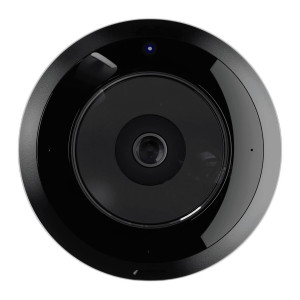
Ubiquiti UVC-AI-PTZ-W 8MP UniFi AI PTZ Camera
Overview
The Ubiquiti UVC-AI-PTZ-W is a pan-tilt-zoom surveillance camera purpose-built for outdoor perimeter monitoring, facility grounds, and large open areas where dynamic coverage matters more than fixed-point observation. The 8MP resolution and motorized PTZ mechanism allow a single camera to cover the field-of-view previously requiring three to five fixed cameras—a significant cost and complexity reduction in expansive deployments. Integration into the Ubiquiti IP cameras ecosystem and UniFi Protect video management platform means centralized provisioning, analytics, and alerting without external middleware or secondary systems.
Key Features
- 8MP Resolution (3840 × 2160): Delivers sufficient pixel density for facial recognition and license plate capture at distance. On-device AI processes this imagery at the edge, reducing bandwidth consumption and latency compared to cloud-dependent systems.
- Pan-Tilt-Zoom Mechanism: Motorized PTZ allows operators or automated rules to track events across a wide area from a single vantage point. Eliminates overlapping fixed-camera coverage patterns and simplifies installation on tall poles, rooflines, or corner mounts where repositioning is otherwise difficult.
- PoE++ Power (802.3bt): Requires a PoE++ capable switch or injector. Higher power draw than fixed cameras (confirm exact wattage in datasheet), but eliminates separate power runs—a real benefit in retrofit outdoor installations where conduit is congested or costly.
- AI-Driven On-Device Analytics: Built-in object detection, person tracking, and threat classification execute locally on the camera. No dependency on external analytics servers; alerts fire immediately when conditions match configured rules. This edge-first approach cuts network overhead and response time in large multi-camera deployments.
- Day/Night Imaging: Integrated infrared illumination (exact range and wavelength in full spec sheet) supports low-light and nighttime monitoring. Performance degrades gracefully in full darkness depending on ambient IR reflectance—expect clear imagery in twilight and lit outdoor spaces; confirm IR range expectations against your deployment footprint.
- Gigabit Ethernet (1000Base-T): Handles multi-stream video output, real-time PTZ commands, and telemetry without bottleneck. Paired with PoE++, this is a single-cable infrastructure requirement—simplifies network topology in facilities with long cable runs.
- UniFi Protect Ecosystem Integration: Native support for role-based access control, encrypted communications, event-driven recording, and audit logging within the UniFi management plane. If your organization already runs UniFi switches, APs, or dream machines, this camera integrates without additional VMS licensing.
- Outdoor-Rated Enclosure: Engineered for weather resistance in professional surveillance environments. Confirm IP and IK ratings in the datasheet for your specific climate (rain, dust, impact tolerance vary by exact rating).
- Motorized Zoom and Focus: Adjustable focal length via software or operator control; reduces the need to pre-position cameras at fixed zoom ratios. Useful when coverage priorities shift or new monitoring zones emerge mid-deployment.
Deployment and Integration
The UVC-AI-PTZ-W is best suited to open-area surveillance where field-of-view flexibility justifies the added mechanical complexity and power demand. Parking lots, building perimeters, access roadways, and outdoor grounds benefit most from PTZ coverage. Organizations running video management systems outside the UniFi ecosystem should verify ONVIF compatibility and test event integration before committing; some third-party VMS platforms support PTZ commands fully, while others offer limited or degraded functionality.
Installation requires robust mounting hardware capable of supporting 8.4 lbs in outdoor wind loads. Confirm your mounting surface can handle mechanical stress during pan and tilt cycles. Network planning must account for PoE++ power availability; standard PoE (802.3af) switches will not power this camera. Consider placement near network closets or use managed PoE++ injectors if your existing infrastructure cannot supply sufficient power density.
When to Choose This Model
Deploy the UVC-AI-PTZ-W when your monitoring brief emphasizes coverage area over fixed-point detail. Scenarios: large parking structures, perimeter patrols, outdoor event spaces, multi-building campuses, or facilities where operators respond to live alerts and need to pan/tilt to track movement. UniFi Protect deployments gain the most value—unified management, edge analytics, and simplified provisioning.
When to Consider Alternatives
If your coverage requirement is static and focused on a narrow zone (hallway entry, dock door, fixed intersection point), a fixed turret or dome camera offers simpler installation, lower power consumption, and no mechanical wear. For indoor applications with limited mounting options, consider compact fixed models with wider lenses. If your network infrastructure cannot reliably deliver PoE++ power or if you require non-Ubiquiti VMS software with limited PTZ support, evaluate fixed-camera alternatives or hybrid deployments.
Frequently Asked Questions
Q: Is the UVC-AI-PTZ-W compatible with non-UniFi Protect video management systems?
A: The camera supports standard ONVIF (Open Network Video Interface Forum) protocols, meaning third-party VMS platforms can ingest video and manage basic functions. However, full AI analytics, advanced scheduling, and integrated alerting are optimized for UniFi Protect. Test integration thoroughly before deployment if you plan to use a different VMS.
Q: What power infrastructure do I need to deploy the UVC-AI-PTZ-W?
A: You must use a PoE++ (802.3bt Class 4) capable switch or injector. Standard PoE (802.3af) or PoE+ (802.3at) will not supply sufficient power. Verify your network closet has PoE++ ports available or plan to deploy a managed PoE++ injector near your camera installation point.
Q: Can operators or automated rules control pan, tilt, and zoom remotely?
A: Yes. UniFi Protect supports PTZ presets and manual operator control via the management interface. Automated tracking based on AI-detected motion is also supported, enabling the camera to follow persons or vehicles without operator intervention.
Q: What is the infrared illumination range and performance in complete darkness?
A: Consult the full technical datasheet for exact IR range, wavelength, and minimum illumination specs. The camera is rated for professional outdoor surveillance including low-light and twilight conditions. In complete darkness without ambient IR reflectance, clarity depends on distance and reflective surface characteristics—test in your actual environment.
Q: What mounting hardware is required, and how do I secure an 8.4 lb camera outdoors?
A: The camera weighs 8.4 lbs and requires robust mounting infrastructure rated for vibration, wind load, and mechanical stress from PTZ movement. Use industry-standard pole mounts, wall brackets, or corner mounts rated for this weight class. Confirm your installation surface can support dynamic loads during pan and tilt cycles.
Q: Does the UVC-AI-PTZ-W work with existing UniFi switches and PoE injectors?
A: If your switches or injectors support PoE++ (802.3bt Class 4), yes. If you have only standard PoE or PoE+ infrastructure, you'll need to upgrade or deploy a dedicated PoE++ injector. Verify your power delivery hardware specifications before installation.
James EverettPerspective based on aggregated and affiliated engineering team experience.
The UVC-AI-PTZ-W (often searched as UVC AI PTZ W) sits at an important inflection point in outdoor surveillance: it trades the simplicity and resilience of fixed cameras for the coverage efficiency and operational flexibility of motorized zoom. At 8MP and with on-device AI processing, this is a genuinely different deployment model than traditional PTZ—analytics don't depend on cloud roundtrips or secondary servers, which matters in environments where network latency or bandwidth constraints are real.
Technical Highlights:
- PoE++ Requirement (802.3bt Class 4): This camera will not run on standard PoE or PoE+. Your network infrastructure must support Class 4 power delivery, which is now common in new deployments but often absent in retrofit scenarios. Budget for a managed PoE++ injector if your existing switches don't have it. This is not a minor detail—undersizing power infrastructure is the #1 cause of intermittent camera dropouts in the field.
- 8MP with Edge AI: The combination of resolution and on-device object detection/tracking means you're not just moving a camera around; you're deploying a system that can discriminate between persons, vehicles, and animals without sending all video to a backend processor. In a multi-camera facility, this edge-first design cuts network load by an order of magnitude compared to cloud-dependent analytics.
- Motorized PTZ Mechanical Wear: Unlike fixed cameras that sit idle, the pan-tilt mechanism is a wear item. In high-activity deployments (e.g., constant auto-tracking), expect bearing and motor longevity to be lower than fixed optics. Confirm expected MTBF (mean time between failure) in the datasheet, and plan maintenance budgets accordingly.
Deployment Considerations:
- Mounting Load and Wind Stress: At 8.4 lbs with active pan-tilt motion, this camera generates dynamic loads on your mounting infrastructure. A pole mount suitable for a 1 lb fixed bullet camera will not survive this. Over-engineer your mount—undersized brackets are a common failure point in high-wind environments.
- UniFi Protect Dependency: While ONVIF support means the camera technically works with other VMS platforms, the AI analytics and advanced PTZ automation are deeply tied to UniFi Protect. If you're evaluating this for a mixed-vendor environment, test the non-UniFi integration path thoroughly before committing. Third-party VMS platforms often support PTZ commands poorly or with significant latency.
- Cable Run and Power Isolation: Single-cable PoE++ simplifies infrastructure, but it also concentrates risk. A damaged Ethernet line means loss of both video and power. Plan cable routing to avoid mechanical damage, high-voltage proximity, and UV exposure on outdoor runs.
The UVC-AI-PTZ-W is the right choice for facilities with expansive outdoor areas where operator responsiveness and dynamic coverage are strategic advantages: perimeter patrols on large campuses, parking structure monitoring with active theft deterrence, or event-space surveillance where threats can emerge from unexpected vectors. It is not a good fit for static, fixed-coverage requirements—a fixed 8MP camera will outlast the PTZ mechanism and cost less to operate.