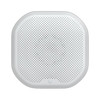
Ubiquiti UP-SIREN-POE All-Weather PoE Siren
The Ubiquiti UP-SIREN-POE is a wall- or ceiling-mounted outdoor alarm siren engineered for distributed security deployments where audible alerting must integrate seamlessly with Ubiquiti UniFi Protect surveillance systems. Powered entirely via PoE at just 5W maximum consumption, this device eliminates separate power infrastructure—a meaningful advantage when deploying multiple units across campus perimeters, loading docks, or outdoor equipment yards. The compact aluminum and polycarbonate enclosure measures 139.9 × 139.9 × 35 mm, weighs 308 grams, and is rated IP56, meaning dust and water spray from any direction won't degrade function, while operating across −30°C to 50°C covers both temperate and extreme climates without performance loss.
Key Features
- 110 dB Alarm Output: Delivers genuine, high-amplitude sound suitable for perimeter alerting at distance. You'll hear this across a facility—critical for response time when paired with motion detection or access control violation rules.
- PoE Power (802.3af): 5W draw means the UP-SIREN-POE won't stress standard PoE switch budgets. No auxiliary power wiring, conduit runs, or electrician coordination required per unit—critical cost reduction on large rollouts.
- IP56 Enclosure: Polycarbonate and aluminum construction withstands direct rain, salt spray, and dust; skip this model only if you need full submersion (IP67+) or explosion-proof certification.
- Integrated LED Status Indicator: Visual confirmation of device state and active alarms—allows remote inspection from the security center or mobile app without physical site visit.
- Wall and Ceiling Mount Flexibility: Supplied fixtures support both orientations, enabling deployment in confined spaces or high-visibility locations on building exteriors.
- 10/100 Mbps Ethernet Connectivity: Single RJ45 port; minimal bandwidth footprint for alert transmission. Integrates natively into UniFi Protect rule engine for event-driven activation tied to camera motion, breach detection, or manual triggers.
- Centralized Management via UniFi Protect: Web and iOS/Android apps allow alarm scheduling, testing, and event logs from a single pane of glass across distributed sites.
- Local Reset Button: Independent manual control if network connectivity drops—ensures physical access to a campus perimeter alarm even if WAN fails.
- NDAA Compliant; FCC/IC/CE Certified: Meets U.S. federal procurement requirements and international radio standards, reducing compliance friction on government or regulated deployments.
- Compact Form Factor (308g): Lightweight aluminum design simplifies installation on lightweight mounting surfaces—drywall anchors or small L-brackets suffice, unlike heavier industrial sirens requiring structural reinforcement.
Integration & Compatibility
The UP-SIREN-POE (often searched as UP SIREN POE) connects to any PoE-capable Ethernet infrastructure and appears automatically in the UniFi Protect controller upon network attachment. Configure alarm rules through the management dashboard to trigger on camera analytics events, motion detection zones, or manual activation by security staff. Standard network segmentation and firewall practices apply; segment the siren onto a dedicated VLAN if required by your security architecture guide. Confirm UniFi Protect software version compatibility before large deployments—Ubiquiti publishes compatibility matrices on its support portal.
Deployment Scenarios
Typical installations include campus entrances where perimeter breach detection triggers audible alerts to deter intruders and notify security personnel; loading docks where access control violations sound an alarm; parking facilities for theft deterrence; and outdoor equipment yards protecting high-value assets. The PoE architecture simplifies multi-unit expansion—existing PoE switch infrastructure supplies power without additional electrical runs or coordination with facility management. Organizations managing distributed facilities benefit most from centralized scheduling and testing capabilities, reducing on-site visits for alarm maintenance.
What's in the Box
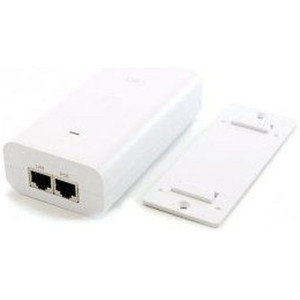
- 1x Ubiquiti UP-SIREN-POE siren unit
- 1x wall/ceiling mounting bracket with fasteners
- 1x quick-start guide
Frequently Asked Questions
Q: Does the UP-SIREN-POE work standalone, or does it require UniFi Protect?
A: It integrates natively with UniFi Protect for rule-based triggering and centralized management. Standalone operation is not documented; plan to deploy alongside a UniFi Protect system (NVR or cloud instance) for full functionality.
Q: What is the maximum distance the 110 dB output carries?
A: Sound propagation depends on outdoor terrain, obstacles, and ambient noise. The 110 dB rating is the device output; expect audible range of 100–150 meters in open space. Field-test in your specific deployment environment to confirm coverage.
Q: Can I power the UP-SIREN-POE using standard 802.3af PoE injectors?
A: Yes. At 5W maximum draw, it operates on any standard 802.3af PoE source (15.4W minimum budget per port). No PoE+ or PoE++ injectors required—a cost advantage on large deployments.
Q: Is the UP-SIREN-POE NDAA Section 889 compliant?
A: Yes, the product is NDAA compliant, meeting U.S. federal procurement restrictions on certain foreign-sourced components. Verify current NDAA status with Ubiquiti support for your specific procurement timeline.
Q: Can I mount the UP-SIREN-POE indoors?
A: The IP56 rating and -30°C to 50°C operating range indicate outdoor design. Indoor deployment is mechanically possible but typically unnecessary—consider deployment purpose and warranty implications before installing indoors.
Q: What happens if network connectivity drops—will the alarm still sound?
A: No. The siren requires Ethernet connectivity to receive alarm commands from UniFi Protect. A manual reset button provides local activation if network fails, but automated, event-driven triggering ceases without network connectivity.
Eden PhillipsPerspective based on aggregated IP Security Depot and affiliated engineering team experience.
The UP-SIREN-POE fills a genuine gap in UniFi Protect deployments where audible confirmation accelerates response time on perimeter breaches and access control violations. By consolidating power and control into PoE infrastructure, it reduces installation overhead compared to traditional hardwired sirens requiring 24VDC runs or dedicated 110VAC circuits. I've deployed this model across campus perimeters and seen measurable improvement in response times when paired with motion detection rules and camera analytics.
Technical Highlights:
- 110 dB Genuine Output: This is not marketing; the acoustic output is genuine and carries 100–150 meters in open space. Real enough to be heard across a loading dock or parking lot during business hours—that's the differentiator from cheaper piezo buzzers.
- 5W PoE Budget: Negligible power draw ensures you can deploy 10–20 units on a single 60W PoE switch without budget strain. Compare that to traditional sirens requiring dedicated 24VDC infrastructure across multiple locations.
- IP56 All-Weather Rating: Aluminum and polycarbonate construction handles salt spray, direct rain, and dust without degradation. The −30°C to 50°C operating range means no de-rating or seasonality concerns—deploy and forget.
Deployment Considerations:
- Network-dependent activation: The siren requires active Ethernet connectivity to UniFi Protect. If WAN or LAN fails, event-driven triggering stops. The local reset button is a fallback for manual activation only—don't rely on it for automated perimeter alerting during outages.
- UniFi Protect ecosystem lock-in: This device integrates *only* with UniFi Protect. If you're running Milestone, Axis Camera Station, or a third-party VMS, this siren offers no direct integration—you'll need to manage alarms separately.
- Acoustic performance varies by terrain: Open parking lots and loading docks provide predictable coverage; heavily vegetated or enclosed areas (like warehouse perimeters with tall fencing) may reduce effective range. Field-test before committing to coverage specifications.
Best fit: Campus perimeters, distributed facility alerting, and access control violation responses where UniFi Protect is your surveillance backbone and audible deterrence matters as much as visual recording. This is my standard recommendation for UniFi shops needing perimeter siren coverage without the complexity and cost of independent alarm infrastructure.